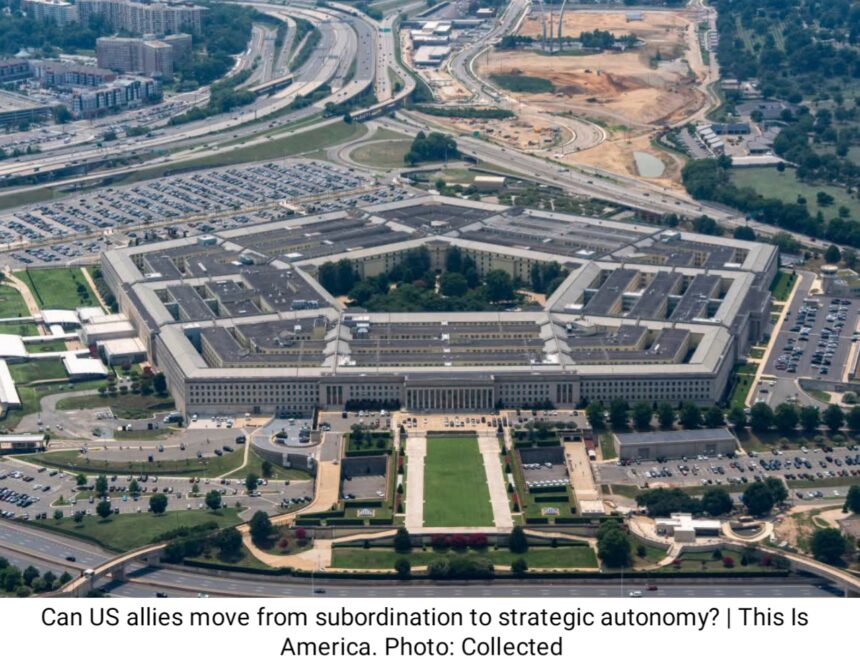
Washington/Brussels — The Pentagon has reportedly sent a questionnaire to NATO allies seeking to assess how closely their political positions align with US policy and the administration of President Donald Trump, according to an Al Jazeera report citing documents obtained by the network. Published on August 19, 2026, the report said the documents contain questions concerning NATO members’ positions and commitment to US policies, suggesting that Washington may be examining political alignment among allied governments beyond the alliance’s traditional focus on military cooperation. The disclosure has raised a broader question: Is the United States seeking not only greater defence cooperation from its NATO allies, but also stronger political alignment with Washington’s specific priorities? NATO is a multilateral military alliance whose members retain sovereign authority over their domestic and foreign-policy decisions, and disagreements between Washington and European allies over military operations, defence spending, Russia policy and diplomatic strategy are not new. However, if the Pentagon’s questionnaire is indeed intended to measure the political positions of allied governments and their willingness to support US policy priorities, the move could trigger a fresh debate over the balance of power within NATO and the alliance’s future decision-making process. The issue comes at a particularly sensitive moment, as the war in Ukraine, pressure on European countries to increase defence spending and broader questions over the future of transatlantic security ties are already creating tensions within the alliance. Any effort to assess the political loyalty of NATO members could therefore deepen concerns about the cohesion of the bloc and potentially affect trust between Washington and European capitals. While the full purpose of the questionnaire and how the information may be used remain unclear from the publicly available material, the documents described by Al Jazeera could offer an important insight into the Trump administration’s approach to its NATO allies. The central question now is whether NATO will remain primarily a collective defence alliance, or whether political alignment with Washington’s priorities will increasingly become an important measure of an ally’s role and commitment within the bloc.
How much do NATO allies agree with Washington’s policies? New mystery in Pentagon questionnaire