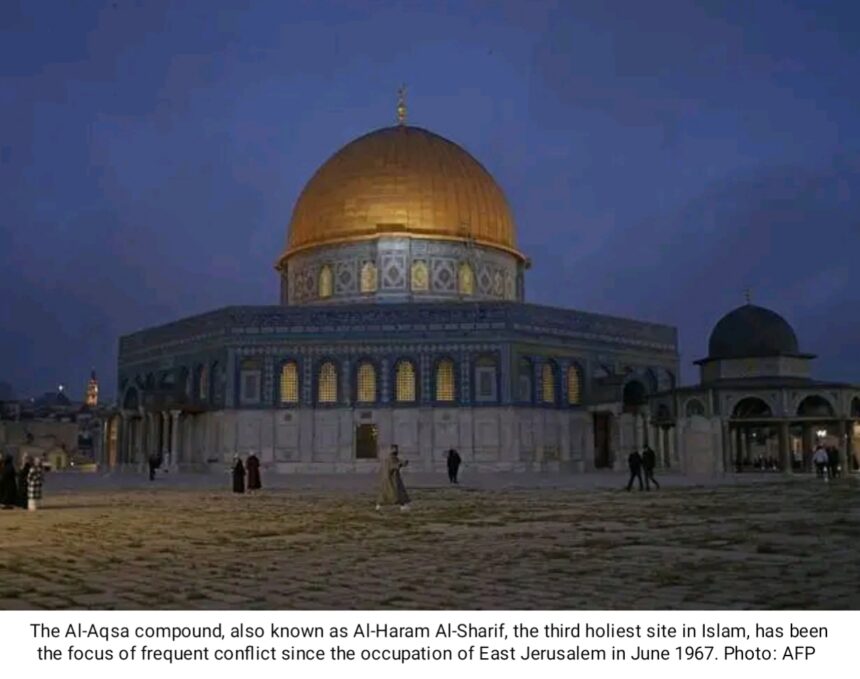
Israeli settlers entered the Al-Aqsa Mosque compound in occupied East Jerusalem 27 times during July, according to the Palestinian Ministry of Religious Endowments and Religious Affairs (Awqaf), in a development that has once again drawn attention to the fragile status of one of the world’s most sensitive religious sites. Palestinian officials said the groups entered the compound through the Israel-controlled Moroccan Gate under the protection of Israeli police before leaving through the Chain Gate after carrying out what they described as Jewish religious rituals inside the complex. The ministry also alleged that several participants performed Talmudic prayers, including full prostration, while some raised Israeli flags within the compound. On multiple occasions, Israeli National Security Minister Itamar Ben-Gvir, members of the Knesset and activists advocating increased Jewish access to the site reportedly joined the visits. Ben-Gvir has repeatedly called for expanding Jewish prayer rights at the compound, a position that has generated criticism from Palestinian authorities and concern from regional governments. The Awqaf ministry further stated that Jerusalem Grand Mufti Sheikh Mohammad Hussein was briefly detained by Israeli authorities during July. Israeli authorities have not publicly commented on every individual incident cited by the Palestinian ministry. The Al-Aqsa Mosque compound, known to Muslims as Al-Haram Al-Sharif and revered as Islam’s third-holiest site, is also the location of the Temple Mount, regarded by Jews as the holiest place in Judaism. The site has remained a focal point of religious and political tensions since Israel captured East Jerusalem during the 1967 Arab-Israeli war, a territory that Palestinians seek as the capital of a future state. Under the long-standing status quo arrangement, the Islamic Waqf administers the religious affairs of the compound while Israel maintains overall security control. Visits by Israeli settlers and politicians, together with restrictions imposed during periods of heightened security, have repeatedly triggered diplomatic disputes, regional condemnation and fears of broader unrest. Analysts warn that any perceived change to the long-standing arrangements governing the holy site carries the potential to inflame tensions not only in Jerusalem but across the wider Middle East, where Al-Aqsa remains a deeply symbolic and politically sensitive issue for millions of Muslims and Jews alike.
International concern over alleged Israeli settlers entering Al-Aqsa 27 times in July