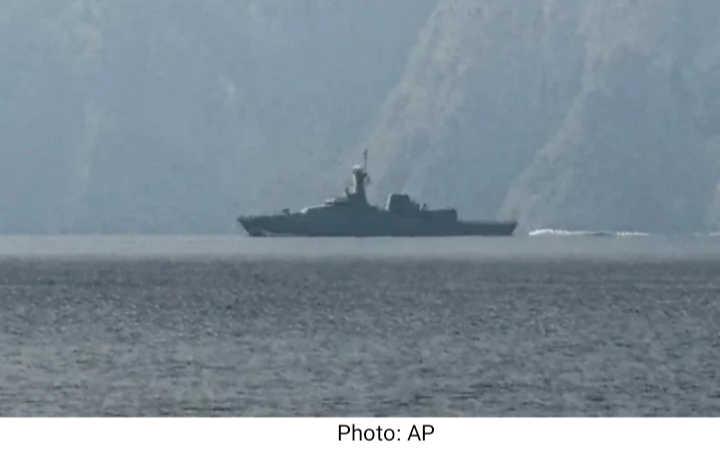
The US–Israeli aggression against Iran has kept the global economy unstable for more than a month; although a two-week ceasefire was announced on Wednesday, Iran and China have taken advantage of the situation to voice their long-standing grievances against the international financial system, with a clear objective—ending the dominance of the US dollar in global trade; Beijing and Tehran have long argued that Washington uses the dollar’s dominance as a political tool to pressure rival nations, and according to a 2023 estimate by JPMorgan Chase, around 80% of global oil trade is conducted in dollars, highlighting its overwhelming influence; nearly one-fifth of the world’s oil and LNG supply passes through the Strait of Hormuz, a strategically vital route under Iran’s influence, giving Tehran and Beijing an opportunity to promote the Chinese yuan as an alternative currency; reports suggest Iran has begun collecting transit fees from commercial vessels passing through Hormuz in yuan, and while the exact number remains unclear, Lloyd’s List noted that at least two vessels had completed such transactions by March 25, with China’s Ministry of Commerce indirectly acknowledging the move and Zimbabwe’s embassy in Iran even suggesting that the era of “petro-yuan” may be approaching; although no formal statement has come from Tehran or Beijing, Iran has assured safe maritime passage during the ceasefire period; Harvard economist and former IMF chief economist Kenneth Rogoff stated that Iran aims to create discomfort for the US while also seriously pursuing yuan usage to bypass sanctions, and China has long been working to expand the use of its currency within BRICS and beyond; the broader vision points toward a multipolar financial system where the dollar’s singular dominance is reduced; increased yuan usage would help both nations avoid US sanctions and simplify bilateral trade, especially after their 25-year strategic partnership agreement signed in 2021; Professor Bulent Gokay of Keele University noted that countering the petrodollar system has become a strategic necessity, with China aiming to establish a multipolar financial structure; China purchases over 80% of Iran’s oil exports, often at discounted rates due to yuan-based transactions, while Iran imports machinery, electronics, and industrial goods from China; despite the ongoing conflict, oil trade between the two has remained largely stable, with Iran exporting between 12 to 13.7 million barrels in the first two weeks of the conflict, most of it to China; China’s ambition to elevate the yuan is not new, and in 2024 President Xi Jinping expressed hope that it would become a major global trade and reserve currency; however, significant challenges remain, as the yuan is not freely convertible like the dollar, and strict capital controls along with concerns over financial transparency continue to limit investor confidence; although the dollar’s share in global reserves has slightly declined, IMF data shows it still accounts for about 57%, compared to 20% for the euro and only 2% for the yuan; yuan-based trade reached 3.7% in 2024, up from less than 1% in 2012; Alicia Garcia-Herrero of Natixis argues that increasing yuan use in Hormuz alone cannot dethrone the dollar, emphasizing the need for active participation from Gulf states, especially since Saudi Arabia agreed in the 1970s to sell oil exclusively in dollars in exchange for US security guarantees, solidifying the petrodollar system; Hosuk Lee-Makiyama of the European Centre for International Political Economy believes Iran is less concerned about China fully replacing the dollar, as their trade relationship is already balanced and self-sufficient; historically, currencies like the euro or yen failed to replace the dollar due to limited industrial backing, but China, as a global manufacturing powerhouse, has a stronger position; Dan Steinbock of Difference Group notes that while the dollar cannot be displaced in the short term, the gradual rise of yuan usage will steadily erode US financial dominance; Rogoff concludes that the outcome largely depends on how the conflict evolves—if Iran and China succeed, more countries may shift away from dollar dependency, but if the US prevails, the dollar’s dominance is likely to persist for some time.
Iran and China join forces in the Strait of Hormuz to reduce the dollar’s dominance