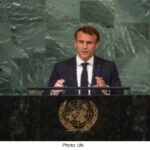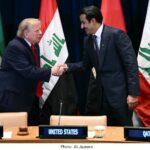
US President Donald Trump launched a strong attack on the International Criminal Court during his address to the United Nations General Assembly in New York, describing the tribunal as a “rogue institution” and urging countries that are members of the court to withdraw. Trump accused the ICC of operating as an “out of control institution” and referred to its officials as an “evil group of people,” while arguing that the United States should not allow its military personnel to face what he characterized as politically motivated trials before an international tribunal. “I call on all nations that are members of the ICC to officially resign from this rogue institution immediately,” Trump said in his UN address, according to Reuters. His remarks represent another escalation in Washington’s longstanding opposition to the court, which was established in 2002 to prosecute individuals accused of genocide, war crimes and crimes against humanity. The United States has never been a member of the ICC and has maintained that the court should not exercise jurisdiction over American citizens or officials without US consent. Trump’s latest criticism comes amid an increasingly tense relationship between Washington and the ICC, particularly over the court’s investigations involving alleged crimes committed by US forces in Afghanistan and its actions concerning Israeli officials in connection with the Gaza conflict. The Trump administration has already imposed sanctions on individual ICC judges and prosecutors and has been seeking to increase pressure on the institution. Reuters reported that the administration was preparing broader sanctions against the ICC itself, a move that could affect the court’s financial transactions, technology services, insurance arrangements, investigations and other operations. The administration has also urged other countries to distance themselves from the tribunal, while Secretary of State Marco Rubio has described the ICC as a threat to US sovereignty and pledged to use available measures to isolate the institution. The ICC, however, maintains a different legal position. The court was created under the Rome Statute and operates as a court of last resort, generally acting when national judicial systems are unable or unwilling to genuinely investigate or prosecute serious international crimes. It has 125 member states, although several major powers, including the United States, Russia and China, are not parties to the Rome Statute. The dispute over the court has become particularly significant because of its investigations and arrest warrants involving senior political and military figures. Trump’s comments at the UN came as the international community was already divided over the Gaza war, accountability for alleged violations of international humanitarian law and the role of international institutions in addressing conflicts. Supporters of the ICC argue that international justice mechanisms are necessary when domestic courts cannot adequately address allegations involving war crimes, crimes against humanity or genocide. Critics, including successive US administrations, have raised concerns about the court’s jurisdiction, accountability and potential impact on national sovereignty. The disagreement has placed the ICC at the centre of a wider debate over how international law should be enforced and whether an international judicial body should be able to investigate or prosecute individuals from countries that have not accepted the court’s jurisdiction. Trump’s call for ICC members to resign therefore goes beyond a criticism of a single institution and reflects a broader dispute over the balance between national sovereignty and international legal accountability. As world leaders gathered at the United Nations, his remarks added another major point of contention to discussions already focused on wars, humanitarian crises, national sovereignty and the future of the international system. The confrontation between Washington and the ICC is likely to remain closely watched as governments assess the legal, diplomatic and practical consequences of further US pressure on the court.
Trump calls ICC a ‘reckless institution’ and calls on members to leave