
Iran’s Oil Revenue Crisis: How Sanctions, Private Traders and Financial Disputes Created a Multibillion-Dollar Problem
Iran is facing a serious financial challenge as billions of dollars in revenue from previous oil sales remain unpaid to the government. According to statements from Iranian judicial authorities reported by Al Jazeera on October 12, 2026, a network of oil intermediaries known inside Iran as “trustees” owes the state between 10 billion and 11 billion euros, equivalent to approximately $11 billion to $12 billion. The outstanding amount represents a substantial share of the country’s expected oil revenue for the current fiscal year, placing additional pressure on public finances at a time when US sanctions, restrictions on oil exports and military confrontation are already weighing heavily on the Iranian economy.
The dispute has raised important questions about how Iran sells its oil under international sanctions, why the government depends on private intermediaries to collect revenue, and what happens when the companies and individuals responsible for handling those transactions fail to return the proceeds. Iranian officials have warned that those who do not settle their obligations could face legal action. However, the situation is complicated by frozen bank accounts, restrictions on international payments, disputed financial records and allegations that some intermediaries have used the system for personal gain.
The crisis illustrates the difficulties faced by a country that depends heavily on petroleum exports while operating under extensive financial restrictions. It also highlights how efforts to bypass sanctions can create long-term problems for public accountability, financial transparency and government control over national resources.
A Multibillion-Dollar Debt Comes Under Scrutiny
The latest controversy centres on money that Iran says should have been returned to the state treasury after crude oil was sold through intermediaries. The country’s judicial authorities have placed the outstanding obligations at between 10 billion and 11 billion euros. Although the precise status of individual debts varies, the overall figure has become a major concern for the government as it attempts to manage public spending and maintain revenue during a prolonged period of economic and military pressure.
Iranian authorities have described the problem as involving a combination of unpaid oil-sale proceeds, financial obligations that remain disputed and allegations of corruption. These categories are not necessarily identical. Some amounts may represent payments that have not been completed, while others may be subject to disagreements over accounting, contractual responsibilities or the ability of traders to transfer money through the international financial system.
The distinction matters because the full amount cannot automatically be treated as money that has been stolen. Establishing how much is recoverable requires examining the circumstances of each transaction, the terms under which the oil was transferred and whether the parties involved can legally and practically return the funds.
Nevertheless, the reported scale of the debt creates a significant problem for the Iranian government. Oil revenue is an important source of foreign currency and public income. When the government cannot collect the proceeds of completed sales, it loses access to resources that could otherwise help finance public services, infrastructure, government operations and other national priorities.
The problem has become more pressing as the United States continues to target Iran’s oil trade and financial networks. Washington’s sanctions campaign aims to restrict Tehran’s access to international markets and financial channels. Iranian authorities, meanwhile, face the challenge of recovering money from a trading system that developed partly because conventional sales and payment arrangements became increasingly difficult to use.
How Iran Created Its Oil Intermediary Network
The origins of the current debt crisis can be traced to 2012, when the United States and European countries imposed major restrictions on Iranian oil exports and the collection of related revenues.
At the time, Western governments said the measures were intended to pressure Iran over its nuclear programme. Restrictions on oil purchases, banking relationships and financial transactions made it more difficult for Tehran to sell crude through ordinary commercial channels and receive payments through established international banking networks.
Iran responded by developing alternative arrangements for selling its oil. Instead of relying exclusively on direct sales through the Oil Ministry and the normal collection of proceeds through the Central Bank, the government began transferring crude oil to domestic institutions, companies and individuals that could arrange sales on its behalf.
In some cases, oil was supplied to organisations as a way of settling outstanding financial obligations owed by the state. Those organisations could then sell the crude themselves or hire private trading companies to handle the transactions.
The system was designed to help the government continue generating revenue despite sanctions. Oil could be transferred to intermediaries with the necessary commercial connections, and the proceeds were expected to be returned to the state treasury. The intermediaries or institutions involved could then recover agreed costs or amounts owed to them.
This approach allowed Iran to maintain parts of its oil trade when direct transactions became more difficult. However, it also created a more complicated chain of responsibility. Instead of having one clearly defined government channel handling each sale and payment, the process could involve multiple institutions, private traders, financial agents and overseas counterparties.
Every additional participant created another point at which payments could be delayed, records could become inconsistent or money could become difficult to trace. The arrangement also made it harder for government agencies to maintain direct oversight of the full value of oil sold.
What began as a response to sanctions therefore developed into a long-term system with significant financial and administrative risks.
Government Institutions Became Part of the Trading System
Several Iranian institutions reportedly received crude oil under the intermediary arrangement. Among them was the Oil Industry Pension Fund, which was established to support retired employees of the country’s oil sector. Its familiarity with the industry made it one of the early participants in the system.
Another recipient was Khatam al-Anbiya Construction Base, a major organisation involved in large infrastructure projects. Government obligations to other institutions were also sometimes settled through crude oil rather than conventional cash payments. Even municipal police organisations reportedly received oil as a form of payment for money owed to them by the state.
These arrangements demonstrate how deeply the system became connected to Iran’s domestic financial structure. Oil was no longer handled exclusively as a commodity sold by a central government agency. It also became a means of settling obligations between public institutions and financing activities through alternative commercial arrangements.
The method offered a practical response to a difficult situation. If conventional transfers were restricted, crude oil could still be sold through intermediaries that maintained access to buyers and trading networks. Institutions that were owed money could receive a valuable commodity instead of waiting for cash payments from a government facing financial constraints.
However, receiving oil did not guarantee that an institution would successfully convert it into available funds. The recipient still needed to arrange a sale, manage shipping and commercial agreements, receive payment and account for the proceeds.
Where private traders were involved, the government also depended on their willingness and ability to fulfil contractual obligations. The state could transfer oil worth a substantial amount, but recovering the resulting revenue depended on transactions taking place across a complex network.
This separation between the transfer of the commodity and the collection of the money became one of the central weaknesses of the system.
Financial Discrepancies Appeared Before the 2015 Nuclear Deal
Problems emerged during the early years of the intermediary network. Iranian authorities found discrepancies between the revenue expected from oil sales and the amounts that intermediaries reported or deposited into the government treasury.
Such differences can arise for several reasons, including payment delays, disagreements over costs, currency-conversion issues, incomplete records and failures to meet contractual obligations. In a system operating under sanctions, transactions may also pass through unusual commercial channels that make verification more difficult.
However, Iranian authorities have also linked the wider problem to major corruption cases. Allegations that individuals failed to return money from oil sales became a significant concern for the government.
The difficulties continued until the 2015 Joint Comprehensive Plan of Action, commonly known as the JCPOA, provided a temporary change in Iran’s economic circumstances. Under the nuclear agreement, restrictions on Iranian oil sales were eased following the implementation of the relevant commitments and international arrangements.
The improvement allowed the Iranian government to regain greater control over its oil exports and revenue collection. With more opportunities to sell oil through recognised commercial channels, Tehran could reduce its dependence on some of the alternative arrangements developed during the earlier sanctions period.
Iranian authorities also pursued individuals accused of failing to return proceeds from oil transactions. Some were imprisoned, according to the account reported by Al Jazeera.
The experience demonstrated that the intermediary system could create serious problems even when the government retained the ability to sell oil. When normal commercial channels were available, Tehran had a better opportunity to restore direct oversight. The underlying risks associated with private intermediaries, however, were not permanently eliminated.
US Withdrawal from the Nuclear Agreement Reopened the Problem
The situation changed again in 2018, when US President Donald Trump withdrew the United States from the JCPOA during his first presidential term and restored a policy of maximum pressure on Iran.
Washington expanded its sanctions campaign against Iranian economic interests, including the country’s oil sector and financial networks. The renewed restrictions made it more difficult for Iran to conduct transactions through international banks and receive payments from overseas buyers.
Once again, Tehran faced strong incentives to rely on private traders and alternative arrangements to sell crude oil. The intermediary network that had been used during the earlier sanctions period became important again.
But the system returned under more difficult circumstances. Sanctions had expanded beyond major government institutions to include companies, individuals, exchange businesses and bank accounts associated with Iranian transactions. Financial institutions and commercial partners faced the risk of penalties if they handled prohibited dealings.
This created a growing problem for intermediaries. A trader who could arrange an oil sale at one stage might later lose access to bank accounts, have company assets frozen or become unable to transfer the proceeds. The money could remain outside the reach of the Iranian government even when the oil had already been delivered and sold.
The result was a cycle in which the government increasingly depended on intermediaries while those intermediaries faced mounting restrictions on their ability to complete transactions. As the network expanded, the number of people and companies involved increased the administrative burden and complicated efforts to trace payments.
The return of sanctions therefore revived the original risks while introducing additional obstacles to recovering unpaid revenue.
How Sanctions Can Turn Unpaid Revenue into Long-Term Debt
Sanctions affect the intermediary system through several interconnected mechanisms.
First, they restrict access to banking services. International financial institutions may refuse transactions linked to Iranian oil because they fear sanctions or regulatory consequences. Even when a buyer has paid for crude, moving the funds through the financial system can be difficult.
Second, sanctions can freeze assets and accounts belonging to individuals or companies connected to prohibited transactions. An intermediary may have commercial assets or money available on paper but lack the legal ability to transfer those funds to the government.
Third, the restrictions increase the cost and complexity of international trade. Oil transactions may require additional intermediaries, alternative payment methods and complicated commercial arrangements. Each additional step can increase expenses and create uncertainty over when the final payment will arrive.
Fourth, sanctions can make the trading network less stable. Individuals and businesses may become subject to restrictions after entering the system. If their accounts are blocked, their ability to fulfil existing obligations can be sharply reduced.
These factors help explain why unpaid oil revenue may accumulate over several years. A debt that begins as a delayed payment can become much harder to recover if the responsible trader loses access to financial services or the assets needed to settle the obligation.
However, sanctions do not explain every discrepancy automatically. Some debts may arise from contractual disputes, poor administration or alleged misconduct. Determining the reasons behind each unpaid amount requires detailed financial records and independent verification.
Iranian officials have argued that some intermediaries exploited the arrangements to enrich themselves. Such allegations require case-by-case investigation, and the existence of a debt does not by itself establish criminal wrongdoing.
The broader difficulty is that a system designed to work around financial restrictions can become increasingly vulnerable to the very restrictions it was created to overcome.
Why Iran Expanded the Number of Private Oil Traders
As sanctions intensified and some intermediaries became unable to operate, Iran reportedly expanded its network of private oil sellers. Rather than assigning large volumes of crude to a smaller number of participants, the government increasingly relied on a wider group of individuals and companies.
This approach could help keep oil moving by reducing dependence on any single trader. If one intermediary encountered difficulties, other participants might still be able to arrange sales.
But the strategy also created new risks. A larger network meant more transactions to monitor, more contracts to reconcile and more counterparties whose financial positions could change unexpectedly.
Smaller allocations could reduce the exposure associated with any one intermediary, but they did not necessarily improve the government’s ability to collect the proceeds. The state still needed accurate records showing how much oil had been transferred, what price it had fetched, which expenses were legitimate and how much money should have reached the treasury.
Without effective monitoring, expanding the number of participants could make the entire system more difficult to supervise. It could also increase opportunities for conflicts of interest and disagreements over financial obligations.
The government’s challenge is therefore not simply to find more buyers for its oil. It must ensure that the value generated by those sales can be tracked and recovered.
The War Has Increased the Pressure on Iran’s Oil Revenues
The dispute over unpaid oil proceeds is unfolding amid a wider confrontation between Iran and the United States and Israel. According to the background provided in Al Jazeera’s October 12 report, renewed hostilities began in late February 2026, while Washington continued to pursue restrictions on Iranian oil exports and maritime trade.
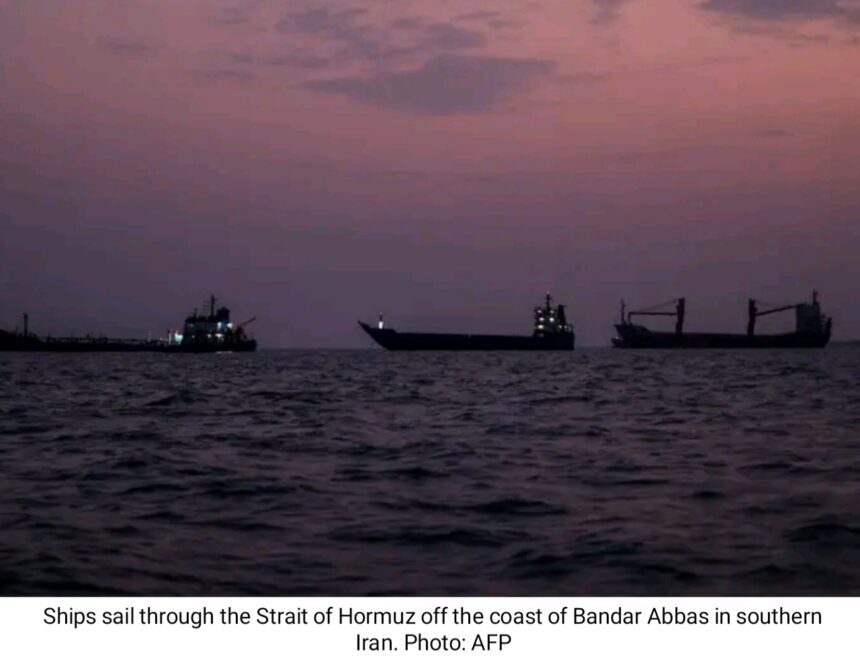
The Strait of Hormuz has become a central point of concern. The waterway is one of the world’s most important routes for transporting oil and other energy supplies from the Gulf to international markets. Disruption to shipping through the strait can affect exporters, importers, energy companies and consumers far beyond the immediate conflict zone.
The United States has maintained a naval blockade targeting Iranian ports, according to the report, while Iran has continued to exert pressure around the strait. Military incidents involving vessels and renewed exchanges of fire have added to uncertainty in the region.
These developments create further complications for Iran’s oil trade. Shipping risks, insurance costs, restrictions on port access and uncertainty over delivery schedules can affect the ability of sellers to complete transactions. Even when crude oil finds a buyer, the process of transporting it and collecting payment may face additional difficulties.
The government must also manage the financial consequences of a prolonged conflict while dealing with restricted access to international markets. If oil revenue becomes harder to collect, the amount available for domestic spending can shrink further.
The outstanding intermediary debt is therefore part of a wider financial problem. It reflects weaknesses in the collection of previous oil revenues at a time when the country’s ability to generate and access new income is under pressure.
Washington Says Its Economic Pressure Is Working
US officials have presented Iran’s financial difficulties as evidence that the sanctions campaign is having an effect. Treasury Secretary Scott Bessent said in August that Iran’s shadow banking system was buckling under pressure, according to Al Jazeera.
The US strategy seeks to limit the revenue available to the Iranian government and increase the economic cost of its policies. Restrictions on oil sales, banking relationships and financial intermediaries are intended to make it harder for Tehran to fund its activities and sustain its economic networks.
From Washington’s perspective, difficulties in collecting oil revenue can indicate that these measures are weakening Iran’s ability to operate internationally.
However, the impact of sanctions must be assessed across the wider economy. Reduced access to oil income can place pressure on government finances, but it can also affect businesses, employment, trade and ordinary households. The consequences depend on how the restrictions are implemented, how the Iranian government responds and whether alternative trading channels remain available.
Iran has continued to seek ways to sell oil despite sanctions. The existence of an extensive intermediary network shows that restrictions have not eliminated all commercial activity. Instead, they have changed how transactions are organised and increased the financial and administrative challenges associated with them.
The unpaid debt also raises a question about the effectiveness of alternative systems. A method that allows oil to be sold under sanctions may provide immediate income, but it can leave the government with less direct control over the money generated by those sales.
Can Iran Recover the Missing Billions?
Iranian judicial authorities have warned that oil intermediaries who refuse to return the proceeds from sales will face legal action. Such measures could help the government recover some outstanding funds, particularly where the responsible parties retain assets or can demonstrate an ability to settle their obligations.
However, legal proceedings alone may not resolve the full problem. Authorities need reliable records of the oil transferred, the sales completed, the payments received and the amounts still outstanding. They must also distinguish between unpaid debts, disputed expenses and allegations of deliberate misconduct.
Recovering funds may be especially difficult where assets are held abroad, bank accounts have been frozen or financial transfers are blocked by sanctions. Even a successful court judgment does not guarantee that money can be transferred into the state treasury.
The government could attempt to strengthen oversight by improving financial audits, requiring more detailed reporting from intermediaries and establishing clearer deadlines for returning oil revenue. It could also review the outstanding accounts and prioritise cases in which the debt is documented and recovery appears possible.
Yet any reforms would have to address the reasons the intermediary network exists in the first place. If Iran remains unable to conduct oil sales and receive payments through ordinary international channels, it will continue to face pressure to use alternative arrangements.
This creates a difficult policy choice. Tehran needs a system flexible enough to operate under sanctions, but it also needs one that protects public revenue and reduces the opportunities for financial abuse.
Greater transparency could help reduce disputes, but transparency alone cannot remove banking restrictions or guarantee access to overseas assets. The recovery effort is likely to depend on a combination of legal enforcement, financial investigation, improved administration and changes in the external conditions affecting Iranian trade.
What the Crisis Means for Iran’s Economy
The reported debt highlights a basic problem for an oil-dependent economy: generating revenue and actually receiving that revenue are two different things.
A government may transfer crude oil to a trader and record an expected payment, but the funds are of limited practical value if they cannot be collected and used. When large sums remain outstanding, officials have less certainty about the resources available to meet public obligations.
The consequences can extend beyond the oil industry. Uncertainty over government income can complicate budget planning, public investment and payments to institutions that depend on state funding. If the government attempts to compensate for lost revenue through other measures, the economic effects may spread to businesses and households.
The scale of the reported debt is particularly significant because it represents a substantial proportion of Iran’s projected oil income for the fiscal year. It does not mean that the entire amount has been permanently lost, but it does show how much money may remain inaccessible while the government struggles to collect it.
The crisis also exposes the limits of relying on informal or less transparent financial channels over an extended period. Such arrangements may help maintain commercial activity during an emergency, but they can create long-term liabilities when payment responsibilities are unclear or enforcement becomes difficult.
For Iran, the challenge is to regain control over oil revenue while continuing to operate in an environment shaped by sanctions, geopolitical confrontation and restrictions on international finance.
A Financial Problem with No Easy Solution
Iran’s multibillion-dollar dispute with oil intermediaries has developed over more than a decade. The original system emerged as a response to sanctions imposed in 2012, became less necessary when restrictions eased after the nuclear agreement and returned to prominence following the US withdrawal from the deal in 2018.
Over time, the network grew more complicated as additional traders and institutions became involved. Sanctions affecting bank accounts, companies and individuals then made it harder for some intermediaries to return the money they owed. At the same time, Iranian officials alleged that some participants had taken advantage of the arrangements for personal benefit.
The current estimate of 10 billion to 11 billion euros in outstanding obligations has placed the issue firmly on the government’s agenda. Judicial warnings indicate that Tehran wants the money recovered, but the task involves more than identifying debtors and demanding payment.
Authorities must establish the status of individual accounts, separate genuine financial obstacles from misconduct and determine which funds can realistically be recovered. They must also consider how to prevent similar problems from developing in future oil transactions.
The wider economic environment makes the task more difficult. Continued sanctions, restrictions on Iranian ports and military tensions around the Strait of Hormuz are adding uncertainty to the country’s ability to sell oil and collect revenue.
Ultimately, the dispute is about more than unpaid invoices. It concerns the government’s control over one of its most important sources of income and the long-term costs of conducting international trade through complex alternative channels. Until Iran can improve revenue collection and reduce the obstacles created by sanctions, the gap between the value of oil sold and the money available to the state is likely to remain a major concern.
Source: Al Jazeera, October 12, 2026. This report is based on the supplied article and its cited information. Allegations and reported financial figures are attributed to the relevant Iranian authorities and reporting; individual debts and claims have not been independently verified here.