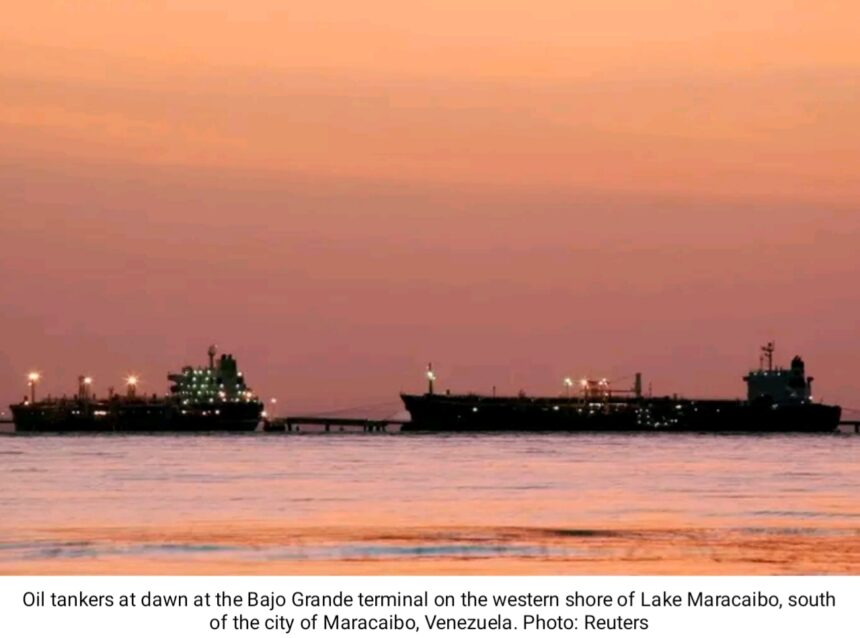
CARACAS/WASHINGTON — Nearly half of Venezuela’s oil output is now being exported to the United States, underscoring how rapidly Washington’s influence over the country’s energy sector has expanded in the seven months since President Nicolás Maduro was removed from power. US Under Secretary of Energy Kyle Haustveit said at an industry event in Houston that Venezuela is currently producing about 1.25 million barrels of crude oil per day, with more than 500,000 barrels heading to the United States. He said the crude is being supplied to US Gulf Coast refineries specifically designed to process Venezuela’s heavy, sour oil. Venezuela holds the world’s largest proven oil reserves, estimated at about 303 billion barrels, or roughly 17 percent of the global total. Yet years of underinvestment, weak infrastructure and US sanctions had sharply constrained production. At the end of 2025, Venezuela was producing about 1 million barrels per day, with only around 135,000 barrels a day being exported to the United States. The renewed flow of Venezuelan crude is now being accompanied by US support for increased production. Haustveit said Washington is sending more than 100,000 barrels per day of naphtha to Venezuela, where it is blended with heavier crude to facilitate transport and processing. He described the arrangement as “a beautiful energy partnership”, arguing that it creates tangible value for both sides. Venezuelan state oil company PDVSA Vice President Jovanny Martinez said crude production could reach approximately 1.245 million barrels per day by the end of August, while exports have risen 19.7 percent this year. Fuel production has also increased 12.9 percent, with domestic fuel supplies up 5.4 percent. Venezuelan officials, however, say the country’s refineries still require modernization, expansion and investment. At the heart of the growing energy relationship is a broader question over US political and financial control. After Maduro’s removal, US President Donald Trump said Washington would run Venezuela and tap its vast oil resources. Secretary of State Marco Rubio later told Congress that proceeds from Venezuelan oil sales would be placed in an account subject to US oversight, with Caracas required to submit monthly budget requests and Washington determining what the funds could not be used for. The Financial Times reported in July that the United States had collected more than $13 billion in revenue from Venezuelan oil sales this year, although Trump said the actual figure was higher. The administration has provided limited public detail about how those revenues are being managed. In April, a State Department official told Congress that roughly $3 billion had been authorized for disbursement to Venezuela. The Council on Foreign Relations has meanwhile warned that Washington’s control over Venezuelan oil exports and other natural-resource revenues raises concerns over transparency and accountability. It has argued that without clear accountability mechanisms and a credible democratic roadmap, the United States risks helping entrench a corrupt successor government. Venezuela’s interim government is led by former Vice President Delcy Rodriguez, while opposition figures have called for presidential elections and political negotiations to determine the country’s future. The surge in Venezuelan oil production and exports to the United States therefore represents more than a shift in commercial flows. It signals a major transformation in Venezuela’s energy sector, with potentially far-reaching consequences for the country’s economy, political trajectory and control over one of the world’s largest petroleum reserves.
New US chapter in Venezuelan oil, more than 500,000 barrels a day flowing