
Washington’s latest measures against the International Criminal Court could affect companies providing services to the tribunal, intensify diplomatic tensions and test the ability of international institutions to pursue accountability for alleged war crimes.
By Al-Mujaddid 24 International Desk
October 10, 2026
The United States has imposed a new round of sanctions on the International Criminal Court (ICC), escalating a long-running confrontation between the administration of President Donald Trump and the international institution responsible for prosecuting individuals accused of genocide, war crimes and crimes against humanity. The decision, announced on Friday, October 9, threatens to extend Washington’s pressure beyond individual judges and prosecutors to companies that provide essential services to the court.
The announcement came just hours after former ICC Appeals Chamber judge Navi Pillay of South Africa was awarded the 2026 Nobel Peace Prize. The Nobel Committee described the award as a statement of support for international legal institutions at a time when judges and organizations responsible for upholding international law face political pressure.
The timing added a powerful symbolic dimension to an already sensitive dispute. While the Nobel Committee highlighted the importance of holding alleged perpetrators of serious international crimes accountable, the Trump administration moved to restrict the ICC’s ability to operate through measures that could affect its access to financial, technological and commercial services.
The court condemned the sanctions as an assault on the rule of law and the foundations of the international legal order. It called on its 125 member states to take action to protect its independence and ensure that its investigations and prosecutions could continue.
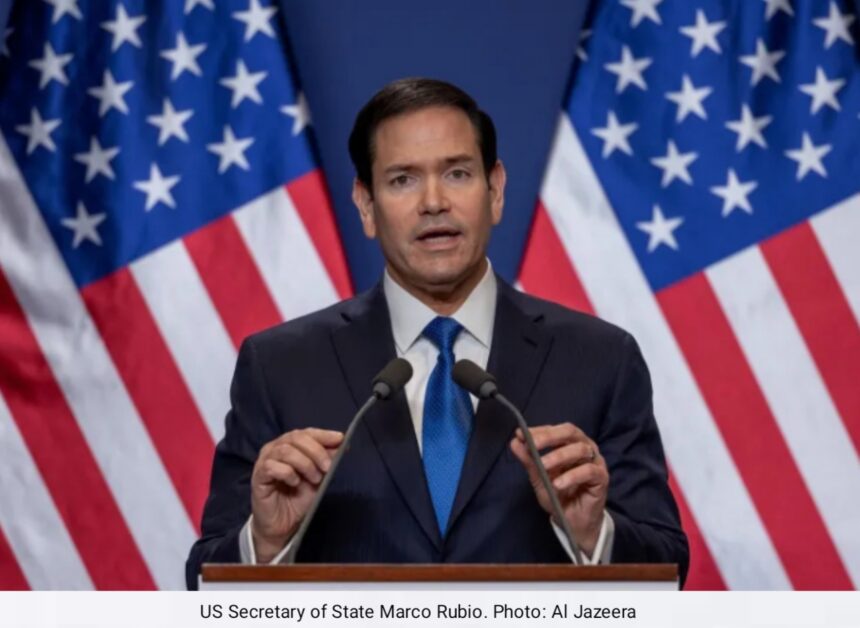
Washington, meanwhile, defended the decision as necessary to prevent the ICC from exercising what it considers illegitimate authority over American citizens. Secretary of State Marco Rubio described the tribunal as a “rogue court” and said the United States would prohibit transactions with the institution, cutting off resources that could otherwise support its operations.
The confrontation raises broader questions about the limits of international judicial authority, the power of national governments to influence global institutions and the future of accountability for alleged atrocities committed during armed conflicts.
A Wider Sanctions Campaign Against the Court
The latest measures represent an escalation in the Trump administration’s campaign against the ICC. Washington has repeatedly objected to the court’s investigations and legal actions involving Israeli officials and its examination of alleged crimes connected to American military operations in Afghanistan.
The United States has previously targeted individual ICC officials through sanctions. The new measures go further by potentially exposing businesses and service providers that work with the institution itself to restrictions.
That distinction matters because a modern international court depends on an extensive network of commercial relationships to function. Banking, insurance, telecommunications, software, digital infrastructure and other services support the administrative and investigative work required to pursue cases across several countries.
Restrictions affecting these services could make it harder for the ICC to maintain normal operations, even if the court’s judges, prosecutors and investigators remain legally entitled to carry out their duties.
US sanctions generally prohibit American companies and individuals from conducting specified transactions with sanctioned entities. Depending on the precise legal terms and applicable exemptions, financial institutions may also limit their relationships with affected organizations to avoid regulatory exposure.
For international businesses, the prospect of violating US sanctions can create serious legal and financial risks. Companies may therefore withdraw from relationships even when the rules allow certain activities, particularly when determining the boundaries of permitted transactions becomes difficult.
This effect, commonly associated with sanctions compliance, could extend the practical reach of Washington’s decision beyond transactions directly involving the United States.
The US Treasury announced an initial six-month grace period and exemptions covering certain activities, including telecommunications, software, pension payments and transactions related to detainees. These provisions appear intended to give the court and its member states time to address American concerns while reducing the immediate disruption caused by the restrictions.
Rubio said the sanctions had been structured to provide an opportunity for the ICC and its members to respond to Washington’s demands. He also indicated that the measures could be adjusted if those demands were not met.
The grace period may offer some immediate flexibility, but it does not remove the uncertainty facing companies and institutions that must decide whether continued cooperation with the ICC could expose them to penalties.
Why Washington Opposes the ICC
The dispute reflects a fundamental disagreement over the relationship between national sovereignty and international criminal justice.
The ICC was established under the Rome Statute, an international treaty adopted in 1998 that entered into force in 2002. Its purpose is to prosecute individuals accused of some of the gravest crimes under international law when the relevant legal conditions are satisfied and national authorities are unable or unwilling genuinely to investigate and prosecute them.
The court is independent of the United Nations, although it cooperates with the organization in various areas. It is based in The Hague, the Netherlands, and operates through its Assembly of States Parties and judicial institutions.
The United States signed the Rome Statute during the administration of President Bill Clinton but never ratified it. Consequently, Washington is not a state party to the treaty and does not accept the court’s authority over Americans simply by virtue of its membership in the international system.
US administrations from both major political parties have expressed concerns about the possibility that an international prosecutor could pursue American service members or officials without the consent of the US government.
The Trump administration has adopted a particularly confrontational approach. It argues that the ICC should not be allowed to exercise jurisdiction over American citizens or elected leaders without US consent.
Rubio reiterated that position in his statement announcing the latest sanctions. He also referred to calls from outside experts for the court to investigate American military personnel, border patrol agents and elected officials. According to the Reuters report, ICC officials have not taken steps toward the prosecutions described in those calls.
The administration’s position reflects a broader concern among some American policymakers that international institutions could undermine national sovereignty by asserting legal authority over citizens of countries that have not accepted their jurisdiction.
However, the ICC’s legal framework is more complicated than a straightforward claim to universal authority. Its jurisdiction depends on the Rome Statute, the nature and location of the alleged crimes, the nationality of the accused in certain circumstances, referrals by the United Nations Security Council and other provisions of international law.
For example, the court may investigate alleged crimes committed on the territory of a state party even when the accused is a national of a country that has not joined the Rome Statute, subject to the applicable jurisdictional requirements. This principle has been central to several disputes involving countries outside the treaty.
The disagreement is therefore about more than whether the United States has ratified the treaty. It also concerns the circumstances under which international criminal jurisdiction can apply to individuals whose governments reject the court’s authority.
Israeli Officials at the Centre of the Dispute
One of Washington’s principal objections concerns ICC arrest warrants issued for Israeli Prime Minister Benjamin Netanyahu and former Israeli defense minister Yoav Gallant in connection with alleged crimes during the Gaza war.
The ICC’s pre-trial judges issued the warrants in November 2024 after considering applications by the prosecutor and the relevant legal materials. The court said there were reasonable grounds to believe that the individuals were responsible for alleged crimes within its jurisdiction. The warrants were judicial measures, not convictions.
Netanyahu and Gallant have rejected the allegations, while Israel has challenged the court’s jurisdiction and the proceedings against its officials.
The distinction between an arrest warrant and a conviction is important. An arrest warrant reflects a judicial determination that the applicable legal threshold has been met. It does not establish guilt beyond a reasonable doubt, which would require a trial and a final judicial determination.
The ICC has also pursued Hamas figures in connection with alleged crimes arising from the October 7, 2023 attacks on Israel and the subsequent conflict. The court’s proceedings have therefore involved allegations concerning more than one side of the conflict.
For Washington, the warrants against Israeli officials have become a major source of friction with the court. The Trump administration views the proceedings as an unacceptable exercise of international judicial authority and has sought to challenge the institution’s ability to act.
For supporters of the ICC, however, the investigation reflects the principle that allegations of serious international crimes should be examined through legal procedures rather than determined solely by political alliances.
The dispute places European governments in a difficult position. Many are close security partners of the United States and maintain strong relations with Israel, while also supporting the Rome Statute and the independence of the ICC.
European governments must therefore consider how to preserve cooperation with Washington while meeting their legal obligations as members of the court’s treaty system.
Afghanistan Investigation Adds Another Layer
The ICC’s examination of alleged crimes connected to Afghanistan has also contributed to tensions with the United States.
The investigation has addressed alleged crimes committed in Afghanistan and certain other relevant locations, including allegations involving members of US armed forces and the Central Intelligence Agency.
The United States has strongly opposed efforts to subject its personnel to ICC proceedings. Washington argues that American authorities possess their own judicial mechanisms and that the court should not interfere with the country’s domestic legal system.
The ICC, however, operates under the principle of complementarity. Under this framework, the court generally acts when national authorities are not genuinely investigating or prosecuting the same conduct, subject to the specific legal requirements of the Rome Statute.
The prosecutor has previously narrowed the scope of the Afghanistan investigation, prioritizing alleged crimes committed by the Taliban and the Islamic State affiliate in Afghanistan. The court has said that allegations concerning US personnel were deprioritized.
This qualification is significant because it demonstrates that the status of an investigation can change without necessarily resolving the underlying legal disagreement between Washington and the court.
The sanctions may now place additional pressure on an institution whose work already involves complex jurisdictional disputes, security concerns and limited resources.
The Court Warns Against Political Interference
The ICC responded to the sanctions by describing them as an attack on the rule of law and the international legal order.
The court called on its 125 member states to defend the institution, arguing that its survival and effectiveness depend on the willingness of governments to support the system they established through the Rome Statute.
Its statement emphasized that the dispute should not be understood as a matter affecting one organization alone. The court argued that the ability of international institutions to operate independently is part of a wider system intended to hold individuals accountable for serious crimes.
ICC Deputy Prosecutor Nazhat Shameem Khan told Reuters that the sanctions were intended to undermine international rule-of-law principles and the work of an independent judicial institution. She said the court would continue its investigations and prosecutions.
The statement signals that the ICC does not intend to suspend its work simply because Washington has imposed restrictions. Nevertheless, continuing judicial proceedings and maintaining the infrastructure needed to support them are separate challenges.
Investigators must collect and preserve evidence, communicate securely with witnesses, cooperate with national authorities, maintain case records and protect sensitive information. Prosecutors must prepare legal submissions, while judges require reliable administrative and technical support.
Sanctions that disrupt financial arrangements, insurance or software services could complicate these activities. Even where exemptions are available, institutions may face delays as they seek confirmation that individual transactions are permitted.
The court’s ability to continue working will therefore depend partly on the practical implementation of the sanctions and the willingness of other governments and service providers to help it maintain essential operations.
Europe Signals Support for the ICC
European officials reacted with concern, emphasizing both the importance of the court and the possibility of further dialogue with Washington.
European Union foreign policy chief Kaja Kallas said the six-month period provided an opportunity for discussions. She also indicated that the European Union had options to ensure the ICC could continue its work.
Belgium’s foreign minister called for the activation of an EU blocking statute to protect the court.
A blocking statute is a legal mechanism designed to limit the effects of certain foreign laws or sanctions within another jurisdiction. Its precise application depends on the relevant legislation, the measures adopted and the circumstances of individual transactions.
If European governments pursue protective measures, they could seek to reduce the pressure on European companies to abandon lawful dealings with the ICC because of US restrictions. The effectiveness of such a response would depend on its legal design, coordination among member states and the willingness of businesses to accept the associated risks.
The European Union’s position is particularly important because all EU member states are parties to the Rome Statute. The Netherlands, where the court is based, is also an EU and NATO member.
Most NATO members are parties to the treaty, with the United States and Turkey standing outside it. This places the dispute within a broader transatlantic relationship that combines close security cooperation with disagreements over international legal authority.
European governments may be reluctant to allow the sanctions to weaken an institution they consider important to international accountability. At the same time, they have strong economic, diplomatic and security relationships with Washington.
Their response will test whether they can protect the ICC without triggering a wider confrontation with the United States.
Why the Six-Month Grace Period Matters
The initial grace period provides a limited opportunity for negotiations and preparations.
During this period, the ICC and its member states may attempt to clarify Washington’s demands, assess which transactions remain permitted and identify alternative arrangements for essential services.
Companies that provide technology, communications, financial services and insurance may also need legal guidance to determine how the sanctions apply to their activities. A lack of clarity could encourage some providers to suspend cooperation even before the restrictions take full effect.
The exemptions announced by the Treasury could reduce the immediate impact in specific areas. Telecommunications and software services are particularly relevant because the court relies on digital systems to manage case files, communicate with investigators and coordinate work across borders.
However, exemptions do not necessarily guarantee that every service required by the court will remain available. Their effectiveness depends on the exact terms, the types of transactions covered and the willingness of providers to continue working with the institution.
The pension and detainee-related exemptions also highlight the possibility that broad sanctions could affect administrative and humanitarian matters unrelated to the political disagreement that prompted them.
For the ICC, the challenge will be to use the available period to protect essential operations and reduce dependence on service providers that may withdraw because of legal or commercial concerns.
For Washington, the grace period creates an opportunity to pursue its stated objectives without immediately imposing the full operational consequences of the sanctions.
Whether the period produces meaningful dialogue or merely delays a deeper confrontation remains uncertain.
The Nobel Peace Prize and the Politics of International Justice
The Nobel Peace Prize awarded to Navi Pillay on October 9 added a notable dimension to the dispute.
Pillay, a South African jurist, served on the ICC Appeals Chamber from 2003 to 2008. The Nobel Committee described the award as support for international judicial institutions at a time when judges and organizations working under international law face political attacks.
Its accompanying statement emphasized that a system capable of holding alleged war criminals accountable and providing justice to victims of abuse is a condition for a peaceful world.
The award does not determine the legality of the ICC’s actions or resolve the dispute over the court’s jurisdiction. The Nobel Committee is not a judicial body, and the prize does not substitute for legal findings by competent courts.
Its timing nevertheless sharpened the contrast between two competing approaches to international accountability.
One approach emphasizes the role of international institutions in ensuring that serious crimes can be investigated even when the individuals accused hold powerful political or military positions.
The other places greater emphasis on national sovereignty, domestic legal systems and the risks of allowing an international tribunal to exercise authority over citizens of states that have not joined its founding treaty.
These positions are not always mutually exclusive. National courts remain central to the prosecution of international crimes, and the ICC was designed to complement rather than replace functioning domestic judicial systems.
The dispute arises when governments disagree over whether international jurisdiction is justified, whether national proceedings are sufficient and how allegations against powerful officials should be handled.
The Nobel award has given renewed visibility to those questions at a moment when the ICC is facing direct pressure from one of the world’s most influential governments.
A Global Court Dependent on International Cooperation
The ICC does not have its own police force. It relies on states to execute arrest warrants, transfer suspects, provide evidence and support investigations.
This dependence on national cooperation is one of the institution’s principal strengths and weaknesses.
Governments that support the court can help it investigate crimes, protect witnesses and bring suspects before judges. Governments that refuse cooperation can make enforcement more difficult, particularly when suspects remain within territories controlled by authorities unwilling to arrest them.
The court’s reach is therefore shaped by law, diplomatic relationships and the willingness of states to comply with their obligations.
The United States sanctions could add a further dimension to this challenge by affecting the commercial infrastructure needed to maintain the institution.
Even if other countries continue to recognize the ICC’s authority, they may need to provide practical support to ensure that the court retains access to banking, insurance, digital systems and other services.
The scale of any disruption will depend on the implementation of the sanctions and the steps taken by the court and its member states.
There is also a broader concern about the precedent that sanctions against an international judicial institution could establish. Other governments may view the measures as evidence that powerful states can use economic pressure to influence institutions investigating conduct involving their nationals or allies.
Supporters of the sanctions may counter that governments should have tools to resist international bodies they believe are exceeding their legal authority.
The disagreement reflects a longstanding tension in international relations: international institutions depend on states for their authority and resources, but their credibility also depends on their ability to act independently when politically sensitive cases arise.
Preparing for Financial and Technological Disruption
The ICC has reportedly spent months preparing for the possibility of sanctions against the institution itself.
According to Reuters, the court has been moving office computers away from Microsoft software toward open-source alternatives and making new arrangements for banking and health insurance.
These preparations suggest that the institution has anticipated the possibility of losing access to some services supplied by companies exposed to US jurisdiction.
Moving to alternative software may reduce dependence on particular providers, but it requires more than installing replacement programs. The court must ensure that its systems remain secure, compatible with existing records and suitable for handling confidential evidence.
Banking arrangements present another challenge. International courts need reliable channels for paying staff, covering operational expenses and supporting activities in multiple jurisdictions. Financial institutions may be cautious about providing services if they fear that doing so could violate sanctions.
Insurance is also relevant to the court’s ability to employ personnel and manage its responsibilities. Restrictions or uncertainty surrounding coverage could increase administrative costs and complicate arrangements for staff working in different countries.
Alternative providers may be available, but switching suppliers can require time, legal review and additional resources. Smaller companies may be particularly reluctant to accept a relationship that could expose them to financial penalties or restrictions on their dealings with US businesses.
The ICC’s preparations could help it withstand some of these pressures. However, the extent to which they can protect the court will depend on the breadth of the restrictions and the support available from member states.
Implications for Victims of International Crimes
The immediate debate concerns the United States, the ICC and the legality of sanctions. Its wider consequences may be felt by victims and communities seeking justice for crimes committed during armed conflicts.
International criminal cases often take years to investigate. Evidence may be scattered across several countries, witnesses may face intimidation, and investigators may need to establish complex chains of responsibility linking individual suspects to alleged crimes.
Disruption to the court’s financial and technological services could add obstacles to that work. Delays in evidence management, communications or administrative support could affect the pace of proceedings, although the scale of any impact cannot yet be determined.
The court’s supporters argue that independent investigations are important because victims may have limited access to effective legal remedies within their own countries. International proceedings can also establish an official judicial record and provide a forum for examining allegations that domestic authorities are unwilling or unable genuinely to address.
At the same time, the ICC cannot resolve every allegation of wrongdoing around the world. Its jurisdiction is limited, its resources are finite and the enforcement of its decisions depends heavily on national cooperation.
The sanctions could therefore influence a wider debate over whether international criminal justice should remain insulated from political pressure and how institutions can maintain their independence when powerful states reject their authority.
What Happens Next?
The immediate focus will be on the implementation of the US measures, the legal meaning of the exemptions and the response of the ICC’s member states.
Washington has indicated that the sanctions are intended to give the court and its members an opportunity to address American concerns. The six-month grace period could provide space for discussions, but no resolution has been announced in the information contained in the October 9 report.
European governments may consider legal and practical steps to protect the court’s operations. Their options will depend on existing laws, the scope of the US restrictions and the extent to which financial and technology providers remain willing to cooperate.
The ICC, meanwhile, is expected to continue its investigations and prosecutions while adapting its administrative arrangements to the new conditions.
Several questions remain unanswered. It is not yet clear how many companies will be affected, whether major service providers will suspend their relationships with the court, or how much additional financial support member states may need to provide.
The long-term consequences will also depend on whether the sanctions remain in place after the grace period, whether Washington modifies its demands and whether European and other governments introduce countermeasures.
A negotiated outcome could reduce the immediate risk of disruption. A prolonged confrontation, however, could deepen divisions between the United States and countries that view the ICC as an important part of the international legal system.
A Test for International Law
The US sanctions against the International Criminal Court mark a significant escalation in a dispute over sovereignty, jurisdiction and accountability.
Washington argues that the tribunal must not be allowed to pursue American citizens or officials without US consent. The ICC maintains that it is an independent judicial institution operating under an international treaty and that its work must continue despite political pressure.
European officials have signaled support for the court while leaving room for dialogue during the six-month grace period. The Nobel Peace Prize awarded to Navi Pillay has added international attention to the debate over the protection of judicial institutions.
The outcome will depend on more than statements from governments and court officials. It will be shaped by the willingness of companies to maintain services, the practical assistance provided by member states and the ability of the ICC to preserve its core operations.
At stake is a central question for the international system: whether a court established to address some of the gravest crimes known to law can continue its work when a powerful country challenges its authority and uses economic measures to exert pressure.
The sanctions do not automatically end the ICC’s investigations or prosecutions. They do, however, create new financial, technological and diplomatic risks for an institution whose effectiveness already depends on cooperation among states.
The coming months will show whether dialogue can prevent a wider confrontation or whether the dispute will become a prolonged test of the relationship between national sovereignty and international justice.
For the ICC and its supporters, the immediate task is to preserve the court’s ability to function. For Washington, the challenge is to pursue its objections without further damaging relations with allies that remain committed to the international legal framework.
The broader consequences will extend beyond The Hague. They will help shape how governments, businesses and international institutions understand the practical limits of judicial independence in a world where legal authority and geopolitical power frequently collide.
Source: Reuters
Email: info@almujaddid24.com