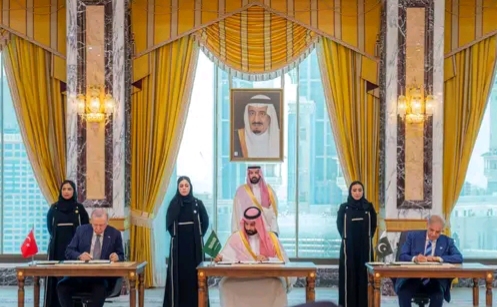
As geopolitical tensions continue to reshape the Middle East and South Asia, a growing number of analysts believe the region is entering a new phase of strategic realignment driven by security concerns, shifting alliances, and intensifying competition among global powers. Against the backdrop of the Israel-Iran confrontation, the war in Gaza, instability in the Red Sea and the Strait of Hormuz, and renewed diplomatic activity by Washington, discussions have increasingly focused on reports of a so-called “Mecca Agreement” that could signal closer strategic coordination among several major Muslim states. While no official text or joint declaration confirming such an agreement has been released, analysts argue that the debate itself reflects a broader reassessment of regional security priorities.
Speaking to Al Jazeera, Imtiaz Gul, Executive Director of the Islamabad-based Center for Research and Security Studies (CRSS), said the growing discussion should be viewed through the wider geopolitical lens of the expansion of the U.S.-backed Abraham Accords. According to Gul, although Pakistan continues to value its relationship with the United States for diplomatic and strategic reasons, policymakers and security experts in Islamabad are increasingly concerned about the long-term regional consequences of an expanding normalization framework between Israel and Arab states.
“The underlying reality,” Gul argued, “is that the aggressive expansion of the Abraham Accords has generated significant anxiety among some of the Muslim world’s major powers.” In his assessment, countries including Pakistan, Saudi Arabia, Türkiye, and Iran are closely monitoring developments that they believe could reshape the regional balance of power for decades to come.
Gul said Pakistan does not currently face a direct military confrontation with Israel. Nevertheless, he noted that sections of the country’s strategic community are evaluating how changes in the Middle East could eventually affect South Asia’s own security environment. He argued that many analysts within Pakistan view the evolving diplomatic landscape not simply as a process of normalization but as part of a broader regional restructuring with potential military, political, and economic implications.
According to Gul’s analysis, one of the principal concerns among critics of the Abraham Accords is the perception that the initiative could further isolate Iran while weakening the political cohesion that has traditionally existed among some Muslim-majority states over the Palestinian issue. He suggested that this perception is encouraging greater discussion about strengthening strategic cooperation, intelligence coordination, defense partnerships, and regional security dialogue among key Muslim countries.
The analyst also recalled diplomatic efforts during U.S. President Donald Trump’s first term, when Washington sought to expand the Abraham Accords by encouraging additional regional partners to join the framework. Gul argued that if similar policies continue in the future, they could intensify geopolitical competition across the Middle East and further accelerate efforts by regional powers to diversify their security partnerships and strategic alliances.
Regional observers note that the broader geopolitical environment has become significantly more complex over the past several years. Ongoing conflicts, disruptions to global energy markets, maritime security challenges, and competition between major international powers have all contributed to an increasingly fluid strategic landscape. In this environment, governments are reassessing traditional alliances while seeking greater strategic flexibility to protect their national interests.
However, it remains important to distinguish between confirmed developments and analytical assessments. Despite widespread discussion in regional media and among geopolitical commentators, there has been no official confirmation from the governments reportedly involved regarding the existence, scope, or objectives of any formal “Mecca Agreement.” As a result, claims that such an arrangement is specifically intended as a coordinated response to the Abraham Accords remain analytical interpretations rather than independently verified facts.
Whether recent diplomatic contacts eventually evolve into a structured regional security framework remains uncertain. What is clear, however, is that the strategic calculations of major Middle Eastern and South Asian powers are increasingly being shaped by a rapidly changing security environment in which military deterrence, energy security, maritime trade routes, and geopolitical influence have become deeply interconnected. As regional rivalries continue to evolve, any future alignment among key Muslim states could have significant implications not only for the Middle East but also for the wider international order.
Is Donald Trump’s expansion of the Abraham Accords behind the Mecca Defense Agreement?