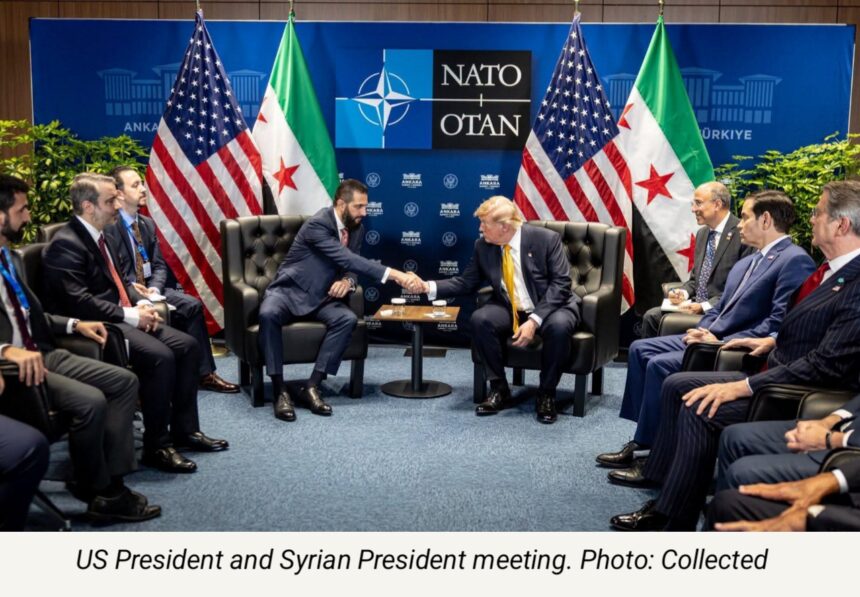
A high-profile meeting on the sidelines of the NATO Summit brought together Syrian transitional leader Ahmed al-Sharaa, widely known during the Syrian conflict as Abu Mohammad al-Julani, and U.S. President Donald Trump, marking another significant step in the gradual normalization of relations between Washington and Damascus. During the meeting, Trump reportedly pledged to support the removal of Syria from the United States’ list of State Sponsors of Terrorism, a move widely viewed as a major diplomatic breakthrough for the new Syrian leadership. Following the talks, Syria’s Foreign Minister publicly thanked President Trump and referred to U.S. Secretary of State Marco Rubio as “my friend” and Ambassador Tom Barrack as “dear ambassador,” signaling Damascus’ willingness to deepen engagement with Washington. However, the meeting also highlighted a striking political and symbolic contrast. Sitting beside Ahmed al-Sharaa, Trump reiterated that no previous American president had done more for Israel than he had, proudly citing his recognition of Jerusalem as Israel’s capital and his administration’s recognition of Israeli sovereignty over the Golan Heights. The symbolism drew attention because al-Sharaa’s wartime alias, “al-Julani,” is historically associated with the Golan region, reflecting family or geographic origins linked to the territory. As Trump praised one of the most controversial foreign policy decisions affecting Syrian territorial claims, al-Sharaa remained publicly silent. Political observers argue that the moment underscored the difficult balance facing Syria’s new leadership: pursuing international legitimacy and improved relations with the United States while avoiding direct confrontation over longstanding national claims. Analysts say the encounter illustrates both the emerging diplomatic opening between Washington and Damascus and the continuing reality that U.S. policy regarding Jerusalem and the Golan Heights remains fundamentally unchanged.
Signs of change in Washington-Damascus relations, old position on Golan issue maintained