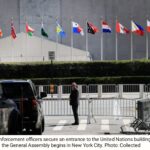
Israeli Prime Minister Benjamin Netanyahu has vowed to travel to New York for the upcoming United Nations General Assembly despite an arrest warrant issued by the International Criminal Court (ICC) and growing political criticism surrounding his planned visit. The announcement has intensified an international debate over the authority of the ICC, diplomatic immunity, and the legal responsibilities of states when hosting leaders accused of serious international crimes.
Speaking in a public interview, Netanyahu rejected the ICC’s arrest warrant as “politically motivated” and without legal legitimacy, reaffirming Israel’s long-standing position that the court has no jurisdiction over the country. He insisted that international legal pressure would not prevent him from representing Israel at the United Nations, arguing that his government remains committed to defending the country’s security and national interests.
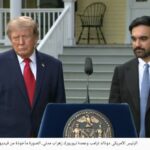
The controversy has been further fuelled by comments from New York City Mayor Zohran Mamdani, who has criticised Israel’s conduct during the Gaza conflict and argued that leaders accused of war crimes should be held accountable under international law. However, Mamdani acknowledged that New York City has no legal authority to enforce an ICC arrest warrant against a visiting foreign leader, noting that such matters fall under the jurisdiction of the U.S. federal government.
The ICC issued arrest warrants related to alleged war crimes and crimes against humanity connected to the Gaza conflict, a move that marked one of the court’s most consequential actions involving the leader of a close U.S. ally. Israel has firmly rejected the allegations, maintaining that its military operations were conducted in self-defence and in accordance with international humanitarian law. Israeli officials have repeatedly accused the ICC of political bias and exceeding its legal authority.
The United States, which is not a party to the Rome Statute that established the ICC, has consistently challenged the court’s jurisdiction over Israeli officials. President Donald Trump has publicly indicated that Netanyahu would not face arrest while visiting the United States, reinforcing Washington’s longstanding support for Israel and its opposition to what it describes as politically motivated legal actions against Israeli leaders.
Netanyahu’s planned visit comes as international concern continues to grow over the humanitarian situation in Gaza. United Nations agencies and humanitarian organisations have repeatedly warned of severe shortages of food, medicine and essential services, while calling for expanded humanitarian access and greater protection for civilians. Israel has maintained that its military campaign targets Hamas and other armed groups, accusing them of operating from densely populated civilian areas, an allegation Hamas denies.
Legal experts say the dispute illustrates the increasingly complex relationship between international criminal justice and global diplomacy. While ICC member states are generally required to cooperate with the court’s arrest warrants, the United States is under no legal obligation to enforce them because it is not a member of the court. Nevertheless, Netanyahu’s decision to travel despite the warrant is expected to draw significant international attention and could become a defining diplomatic issue during the UN General Assembly.
Diplomats expect the controversy to feature prominently in discussions on the sidelines of the UN gathering, where leaders are also scheduled to address the ongoing conflicts in the Middle East, humanitarian relief efforts, regional security and prospects for renewed ceasefire negotiations. Human rights organisations are expected to renew calls for accountability, while Israel’s allies are likely to continue defending the country’s right to protect its security against militant threats.
The unfolding dispute underscores the growing tension between international legal institutions and geopolitical realities. Whether Netanyahu’s visit proceeds without incident or sparks further diplomatic confrontation, it is likely to become one of the most closely watched episodes at this year’s United Nations General Assembly, reflecting broader divisions within the international community over the Gaza war, the authority of the ICC and the future of international accountability.
Netanyahu’s visit to New York with ICC warrant in mind sparks diplomatic tensions, global discussions