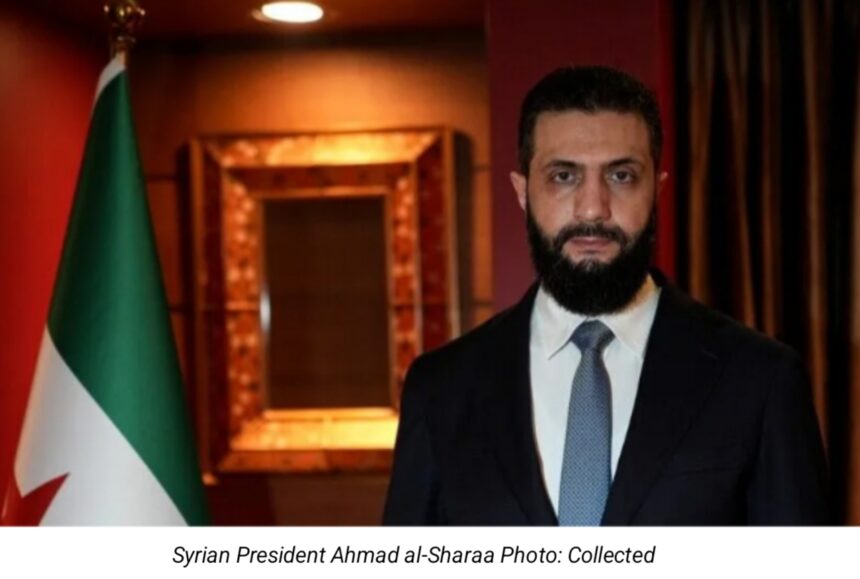
Syria is actively pursuing a security agreement with Israel in a move that could mark a significant shift in the geopolitical landscape of the Middle East. Syrian President Ahmed al-Sharaa said his government is working with the participation of several countries to reach a security arrangement with Israel, signalling an effort to reduce tensions and establish a more stable regional security framework after years of conflict and hostility.
Speaking about the initiative, President al-Sharaa said the proposed agreement is aimed at preventing further military escalation, strengthening border security, and creating mechanisms to avoid future confrontations between the two sides. While he confirmed that several regional and international partners are involved in facilitating the talks, he did not disclose the identities of those countries or provide a timeline for concluding the negotiations.
The announcement comes at a time of heightened diplomatic activity across the Middle East, where several governments have intensified efforts to contain regional instability through dialogue and confidence-building measures. Analysts say any formal security agreement between Syria and Israel would represent one of the most consequential diplomatic developments in decades, potentially reshaping long-standing security dynamics along their shared frontier.
Despite the diplomatic momentum, significant challenges remain. Key issues—including the status of the Israeli-occupied Golan Heights, border security, the presence of armed groups, and broader regional rivalries—are expected to complicate negotiations. Experts caution that while confidence-building measures may be achievable in the near term, reaching a comprehensive and durable agreement will require sustained political commitment from all parties involved.
Israeli officials have not immediately provided a detailed public response to President al-Sharaa’s remarks. Observers believe that if negotiations advance successfully, the agreement could contribute to reducing military tensions, improving regional stability, and opening the door to broader diplomatic engagement across the Middle East. For now, international attention remains focused on whether the ongoing discussions can evolve into a formal agreement capable of delivering lasting security and confidence between the two neighbouring states.
New turn in Middle East politics: Syrian President Ahmed al-Sarrah on path to agreement with Israel