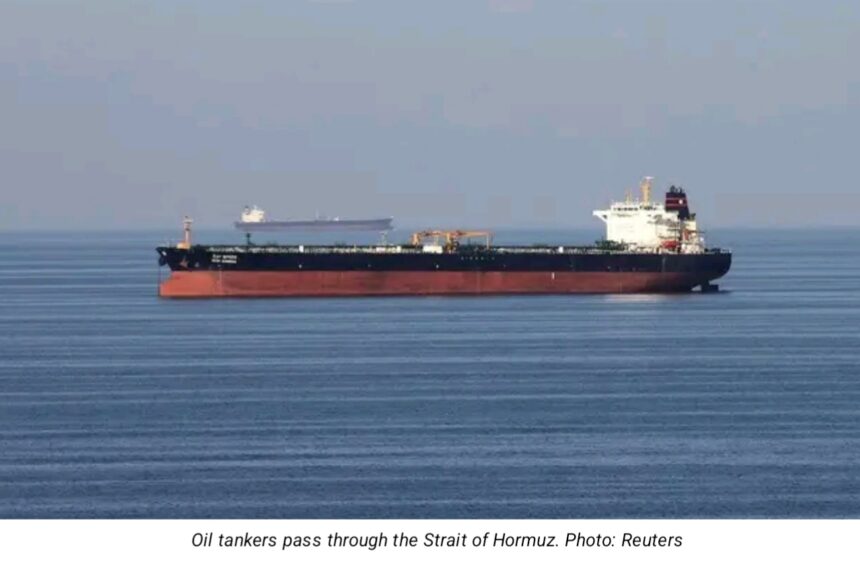
proposed arrangement that would grant Iran greater authority over vessels entering the Persian Gulf through the Strait of Hormuz is encountering significant resistance from the global shipping industry, with maritime executives, insurers and trade experts warning that the plan could prove extremely difficult to implement under existing international sanctions and insurance regulations.
The Strait of Hormuz remains one of the world’s most strategically important maritime chokepoints, serving as a vital gateway for global energy supplies and international trade. Before the outbreak of large-scale hostilities earlier this year, roughly one-fifth of the world’s seaborne oil exports passed through the narrow waterway, making uninterrupted navigation essential for global energy security and economic stability.
According to sources familiar with the ongoing discussions, the latest proposal under consideration would allow Iranian authorities to exercise greater oversight over inbound commercial shipping entering the Gulf. Outbound vessels would continue to use designated navigation routes between Iranian and Omani waters, while exit procedures would reportedly involve coordination with Omani authorities after notification to Iran.
Although supporters argue that the proposal could contribute to maritime security and conflict management, shipping organizations fear that compulsory transit payments or administrative controls would fundamentally alter the long-standing legal framework governing one of the world’s busiest international waterways.
Leading international shipping associations have emphasized that commercial vessels must retain the ability to navigate international sea lanes safely, predictably and without unnecessary restrictions. Maritime groups argue that introducing mandatory transit charges would effectively establish a toll system in one of the world’s most important international straits, potentially creating a precedent that could reshape global maritime law beyond the Gulf region.
Industry sources say Iran has discussed transit fees reportedly ranging between five and seven percent of the cargo’s declared value, while Oman has considered a significantly lower fee structure. The United States, however, continues to oppose the introduction of any mandatory transit charges, maintaining that international navigation through the Strait of Hormuz should remain free from additional financial obligations.
Beyond the legal debate, commercial shipping companies face an even greater challenge arising from U.S. sanctions. Washington has imposed sanctions on the Iranian authority established to administer the waterway, creating substantial compliance risks for international shipping firms, oil traders and financial institutions.
Maritime lawyers warn that any payments made to sanctioned Iranian entities could expose shipping companies to severe legal and financial consequences, including potential asset freezes, restrictions on financial transactions and broader sanctions enforcement measures. As a result, many operators may find themselves unable to comply with Iranian requirements without simultaneously risking violations of U.S. sanctions.
Insurance has emerged as another major obstacle.
The London insurance market has recently introduced a revised war-risk clause that could terminate certain insurance protections if shipowners pay transit fees or similar charges for passage through the Strait of Hormuz. Since vessels operating in the region already require specialized war-risk coverage because of heightened military tensions, the new insurance language has added another layer of uncertainty for commercial operators.
Marine insurance specialists note that shipowners could effectively face an impossible choice. Refusing to pay any required transit fee could complicate passage through the waterway, while making such a payment could jeopardize essential insurance coverage needed for voyages through one of the world’s highest-risk maritime regions.
International maritime experts also stress that the existing traffic separation system governing navigation in the Strait of Hormuz has operated for decades under internationally recognized arrangements designed to ensure the free and non-discriminatory movement of commercial shipping. Any unilateral changes to that system, they argue, could trigger wider diplomatic and legal disputes involving regional states, major energy consumers and international maritime organizations.
The debate extends well beyond regional politics. Any disruption to shipping through Hormuz has the potential to affect global oil prices, liquefied natural gas exports, insurance premiums, freight costs and worldwide supply chains. Even limited administrative delays or additional compliance requirements could increase transportation costs for energy producers and import-dependent economies across Asia, Europe and beyond.
Energy market analysts believe prolonged uncertainty surrounding navigation rules could encourage shipping companies to reassess operational risks, resulting in higher freight rates and increased costs for global consumers. Importers of crude oil and refined petroleum products would likely bear much of the financial burden if transit through the strategic waterway becomes more expensive or administratively complex.
Diplomatic efforts involving regional governments continue as negotiators seek a framework capable of balancing security concerns with international legal obligations and commercial realities. However, shipping executives remain cautious, arguing that any arrangement must provide legal certainty, preserve freedom of navigation and ensure that commercial operators are not forced to choose between complying with one country’s transit requirements and violating another country’s sanctions regime.
For now, the proposed Hormuz transit arrangement remains under discussion, but industry observers believe substantial legal, diplomatic and commercial obstacles must be resolved before any new system governing one of the world’s most critical maritime corridors could become operational.
New Chapter of the Hormuz Crisis: The Three-Pronged Challenge of Shipping, Insurance, and International Law