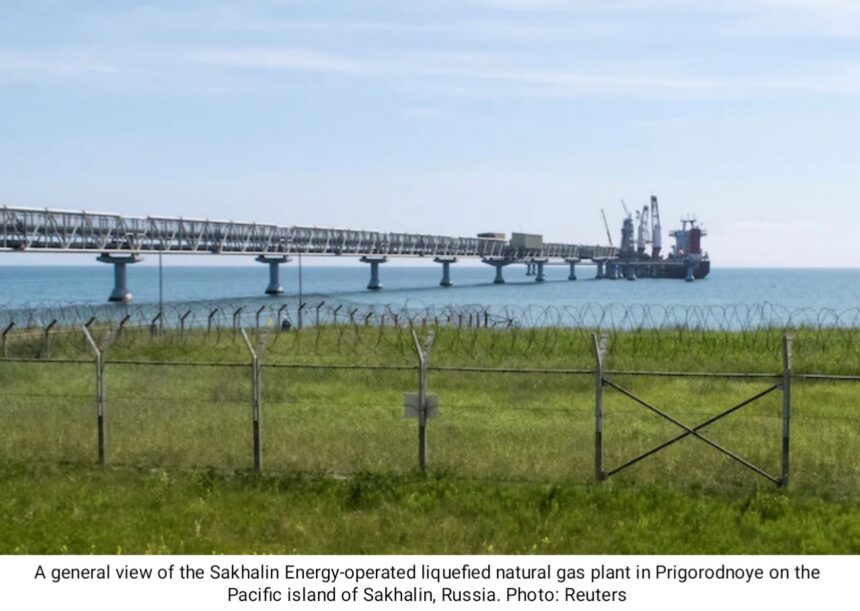
A proposed energy partnership involving an American company, Russian natural gas technology and Alaska’s vast gas reserves has emerged as a significant element in discussions between officials linked to the United States and Russia, raising questions about the intersection of energy investment, geopolitical strategy and diplomatic efforts to end the war in Ukraine. According to an investigation published by The New York Times, interviews and documents indicate that a Russian energy giant secretly financed a U.S. company pursuing an ambitious project designed to extract natural gas in Alaska, liquefy it and export the resulting liquefied natural gas (LNG) to international markets. The proposal has reportedly attracted interest from both the Kremlin and the White House, with Russian President Vladimir Putin discussing the plan with U.S. President Donald Trump’s peace envoys, Steve Witkoff and Jared Kushner, during talks last month, according to people familiar with the negotiations cited by the newspaper.
Alaska Gas Project Connects Energy Ambitions With Geopolitics
The proposed venture, known as the Polar LNG plan, seeks to develop natural gas resources in northern Alaska, where substantial reserves could potentially support large-scale production and exports. Under the reported arrangement, an American energy company would acquire Russian technology to access the gas, process it into LNG and ship it to overseas customers, including countries aligned with Washington. If implemented, the project could become part of a broader effort to expand U.S. energy exports and strengthen the country’s position in international energy markets.
The plan appears to fit the Trump administration’s stated ambition to promote American energy production and exports under its global energy dominance agenda. Alaska possesses considerable natural gas resources, but turning those reserves into an economically viable export industry would require substantial infrastructure, investment, specialised technology and access to international shipping routes and customers. The proposed use of Russian technology could therefore offer a potential route to developing the project, although its commercial viability, technical requirements and financing arrangements would need to be assessed in detail.
The reported Russian financing adds another layer of complexity. While the venture could be presented publicly as an American energy development initiative, the involvement of a Russian energy company behind the scenes could give Moscow a financial interest in a project intended to support U.S. energy exports. The extent of that involvement, the precise financing structure and the potential ownership or commercial rights associated with the arrangement remain important questions for further scrutiny.
Kremlin and White House Interests Converge
Energy cooperation has increasingly featured in discussions about the future of U.S.-Russia relations, particularly as the two governments explore possible pathways towards ending the war in Ukraine. According to the reporting by The New York Times, the Alaska gas proposal has been discussed as part of a wider set of potential energy agreements that White House officials believe could help improve relations with Moscow and create conditions for progress in peace negotiations.
Such an approach would represent a strategic calculation in which commercial opportunities could be used to create incentives for diplomatic engagement. Supporters of economic cooperation might argue that mutually beneficial projects can establish channels of communication, encourage long-term commercial relationships and reduce the incentive for confrontation. However, the relationship between investment and diplomacy is rarely straightforward, particularly when the countries involved remain divided over security, territorial disputes and the consequences of a prolonged war.
For Moscow, a potential role in an Alaska-based LNG venture could offer access to commercial opportunities linked to a major energy-exporting market. For Washington, cooperation involving Russian technology or investment could potentially accelerate the development of energy resources and strengthen the economic case for expanding LNG exports. Nevertheless, the political implications would depend heavily on the conditions attached to any agreement, the degree of Russian participation and whether the project would conflict with existing sanctions or other restrictions.
The reported discussions also raise a broader question about whether economic cooperation can meaningfully contribute to ending the war in Ukraine or whether commercial negotiations risk advancing independently of the underlying security issues. Energy deals can provide financial incentives, but they cannot by themselves resolve disagreements over sovereignty, territorial control, military security or the future political order in Europe.
Questions Over Transparency and Financial Disclosure
The reported secret financing is likely to attract attention because the project combines American commercial interests with financial support from a Russian energy company at a time when relations between Washington and Moscow remain politically sensitive. Transparency over funding, ownership and contractual obligations would be essential for assessing whether the arrangement serves the interests of the companies involved, the U.S. government or other parties.
If a Russian company provided capital to an American firm while negotiations were taking place between senior political representatives, investigators and policymakers would have reason to examine the structure of the transaction. Relevant questions would include whether the financing was provided directly or through intermediaries, what financial or technological rights the Russian company expected in return, and whether any government officials were aware of the arrangements before they became part of diplomatic discussions.
The available reporting does not, by itself, establish that the financing was illegal or that the project violated U.S. law. Those conclusions would require evidence about the relevant contracts, corporate relationships, applicable regulations and any restrictions governing the parties involved. However, undisclosed financial relationships can create legitimate concerns about conflicts of interest, political influence and the ability of public authorities to evaluate the strategic consequences of major infrastructure projects.
The distinction between a commercially legitimate investment and a politically sensitive arrangement is particularly important when the project could affect national energy policy and foreign relations. Clear disclosure and independent scrutiny would help establish the nature of the financing and determine whether the agreement complies with applicable legal and regulatory requirements.
Alaska’s LNG Potential and the Challenges Ahead
Alaska has long been viewed as a potential source of additional natural gas supplies for domestic consumption and international export markets. Developing an LNG industry in the state could create opportunities for energy producers, construction companies, shipping operators and other businesses. It could also strengthen links between North American gas production and overseas markets seeking alternatives to existing suppliers.
Yet the scale of the challenge should not be underestimated. Large LNG projects typically require expensive processing facilities, pipelines, transport infrastructure, specialised vessels and long-term commercial agreements with buyers. In Alaska, the remote location of major gas resources, harsh weather conditions and the distance between production sites and export terminals can add to construction and operating costs.
Financing is another central issue. Investors must consider whether expected future revenues will justify the upfront expenditure and whether the project can compete with LNG supplies from established exporters. Changes in international gas prices, demand, interest rates, construction costs and government policy could all influence the project’s prospects.
The proposed use of Russian technology would also require a detailed assessment of technical compatibility, maintenance arrangements, intellectual property rights and the availability of specialised equipment. Depending on the technology involved and the companies supplying it, regulatory restrictions and geopolitical tensions could affect procurement, financing and future operations.
For these reasons, political support alone would not guarantee that the Alaska project could move from negotiations to construction. A final investment decision would require a credible commercial model, dependable funding, regulatory approvals and clear arrangements governing technology, ownership and exports.
Energy Security and the Global LNG Market
The project is also relevant to the wider competition over global natural gas supplies. LNG has become an important part of international energy trade because it allows natural gas to be transported by sea to markets that are not connected to producers by pipelines. Importing countries can use LNG to diversify their supply sources, while exporters can reach a broader range of customers.
An expanded Alaska export industry could potentially contribute additional supplies to international markets, although its impact would depend on production capacity, completion timelines, shipping costs and the availability of competing sources. American LNG exports already form part of Washington’s wider energy and trade strategy, while countries in Europe and Asia continue to assess how to balance affordability, supply reliability and environmental commitments.
The reported involvement of a Russian energy company introduces a contradiction that policymakers would need to address. A project intended to reinforce American energy exports could also create a financial or technological role for a Russian company. Whether that arrangement would strengthen U.S. energy security or create new dependencies would depend on the specific terms of cooperation.
The question is not simply whether Russian technology could help unlock Alaska’s gas resources. It is also whether the United States could maintain sufficient control over critical infrastructure, equipment, intellectual property and supply chains to avoid creating vulnerabilities that might become significant during a future diplomatic crisis.
The Ukraine War Remains Central to the Political Calculation
The reported discussions take place against the backdrop of the war in Ukraine, which has reshaped relations between Russia and Western governments and placed economic cooperation under intense political scrutiny. Any attempt to establish new commercial ties between Washington and Moscow is likely to be examined in light of the broader negotiations over the conflict and the conditions under which restrictions on Russian economic activity might change.
For the United States, negotiations over energy projects could provide an additional channel for engagement with Russia. However, policymakers would need to distinguish between commercial arrangements that produce tangible benefits and agreements that could weaken negotiating leverage without securing meaningful progress towards peace.
Ukraine and its international partners would also have an interest in understanding whether proposed U.S.-Russia economic agreements are connected to the terms of any future settlement. Energy cooperation that proceeds without clear diplomatic progress could generate debate over whether commercial incentives are helping to resolve the conflict or simply creating new interests that complicate the negotiations.
At the same time, the existence of discussions does not mean that an agreement has been finalised or that the project will necessarily be implemented. Diplomatic proposals can change substantially during negotiations, and large energy developments frequently encounter financial, technical and political obstacles before construction begins.
The details of the reported financing, the status of the technology arrangements and the extent of any commitments made by the companies involved will therefore be important in determining whether the plan represents a serious commercial undertaking or remains an early-stage proposal.
What Happens Next?
The future of the Polar LNG proposal will depend on several unresolved issues, including the financial structure of the venture, the availability of technology, the cost of developing Alaska’s gas resources and the regulatory conditions governing cooperation with Russian companies. The political context will also matter, particularly if the proposal continues to feature in discussions aimed at improving U.S.-Russia relations and ending the war in Ukraine.
Greater transparency about the reported financing would help clarify the commercial interests involved and allow policymakers to assess potential legal, economic and national security implications. Any eventual agreement would need to establish the rights and responsibilities of the companies involved, the terms under which technology could be transferred and the safeguards required to protect critical infrastructure.
For now, the reported proposal illustrates how energy investment can become intertwined with international diplomacy. Alaska’s natural gas resources offer a potential commercial opportunity, while Russian technology and financing could introduce both practical possibilities and political complications. Whether the project advances will depend on the ability of the parties to reconcile those interests with commercial realities, legal requirements and the wider consequences of the war in Ukraine.
The central issue is therefore larger than the development of a single LNG project. It concerns how governments balance energy ambitions, foreign investment and national security when pursuing diplomatic engagement with a strategic rival. The outcome could influence not only the future of Alaska’s gas industry but also the broader debate over the role of economic cooperation in shaping relations between Washington and Moscow.
Source: The New York Times,