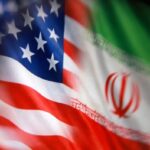
The conflict between Iran and the United States has entered a dangerous new phase after Iranian President Masoud Pezeshkian declared that the Islamic Republic is now engaged in a “full-scale war” with Washington. His remarks came as the United States intensified military operations across Iran, launching fresh strikes on multiple locations, including a city that hosts one of the country’s key nuclear power facilities. The developments have significantly heightened fears of a broader regional conflict, raising concerns over Middle East stability, global energy security, and the risk of further military escalation.
Speaking amid the expanding hostilities, President Pezeshkian accused the United States of waging direct war against Iran and vowed that Tehran would respond with determination to defend its sovereignty and national security. He said Iran would not yield to military pressure or foreign intervention, emphasizing that the country’s armed forces and government were prepared for a prolonged confrontation if necessary. Iranian officials described the latest wave of U.S. attacks as a serious escalation that could push the region closer to a wider conflict.
According to U.S. officials, the strikes were aimed at degrading Iran’s military capabilities by targeting strategic infrastructure, missile-related facilities, command centers, and other security assets. Iranian authorities, however, argued that the attacks extended beyond military objectives and endangered civilian infrastructure, particularly areas surrounding a major nuclear power plant. Although no immediate reports indicated damage to the nuclear facility itself, the proximity of military operations to sensitive nuclear infrastructure has triggered renewed international concern over the possibility of a catastrophic accident or environmental consequences.
Iran’s Islamic Revolutionary Guard Corps (IRGC) said it had responded by expanding military operations against what it described as U.S. and allied interests across the region. Iranian state media reported missile and drone attacks targeting strategic locations linked to American forces and their regional partners. Regional governments have responded by tightening security measures, increasing air defense readiness, and reinforcing surveillance across key military and civilian installations as fears of further retaliatory attacks continue to grow.
The rapidly deteriorating security situation has also begun to affect global energy markets. Rising tensions around the Strait of Hormuz—through which a significant share of the world’s oil exports passes—have renewed concerns about possible disruptions to international energy supplies. Energy analysts warn that any prolonged military confrontation or restrictions on maritime traffic could drive oil prices higher, increase shipping costs, and create fresh economic uncertainty for energy-importing nations across Europe and Asia.
The international community has reacted with growing alarm. The United Nations, the European Union, and several regional governments have urged both Washington and Tehran to exercise maximum restraint and return to diplomatic engagement before the conflict spirals further out of control. Analysts warn that continued military exchanges could draw additional regional actors into the crisis, transforming a bilateral confrontation into a broader Middle East conflict with far-reaching geopolitical and economic consequences.
Security experts say the latest escalation marks one of the most dangerous moments in U.S.-Iran relations in recent years. With both sides signaling their determination to continue military operations and neither indicating a willingness to step back, concerns are mounting that the conflict could expand beyond its current scope. As diplomatic efforts struggle to gain momentum, the region remains on high alert, while governments around the world closely monitor developments that could reshape the security landscape of the Middle East and the global economy.
Iran declares ‘full-scale war with the United States’, US attack on areas near nuclear power plants, new crisis in the Middle East