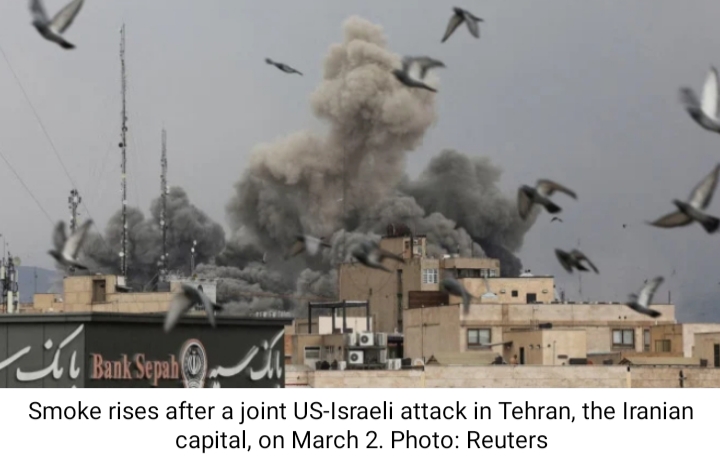
United Nations humanitarian chief Tom Fletcher has stated that Donald Trump is spending around $2 billion per week on what he described as a “reckless” war against Iran, arguing that such an amount could instead save the lives of more than 87 million people worldwide; speaking on Monday (April 20) at Chatham House in London, he warned that rhetoric about bombing Iran “back to the Stone Age” is becoming dangerously normalized, encouraging authoritarian leaders globally to adopt similar threats and destructive tactics that often target civilians and infrastructure; the former British diplomat also criticized domestic politics in United Kingdom, saying prolonged political divisions have pushed the country into a defensive stance and weakened its claim to global leadership due to deep cuts in foreign aid; Fletcher highlighted that UN humanitarian operations are currently facing a severe funding crisis, with his office’s budget reduced by nearly half due to declining international contributions and rising defense spending; he added that the economic consequences of the Iran conflict are spreading globally, with food and energy prices rising close to 20 percent, particularly affecting sub-Saharan and East African nations and pushing millions toward extreme poverty; according to him, while approximately $2 billion is being spent daily on the conflict, his emergency humanitarian plan aimed at saving 87 million lives required a total of $23 billion—an amount equivalent to less than two weeks of war spending—yet a major funding gap remains; Fletcher further described relations between the UN and the Trump administration as a “rollercoaster,” noting he has partly convinced them that the UN is not merely an ineffective bureaucracy; he contrasted governance with real estate practices, explaining that while state leadership values stability, systems, and procedures, some political actors prioritize uncertainty and rapid deal-making; he concluded by saying that if Trump genuinely succeeds in ending multiple wars, he could be considered for a Nobel Peace Prize, but emphasized that real outcomes—not rhetoric—are what ultimately matter.
US spending on Iran war ‘reckless’, could have saved 87 million lives: UN