
Diplomatic efforts between the United States and Iran have entered a difficult and uncertain phase, with the future of the Strait of Hormuz, Iran’s nuclear programme and the possibility of ending the ongoing conflict all tied together in a complicated negotiating process. Indirect contacts involving Qatar and Pakistan have continued around the United Nations General Assembly in New York, but Washington and Tehran remain divided over what should happen first and how commitments should be implemented.
At the centre of the latest diplomatic effort is an Iranian seven-day proposal under which Tehran would reopen the Strait of Hormuz and restore normal maritime traffic if Washington takes a series of steps, including lifting its naval blockade, easing sanctions and releasing frozen Iranian assets. Iran has said that once these conditions are addressed, broader negotiations, including discussions over its nuclear programme, could resume. Reuters reported on September 30 that Iran had received a US response to the proposal through Qatari mediators, although the details of Washington’s response were not immediately disclosed. The main disagreement at that stage was reportedly about the sequencing of the proposed steps.
The developments are important because the Strait of Hormuz is one of the world’s most strategically significant maritime routes. Any prolonged disruption affects oil and gas shipments, shipping costs and energy markets far beyond the Gulf. The diplomatic dispute is therefore not simply a bilateral disagreement between Washington and Tehran. Its consequences extend across the Middle East and into the wider global economy.
The seven-day proposal
Iranian Foreign Minister Abbas Araghchi presented the basic outline of Tehran’s seven-day proposal during the United Nations General Assembly in New York in late September. According to Reuters, Iran proposed reopening the Strait of Hormuz and restoring normal maritime passage if Washington accepted a set of conditions. Araghchi said the timetable could begin once the United States accepted the proposal.
Al Jazeera reported that the Iranian proposal was based partly on a memorandum of understanding reached between Iran and the United States on June 17. Under that earlier arrangement, Iran had agreed to allow shipping through the strait for a defined period while broader negotiations took place. The new proposal sought to compress the process into seven days and alter the order in which the commitments would be carried out.
The Iranian position, as described by Araghchi, was that several US measures would need to come first. These included ending the naval blockade around Iranian ports, lifting or easing sanctions affecting Iran’s oil exports and releasing frozen Iranian funds. Iran also linked the proposal to a broader ceasefire framework.
After those steps, Tehran said the Strait of Hormuz could be reopened and wider negotiations could begin. Those negotiations would include the nuclear issue and other elements of a possible agreement to end the conflict.
The proposal therefore reflects a sequencing problem. Iran wants confidence-building measures before entering a wider negotiation. The United States has placed greater emphasis on addressing Iran’s nuclear programme as part of any comprehensive settlement.
Why the sequence matters
The disagreement over sequence is more than a technical negotiating issue. It reflects the deep lack of trust between the two governments.
Iran argues that previous diplomatic commitments were followed by military action and sanctions, making it unwilling to make major concessions before receiving concrete guarantees. Iranian President Masoud Pezeshkian told Al Jazeera that Tehran no longer trusted Washington because previous negotiations had been followed by attacks and sanctions.
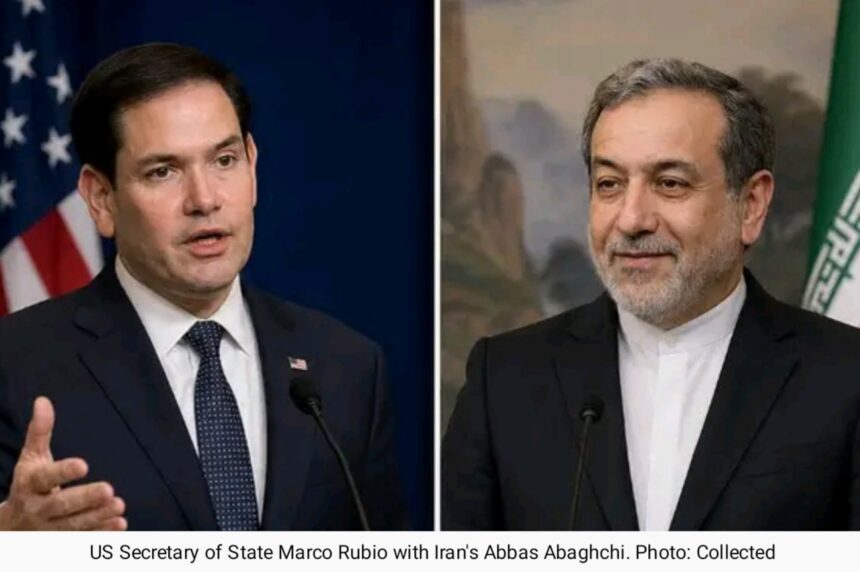
Washington, meanwhile, has stressed that Iran’s nuclear programme cannot be separated from a broader settlement. US Secretary of State Marco Rubio said in remarks in New York on September 23 that the central issue for the administration was preventing Iran from obtaining a nuclear weapon.
An American official cited by Al Jazeera said indirect discussions had been positive and constructive but maintained that there would be no agreement unless Iran’s nuclear programme was addressed. The official also said Washington was prepared to discuss sanctions relief and the release of frozen Iranian funds in connection with progress on nuclear issues.
This leaves the two sides facing a familiar diplomatic problem: each wants evidence that the other will honour its commitments before making its own major move.
Qatar and Pakistan’s role
Because Washington and Tehran have limited direct diplomatic contact, intermediaries have become central to the process.
Qatar has been particularly active in carrying messages between the two governments. Iranian officials have also described Pakistan as part of the mediation channel. The two countries have played different but complementary roles in relaying proposals and attempting to narrow differences.
During the UN General Assembly, Qatari mediators met with Araghchi in New York. The Iranian foreign minister said the discussions focused on finding ways to meet Iran’s conditions for reopening the Strait of Hormuz. He said the Qatari side would communicate ideas to Washington before delivering the American response back to Tehran.
The importance of Qatar’s role became clearer after Iran announced that it had received an official US response through Qatari intermediaries. Reuters reported on September 30 that the response was being reviewed by Iranian officials and that Qatar was continuing its efforts to bridge the remaining differences.
Pakistan has also been involved in carrying messages between the two sides. Tehran’s reliance on third-party channels allows communication to continue even when direct political engagement remains difficult.
The Strait of Hormuz as a bargaining issue
The Strait of Hormuz is central to the current dispute because of its importance to global energy transportation.
The waterway connects the Persian Gulf with the Gulf of Oman and the Arabian Sea. Large volumes of oil and liquefied natural gas normally pass through the route, making any disruption a major concern for energy-importing countries.
The current crisis has already affected energy markets. A Reuters survey published on September 30 found that analysts had raised their forecasts for 2026 oil prices because of prolonged disruption in Gulf exports. The survey put the expected average Brent crude price for the year at $89.05 per barrel, while noting that shipping through the region remained impaired.
The consequences extend beyond crude oil. Higher shipping costs, insurance expenses and disruptions to energy supplies can affect fuel prices, transportation and inflation in countries far from the Middle East.
For Iran, the strait is also a strategic instrument. Tehran has repeatedly connected the reopening of the waterway with the lifting of restrictions imposed by Washington. For the United States, maintaining freedom of navigation through the waterway is a major security and economic concern.
That makes the strait both a security issue and a negotiating tool.
Washington’s position
The Trump administration has publicly signalled that it wants a broader agreement rather than a limited arrangement focused only on maritime traffic.
US officials have repeatedly connected the diplomatic process with Iran’s nuclear programme. Rubio’s comments during the UN General Assembly reflected that position, with Washington presenting the nuclear issue as a central element of any settlement.
President Donald Trump also rejected Iran’s proposal publicly before the latest response was delivered through Qatar. Reuters reported that Trump dismissed the Iranian plan, while Iranian officials continued to say they were waiting for Washington’s formal response through the mediator.
This apparent contradiction illustrates the difference between public political messaging and indirect diplomatic communication. Even after Trump publicly rejected the Iranian proposal, the mediation channel remained active and further discussions took place.
The administration has also maintained economic pressure on Tehran. AP reported that the United States announced additional sanctions targeting elements of Iran’s military supply chain while diplomatic efforts were continuing.
Tehran’s position
Iran has presented the seven-day plan as a possible route toward de-escalation, but Tehran has also maintained that the conditions for reopening the strait must be addressed first.
Araghchi said Iran’s position had not changed during his meetings with Qatari mediators. According to Al Jazeera, he said Tehran’s conditions for reopening the strait remained clear and that there had been no discussion of changing Iran’s position.
Iran’s approach reflects its concern that reopening the waterway without receiving reciprocal concessions from Washington could weaken its bargaining position.
Tehran therefore wants the process to be based on reciprocal actions. The United States would take specified steps, Iran would respond, and the two sides would then move toward broader negotiations.
Washington has approached the same problem differently, seeking commitments on the nuclear programme as part of the agreement rather than postponing that issue until after the maritime dispute is resolved.
The New York dispute
The diplomatic atmosphere became more complicated after reports that Secretary of State Marco Rubio ordered the Iranian delegation to leave New York earlier than planned.
The Associated Press reported that two US officials said Rubio ordered Araghchi and his delegation to leave the United States after limited progress in indirect talks. The discussions had covered the Strait of Hormuz, regional conflicts and Iran’s nuclear programme.
The Iranian side disputed the description of the departure as an expulsion. Iran’s UN mission said the delegation’s departure had already been scheduled and that the timetable had been communicated to the US State Department.
That difference in accounts is significant. Washington viewed the continued presence of the delegation in New York as no longer useful after the General Assembly had concluded, while Tehran maintained that its departure was already planned.
The episode nevertheless demonstrated how fragile the diplomatic environment had become. Even while Qatar continued mediation, the two sides were unable to establish a direct negotiating framework.
The nuclear question
Behind the dispute over Hormuz lies a much larger question: what happens to Iran’s nuclear programme?
The United States wants nuclear restrictions to be part of any wider settlement. Iran, meanwhile, has insisted that its rights and security concerns must be addressed and has been reluctant to accept a process in which it makes concessions before receiving concrete guarantees.
The nuclear issue has therefore become closely linked with the wider conflict.
For Washington, the concern is that Iran could develop the capability to produce a nuclear weapon. For Tehran, the issue is also connected to sovereignty, sanctions and what it sees as its right to pursue peaceful nuclear activities.
A future agreement would therefore need to address both the technical nuclear questions and the political guarantees surrounding them.
The regional dimension
The US-Iran dispute cannot be separated from the wider Middle East conflict.
The Strait of Hormuz connects several Gulf states to international markets. Any prolonged disruption can affect Saudi Arabia, the United Arab Emirates, Qatar, Kuwait, Bahrain, Iraq and Oman, as well as countries in Asia and Europe that depend on Gulf energy supplies.
Qatar’s involvement is particularly notable because Doha has maintained communication channels with both Washington and Tehran. The country’s role as a mediator reflects the fact that Gulf states have a direct interest in preventing the conflict from expanding.
Reuters has also reported wider discussions among Gulf countries about regional security arrangements as the United States reduces parts of its military presence in the region.
These developments suggest that the regional states are not simply waiting for Washington and Tehran to settle their dispute. They are also examining how future security arrangements might work if the current regional balance changes.
Economic pressure is increasing
The longer the dispute continues, the greater the economic consequences become.
Oil prices have remained sensitive to developments around the Strait of Hormuz. Reuters reported that analysts had raised their 2026 oil forecasts because of prolonged Gulf disruption and uncertainty over when shipping conditions would fully recover.
For consumers, the effects can appear through higher fuel and transportation costs. For governments, prolonged disruption can create pressure on inflation, trade balances and energy security.
Iran faces additional economic pressure from US sanctions. AP reported that the Iranian rial had fallen to new lows during the conflict and that the country’s economy was facing severe pressure.
This economic dimension may influence the calculations of both sides, although it does not automatically make a diplomatic agreement easier. Economic pressure can create incentives for negotiation, but it can also harden political positions.
What happens next?
The immediate question is what Iran will do with the US response delivered through Qatar.
The details of that response had not been publicly disclosed when Reuters reported on September 30. The key issue identified by the report was the sequence in which the proposed steps would be implemented.
If Washington and Tehran can agree on sequencing, a limited confidence-building arrangement could potentially provide a foundation for wider negotiations. If they cannot, the current mediation effort could remain stalled.
Qatar’s role will remain important because the two governments continue to rely on indirect communication. Pakistan may also remain involved in carrying messages and supporting the diplomatic process.
The next stage is therefore unlikely to depend on a single meeting or statement. It will depend on whether the two sides can agree on a mechanism that allows each to take action without believing it is giving up its leverage.
A narrow diplomatic opening, but no agreement yet
The latest developments show that communication between Washington and Tehran has not completely broken down. Qatar continues to carry messages, Iran has received an American response, and both sides remain engaged through intermediaries.
At the same time, there is no confirmed comprehensive agreement.
The core disagreements remain clear. Iran wants the lifting of the naval blockade, sanctions relief and the release of frozen assets linked to the reopening of the Strait of Hormuz and the resumption of broader negotiations. The United States wants Iran’s nuclear programme addressed as part of any settlement and has continued to apply economic pressure.
The dispute over which side should move first remains the central obstacle.
The situation around the Strait of Hormuz therefore remains closely connected to the wider question of whether diplomacy can produce a durable framework for ending the conflict. Any progress would have implications beyond Washington and Tehran, particularly for Gulf security, international shipping and global energy markets.
For now, the diplomatic channel remains open, but the distance between the two sides is still substantial. The US response received by Iran through Qatar could provide another opportunity for negotiation, or it could expose the limits of the current mediation effort. Much will depend on whether Washington and Tehran can move from exchanging conditions to agreeing on a practical sequence of reciprocal steps.