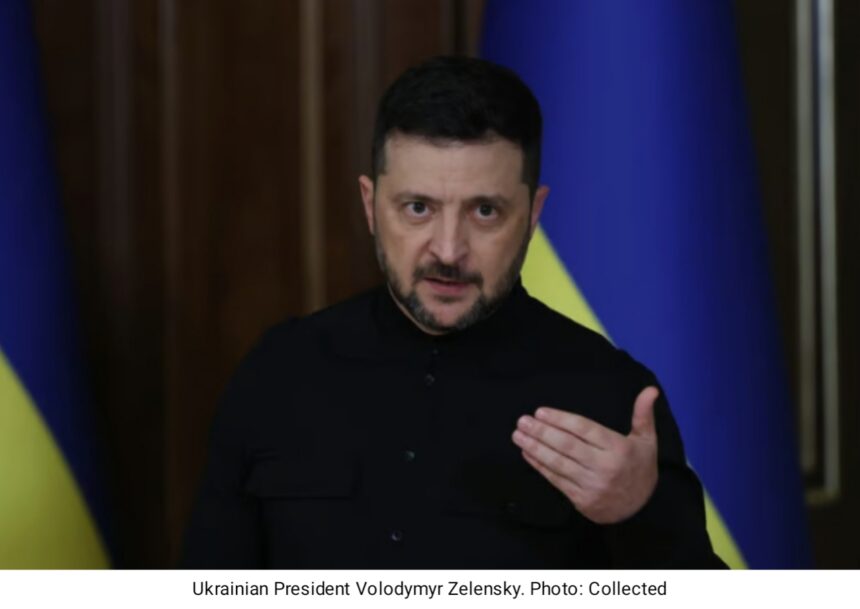
Kyiv/Moscow — The dismissal of Ukraine’s popular Defence Minister Mykhailo Fedorov by President Volodymyr Zelensky, followed by Fedorov’s call for elections during wartime, has intensified debate over Ukraine’s political cohesion and could give Russia a new opening to exert political and psychological pressure beyond the battlefield. Fedorov was removed from office last month, triggering public protests in several Ukrainian cities and calls for his reinstatement. After those efforts failed, he publicly called for the restoration of Ukraine’s full democratic process. In a video address, Fedorov questioned how long a government can remain in office without a fresh electoral mandate if the war continues for years. His argument was that Ukraine is fighting to remain a free European state and must therefore find a legal, secure and realistic mechanism for restoring democratic processes even during a prolonged war. Yet his position has opened a contentious political debate. Holding elections under martial law would present major constitutional and security challenges, while ensuring the participation of people in Russian-occupied territories, soldiers serving at the front, millions of displaced Ukrainians and citizens living abroad would be extraordinarily difficult. Recent polling cited in the debate suggests that support for holding elections while the war continues remains limited. Fedorov’s appeal may therefore be welcomed by those who see it as a defence of democratic accountability, while others may interpret it as an attempt to build a political platform for himself. Some Ukrainian political figures also fear that Moscow has long sought elections in Ukraine as a means of exploiting political divisions and weakening national cohesion. If Russia cannot achieve its objectives on the battlefield, deepening political instability, questioning the legitimacy of Ukraine’s leadership and encouraging social divisions could offer an alternative route to weakening Kyiv’s resistance. It is important, however, to distinguish this assessment from any official Russian position. The issue has gained further significance amid continuing debate within the administration of US President Donald Trump over Ukraine policy. The deeper Ukraine’s domestic political crisis becomes, the more likely it is that questions surrounding Kyiv’s leadership, corruption and democratic legitimacy will attract attention in Washington. Zelensky’s government has already faced a series of political and administrative challenges, including the departure and dismissal of senior officials amid corruption allegations, putting additional pressure on the president’s political standing. Fedorov’s popularity is particularly sensitive for Zelensky because his supporters regard him as a reform-minded figure who sought changes within the defence ministry, opposed corruption and advocated for the interests of ordinary soldiers. Another former ally, former armed forces commander General Valerii Zaluzhnyi, could also emerge as a potential political challenger. Zelensky’s challenge, therefore, extends beyond managing the war against Russia: he must preserve national unity during wartime while preventing disputes with potential rivals from reaching a point where domestic divisions undermine Ukraine’s ability to fight. Zelensky’s presidential term formally expired in May 2024, but elections have not been held because of the war and martial law; his government maintains that the existing arrangement is rooted in Ukraine’s wartime constitutional framework. Critics such as Fedorov, however, are asking how the question of democratic legitimacy can be resolved if the war continues indefinitely. The dispute could become one of the most consequential issues in Ukrainian politics in the months ahead. Zelensky must simultaneously sustain the war effort and international support while managing increasingly prominent former allies and potential political competitors. If the crisis deepens, Russia could seek to exploit it through information warfare, political pressure and efforts to influence public opinion alongside its military campaign. Ultimately, whether Fedorov’s demand for elections strengthens democratic accountability or deepens Ukraine’s internal divisions will depend on how Kyiv manages the competing imperatives of democracy, national security and wartime unity. What is increasingly clear is that Zelensky now faces not only the challenge of confronting Russia on the battlefield but also the growing strategic difficulty of keeping his own political camp united.
War, elections and leadership crisis: Zelensky faces tough tests