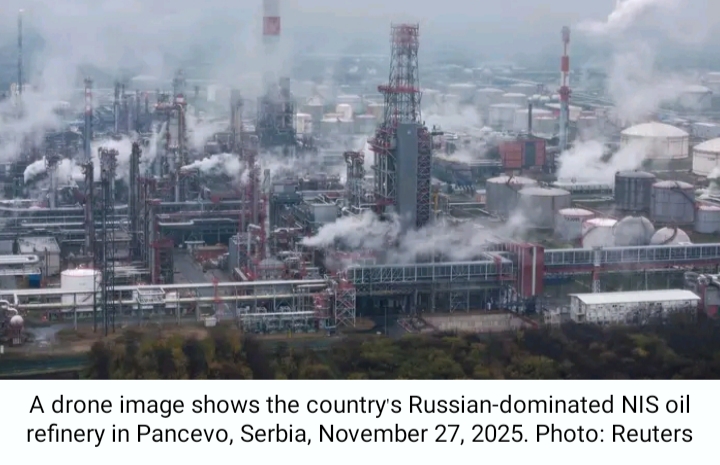
BELGRADE, June 26 — Serbia’s Russian-owned energy company NIS has formally requested a new waiver from the United States Treasury Department that would allow it to continue operating beyond July 1, when its current sanctions exemption is set to expire. The request highlights growing concerns over Serbia’s energy security, as NIS operates the country’s only oil refinery and supplies nearly 80 percent of the domestic fuel market.
In its application to the U.S. Treasury’s Office of Foreign Assets Control (OFAC), NIS stated that an extension of the waiver is essential to ensure the uninterrupted operation of its refinery and to maintain a stable supply of petroleum products across Serbia. The company also emphasized that negotiations aimed at restructuring its ownership are at an advanced stage, a move expected to address U.S. concerns over Russian control.
NIS remains majority-owned by Russia’s Gazprom Neft and Gazprom, whose combined stake has placed the company under U.S. sanctions as part of Washington’s broader measures targeting Russia’s energy sector following Moscow’s invasion of Ukraine. Without a renewed waiver, NIS would lose the ability to import crude oil and refine it into fuel products, posing significant risks to Serbia’s energy market and fuel distribution network.
The United States has consistently urged the reduction or complete divestment of Russian ownership in NIS. While those efforts continue, OFAC has granted the company several temporary waivers to prevent disruptions to Serbia’s fuel supplies and allow time for ownership negotiations to progress.
As part of the ongoing restructuring process, Hungarian oil and gas company MOL has also received authorization from OFAC until July 1 to finalize negotiations for the acquisition of the 56.16 percent stake in NIS currently held by Gazprom Neft and Gazprom. The Serbian government retains a 29.9 percent ownership stake in the company.
The outcome of the waiver request is expected to have significant implications not only for Serbia’s domestic energy stability but also for the broader geopolitical landscape of Southeast Europe, where governments continue balancing energy security with international sanctions imposed on Russia. Industry observers note that a failure to secure another waiver could disrupt fuel imports, increase energy costs, and intensify pressure on Belgrade to accelerate the restructuring of NIS and reduce Russian influence over the country’s strategic energy infrastructure.
80 percent of Serbia’s energy supply at risk, NIS seeks relief from US sanctions