
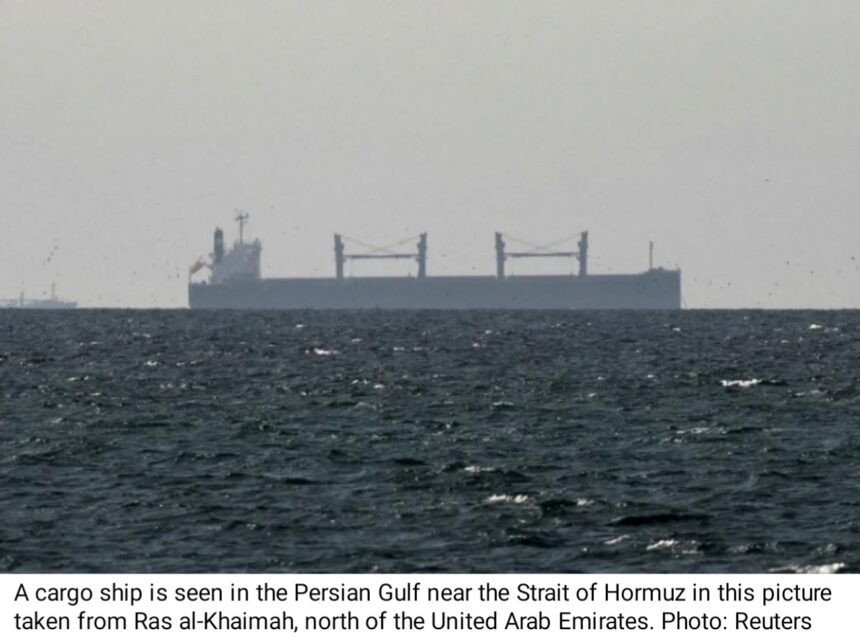
Iran has granted special permission for a number of Iraqi oil tankers to pass through the Strait of Hormuz following repeated requests from Baghdad, a move that could provide temporary relief to Iraq’s oil-export operations amid continuing regional conflict and disruption to one of the world’s most strategically important energy corridors. Iran’s state news agency IRNA reported that Baghdad had pursued the issue through several channels, with the request becoming a key point of discussion during Iranian Parliament Speaker Mohammad Baqer Qalibaf’s recent visit to Iraq.
Iraqi President Nizar Amedi said on Saturday that Iran had facilitated the passage of vessels carrying Iraqi oil in recent days and that Baghdad had discussed the possibility of continuing Iraqi oil exports through the Strait with Iranian officials. However, he stressed that the overall situation remains complicated, underscoring the continuing uncertainty surrounding commercial shipping in the waterway.
The development is particularly significant for Iraq, whose oil industry remains heavily dependent on export routes through the Persian Gulf. Before the outbreak of the war, Iraq was producing around 4 million barrels of oil per day, making uninterrupted access to international markets crucial for government revenues, foreign-exchange earnings and broader economic stability.
The Strait of Hormuz has become one of the central pressure points in the regional conflict. Shipping traffic through the waterway remains significantly below pre-war levels, while vessels continue to face security risks. Any prolonged disruption could have consequences well beyond the immediate region, potentially affecting global crude oil supplies, shipping costs, insurance premiums and energy prices.
For Baghdad, the Iranian decision represents a limited but important diplomatic opening. Rather than indicating a full reopening of the Strait, the permission appears to apply to specific Iraqi vessels under special arrangements. This distinction is critical because broader commercial shipping remains constrained, leaving international energy markets exposed to continued uncertainty.
At the same time, Iraq is accelerating efforts to reduce its dependence on the Strait by developing alternative export routes. Prime Minister Ali al-Zaidi said Baghdad was working to increase oil exports through Turkey’s Ceyhan port while also exploring exports through Syria’s Baniyas port and Jordan’s Aqaba port. The strategy reflects growing concern in Baghdad that the Hormuz crisis could persist and that relying on a single maritime corridor carries substantial economic and strategic risks.
Iran’s decision also highlights the complex relationship between regional security and energy diplomacy. Although Tehran remains a central actor in the security environment surrounding the Strait, the special authorization for Iraqi tankers suggests that diplomatic channels can still produce limited exceptions even during periods of severe military tension. For Iraq, maintaining oil flows is an economic necessity; for Iran, managing access to the Strait provides significant regional leverage.
The wider implications could be substantial. If disruptions continue, major oil-producing countries may increasingly seek alternative pipelines, ports and overland routes to maintain exports. Such a shift could reshape regional energy logistics while placing additional pressure on existing infrastructure. At the same time, any further reduction in global oil supplies could intensify upward pressure on crude prices and increase concerns over energy security in major importing economies.
The permission granted to Iraqi tankers therefore goes beyond a narrow shipping arrangement. It represents a small but strategically significant development in the broader struggle over the Strait of Hormuz, where military security, regional diplomacy and global energy interests increasingly intersect. Until commercial shipping can return to more normal and predictable levels, every movement through the Strait is likely to remain closely watched by governments, energy companies and financial markets around the world.