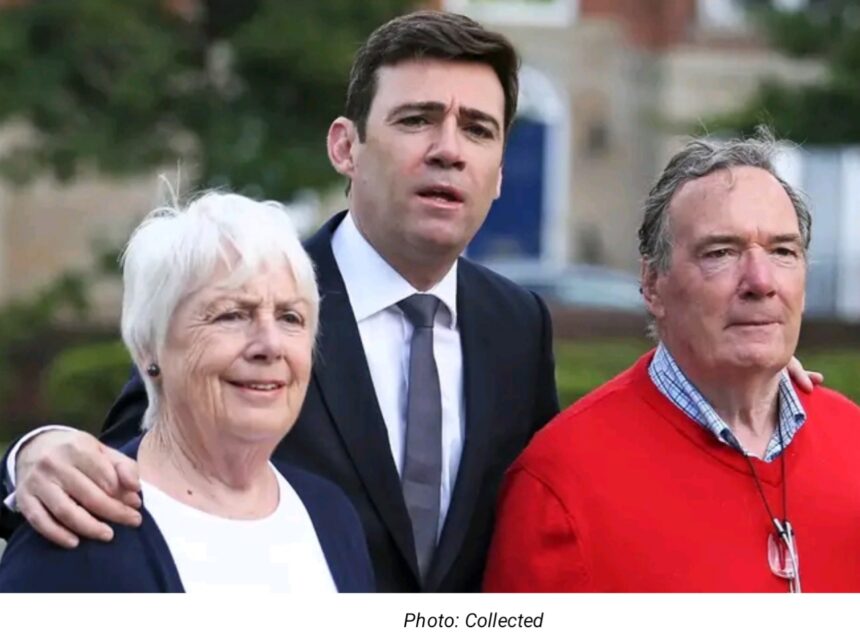
Andy Burnham’s ascent to Britain’s highest political office has been overshadowed by a deeply personal tragedy, revealing the emotional cost that can accompany even the greatest moments of public success. As he prepares to enter 10 Downing Street as the United Kingdom’s next Prime Minister, Burnham disclosed that his father, Roy Burnham, who is living with Alzheimer’s disease, is unaware that his son is about to lead the country. The revelation has resonated across Britain, highlighting the devastating impact of dementia on families and the cruel reality that life’s most significant milestones can become invisible to those suffering from memory loss. Burnham described the situation as one of the most painful aspects of his political journey, acknowledging that the man who inspired and supported him throughout his life can no longer comprehend the magnitude of his achievement. His personal experience has also reinforced his commitment to strengthening Britain’s health and social care systems, with dementia care, support for unpaid carers, and long-term social care reform expected to feature prominently in his government’s domestic agenda. Political observers say Burnham’s deeply personal connection to Alzheimer’s could shape policy decisions in ways that extend beyond traditional healthcare, influencing wider debates on aging populations, community care, and public investment in medical research. As Britain prepares for a new era under Burnham’s leadership, the story behind his historic rise serves as a powerful reminder that political triumph and private heartbreak often coexist. While the transition to Downing Street marks the culmination of years of public service and political ambition, it is also a poignant moment defined by the absence of recognition from the father whose pride he had hoped to share. Burnham’s experience has struck a chord with millions of families affected by dementia, underscoring the human dimension behind political leadership and bringing renewed attention to one of the United Kingdom’s most pressing public health challenges.
Andy Burnham at the peak of power, emotional moment in silent pain of memoryless father