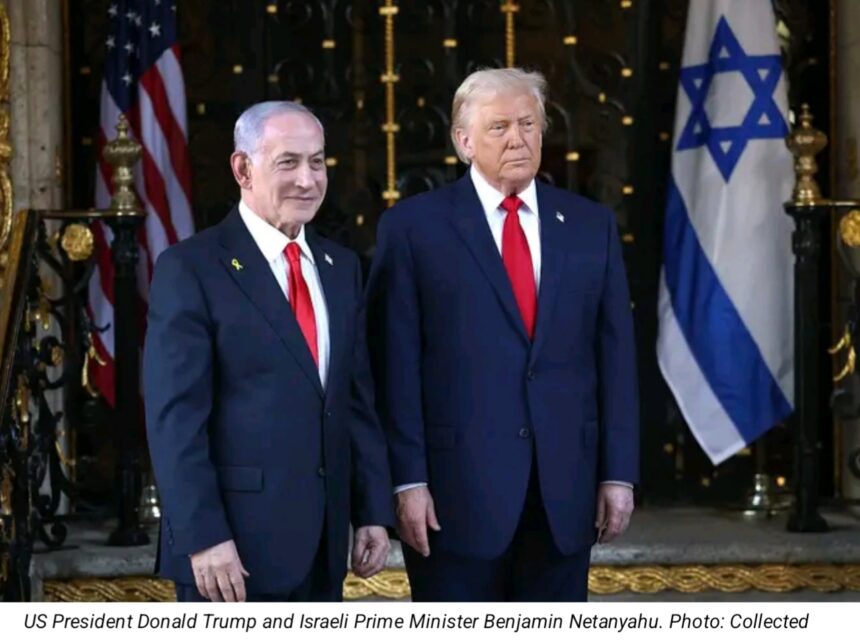
Washington/Jerusalem — Growing doubts within the U.S. intelligence community over the reliability of Israeli intelligence assessments on Iran are emerging as a new source of tension in the long-standing relationship between U.S. President Donald Trump and Israeli Prime Minister Benjamin Netanyahu. Six months into the conflict with Iran, Washington is increasingly searching for a diplomatic path out of a war that has imposed significant economic and political costs, while questions are mounting over the intelligence assessments that helped shape the conflict in the first place. At the outset of the war, Israel warned that Iran was approaching the threshold of acquiring a nuclear weapon, an assessment that played an important role in shaping the case for military action. But as the conflict has dragged on, questions have intensified inside Washington over the accuracy of those assessments, the achievement of military objectives and the broader political costs of the war. Recent reports have also shed light on a highly secretive security operation to move Trump out of Turkey following intelligence indicating a possible Iranian threat against him. During the NATO summit in Ankara, the U.S. president was reportedly transferred under extraordinary security measures before traveling safely to Britain. Yet while the information was considered serious enough to warrant protective action, U.S. intelligence agencies were not fully convinced of its reliability. Reports indicated that the Central Intelligence Agency had expressed low confidence in the assessment, even as U.S. officials decided that the potential threat could not be ignored. The episode has therefore raised a broader question in Washington: how much confidence should the United States continue to place in intelligence supplied by Israel? For decades, Israeli intelligence has been regarded by many U.S. policymakers as one of Washington’s most important sources of information on the Middle East. But that confidence has come under increasing pressure, particularly after the October 7, 2023 Hamas attack exposed major failures within Israel’s intelligence and security establishment. The latest controversy comes against a backdrop of growing differences between Trump and Netanyahu over Iran, Lebanon and Gaza. Although the two leaders remain closely aligned on many strategic issues, disagreements over the direction and duration of the conflict have become increasingly difficult to conceal. The war has also failed to produce the decisive political outcome that some Israeli officials had expected, including the prospect of weakening or removing Iran’s leadership. That gap between expectations and results has intensified scrutiny of the intelligence assumptions underpinning the campaign. Veteran U.S. diplomat Aaron David Miller has argued that Israeli leaders have at times presented intelligence assessments in ways that support their broader political objectives, particularly regarding adversaries such as Iran and Hamas. Such concerns are especially significant as Washington attempts to balance continued military pressure on Tehran with growing pressure to contain the economic and political consequences of the conflict. Still, skepticism inside the CIA does not necessarily mean that U.S. officials are willing to disregard Israeli warnings, particularly when the personal security of the president is involved. Trump has faced multiple threats and assassination attempts, while U.S. authorities have previously investigated alleged Iranian-linked plots against him. For the Secret Service, even intelligence assessed with limited confidence can be sufficient to justify precautionary measures when the consequences of ignoring a genuine threat could be catastrophic. Analysts, however, caution that the public debate over intelligence assessments may also reflect institutional tensions within the U.S. government. Yossi Mekelberg, an expert on U.S.-Israel relations at Chatham House, has suggested that the CIA may feel that its influence over the decision-making process has diminished and that public discussion of intelligence failures could be part of an effort to restore its role. The wider war has already exposed serious questions about intelligence collection, analysis and the translation of intelligence into military decisions. The reported strike on a school in Iran’s Minab that killed more than 170 people, including children, has further intensified scrutiny and prompted questions about the intelligence basis for military operations. At the same time, Netanyahu’s relationship with Trump has not collapsed. Despite disagreements, the strategic ties between Washington and Jerusalem remain deep, encompassing military cooperation, intelligence sharing and broader regional interests. Netanyahu has continued to visit Washington and engage with the Trump administration even amid disagreements over Israeli military operations in Lebanon. Gaza has also become a significant point of friction. Trump has promoted a political framework for Gaza, while Netanyahu has continued to reject the prospect of a Palestinian state. Yet Trump has stopped short of publicly breaking with the Israeli prime minister, underscoring the continued importance of the relationship. The political pressures facing both leaders, however, are likely to make the relationship more difficult in the months ahead. Trump is approaching a U.S. midterm election cycle in which Republicans could face significant political risks, while Netanyahu faces his own domestic political challenges and an important election battle in October. The outcome of the Iran conflict is therefore no longer simply a matter of foreign policy for either leader; it is increasingly tied to their domestic political survival. Andrew Moran, head of politics and international relations at London Metropolitan University, has described the developments as part of a broader shift in the balance of power within the U.S.-Israel relationship. One important example is southern Lebanon. After Israeli Defense Minister Israel Katz said Israeli forces would remain in Lebanon until Hezbollah is disarmed, the U.S. State Department indicated that a permanent Israeli military presence in southern Lebanon would not be consistent with commitments made under a U.S.-brokered understanding with the Lebanese government. The statement offered another indication that Washington is becoming more willing to publicly challenge Israeli policy when it conflicts with broader U.S. diplomatic objectives. Israeli intelligence was once treated in Washington as close to a gold standard on Middle Eastern security issues. The fact that U.S. officials reportedly acted on a warning while simultaneously expressing doubts about its credibility highlights how that perception is changing. Washington cannot afford to ignore a potential threat to the president, but the willingness to question the reliability of the underlying intelligence represents a significant departure from the past. The shift does not necessarily signal that Trump is turning away from Israel. Rather, it suggests that the relationship is becoming more conditional, shaped increasingly by competing political interests, strategic calculations and the costs of prolonged conflict. The future of the Iran war, Israel’s military presence in Lebanon, the political future of Gaza and the domestic pressures facing both Trump and Netanyahu will determine how far the current tensions go. For now, the relationship between Washington and Jerusalem remains strategically important, but it is no longer as politically unquestioned as it once appeared. The growing debate over Israeli intelligence may prove to be one of the clearest signs of that changing relationship.
CIA losing confidence in Israeli intelligence, Trump-Netanyahu relationship growing rift