
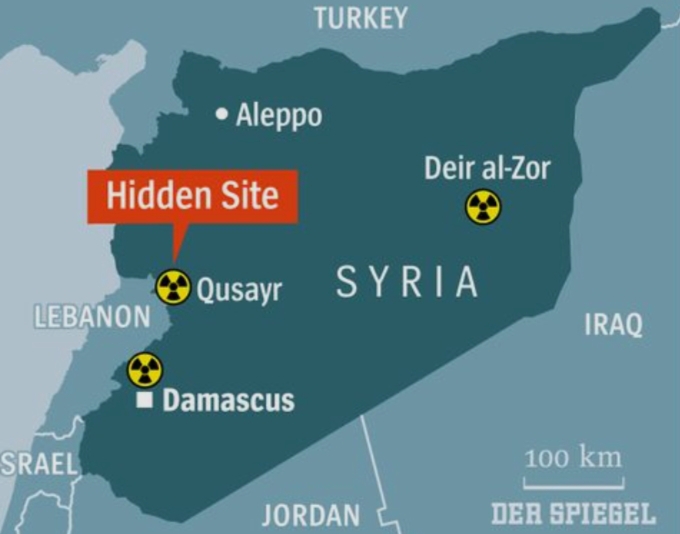
DAMASCUS/VIENNA: A previously undeclared nuclear facility built in Syria during the rule of former President Bashar al-Assad had the potential to be used to produce fissile material suitable for nuclear weapons, the International Atomic Energy Agency (IAEA) has said.
IAEA Director General Rafael Grossi told reporters in Vienna on Monday that the reactor at the facility had the potential to produce fissile material that could be used in the development of nuclear weapons. The assessment has renewed international scrutiny of Syria’s alleged undeclared nuclear activities under the former government.
The UN nuclear watchdog is currently investigating the facility and other related nuclear activities in cooperation with Syria’s new authorities. The agency said an IAEA team visited several Syrian sites in August as part of ongoing verification efforts.
At the Deir ez-Zor site, inspectors identified underground cooling infrastructure whose characteristics were consistent with those of a nuclear reactor. The IAEA said it would continue monitoring the site as excavation and investigative work progresses.
Grossi said inspectors faced significant difficulties in reaching parts of the facility, including having to break through walls and navigate a narrow passage to access nuclear-related materials. Boxes and other items were found scattered throughout the site.
The IAEA said important nuclear-related materials discovered there are now under its safeguards. Inspectors have also installed surveillance cameras at the location to help monitor the site.
Alleged North Korean Assistance
The Deir ez-Zor facility has long been at the centre of international concern over Syria’s alleged undeclared nuclear programme. International reports have previously alleged that the Assad government constructed a nuclear reactor at the site with assistance from North Korea.
The facility was destroyed by an Israeli airstrike in 2007, bringing the allegations into the international spotlight. Syria subsequently levelled much of the site, while the former government did not provide full answers to the IAEA’s questions about the facility.
The IAEA has also identified information indicating the existence of additional facilities linked to Syria’s former nuclear activities. These reportedly included a facility that may have been involved in producing nuclear fuel for the reactor, as well as a storage site for nuclear fuel, uranium-related waste and other radioactive materials.
The agency has said the former Syrian authorities failed to declare relevant nuclear material, facilities and activities to the IAEA, leaving significant questions about the scope and purpose of the country’s past nuclear programme.
Further Undeclared Facilities
Syria’s new authorities have increased cooperation with the IAEA. In July, the current administration informed the agency about another previously undeclared facility and invited international nuclear inspectors to investigate the site.
An IAEA team subsequently visited the facility last month as part of efforts to establish a clearer picture of Syria’s nuclear activities and related infrastructure.
The agency is now continuing to examine nuclear materials, facilities and other evidence to determine the nature and history of Syria’s undeclared activities.
Wider Middle East Nuclear Concerns
The IAEA’s latest findings could intensify concerns over nuclear proliferation in the Middle East, where questions surrounding undeclared nuclear programmes and regional nuclear capabilities remain highly sensitive.
Israel is widely regarded as the only nuclear-armed state in the Middle East, although it has never officially confirmed or denied possessing nuclear weapons.
The IAEA’s ongoing investigation could provide further information about the purpose of the Deir ez-Zor facility, the nature of the nuclear materials discovered there and the broader scope of Syria’s former nuclear programme.
The findings are likely to remain under close international scrutiny as the agency continues its verification work with Syria’s current authorities.