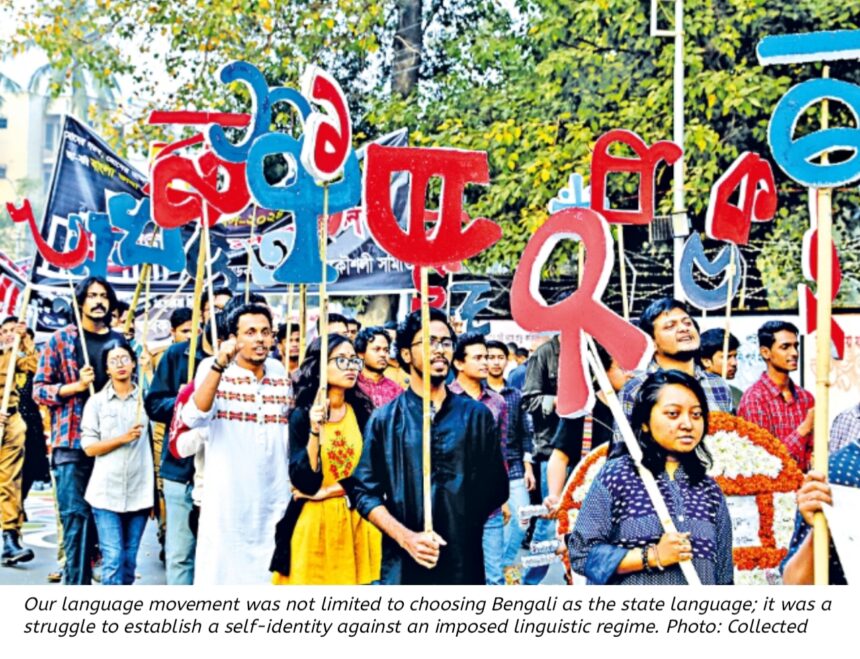
The increasing use of offensive, vulgar, and abusive language in Bangladesh’s public discourse has emerged as a subject of growing concern among academics, linguists, educators, cultural figures, civil society representatives, and gender rights advocates. While freedom of expression remains a cornerstone of every democratic society, many observers argue that the normalization of obscene and degrading language in political rhetoric, protest movements, social media platforms, university campuses, and everyday public conversations risks undermining the cultural dignity of the Bengali language and weakening the standards of respectful public debate. Experts emphasize that language is far more than a tool of communication; it is the primary vessel through which a nation preserves its history, literature, philosophy, scientific knowledge, religious traditions, legal systems, collective memory, and cultural identity. As a result, the transformation of public language is increasingly viewed as a reflection of broader social, political, and cultural developments. Over the past several years, the rapid expansion of digital communication, combined with the influence of social media algorithms, viral content, political polarization, and emotionally charged online interactions, has significantly altered patterns of public expression. Researchers note that platforms encouraging instant reactions often reward provocative, confrontational, and sensational language, contributing to an environment where insults and vulgar expressions receive greater visibility than thoughtful discussion. Although language naturally evolves alongside society and technology, linguists distinguish between linguistic evolution and linguistic deterioration, arguing that the acceptance of degrading or abusive speech should not automatically be interpreted as healthy linguistic development. Political analysts also observe that protest movements and political activism have historically relied on powerful rhetoric to mobilize supporters and challenge authority. However, they caution that when legitimate political criticism becomes dominated by personal insults, obscenity, or language designed primarily to humiliate opponents, the ethical legitimacy of public discourse may be weakened. In such circumstances, attention can shift away from substantive political demands toward the controversy surrounding the language itself. Gender rights advocates further argue that many offensive expressions commonly used in Bengali, as in numerous other languages, disproportionately target women or invoke female family members and the female body as instruments of humiliation. According to researchers studying gender and language, this pattern reflects deeper structural inequalities by reinforcing the idea that degrading women is an effective means of attacking political or personal adversaries. They contend that the normalization of such expressions contributes to a broader culture of gender-based discrimination and may discourage women from participating freely in public debate, civic engagement, and political life. Sociologists similarly warn that the language routinely used within a society often mirrors its underlying values and social relationships. When hostile, degrading, or abusive speech becomes commonplace in political rallies, educational institutions, online discussions, and entertainment content, it may gradually reduce levels of mutual respect, tolerance, and constructive dialogue. Some scholars argue that this shift can erode the foundations of democratic culture by replacing evidence-based discussion with emotional hostility and personal attacks. At the same time, specialists emphasize that protecting civility should never be confused with restricting legitimate criticism or suppressing freedom of expression. Rather, they argue that democratic societies function best when citizens are able to express strong disagreement while maintaining respect for the dignity of others. Many educators believe that families, schools, universities, media organizations, cultural institutions, and digital platforms all share responsibility for promoting respectful communication and encouraging critical thinking among younger generations. Since children and adolescents increasingly learn patterns of communication through online platforms, the widespread normalization of vulgar speech may influence future standards of interpersonal interaction and civic behavior. Cultural historians also point out that the Bengali language has evolved over centuries through contributions from poets, philosophers, mystics, scholars, reformers, and freedom movements, earning global recognition through the historic Language Movement and its rich literary heritage. Preserving that heritage, they argue, does not require resisting every linguistic change, but it does require protecting the principles of dignity, courtesy, and mutual respect that have long characterized the language’s finest traditions. Ultimately, experts from diverse disciplines agree that maintaining a healthy public sphere requires balancing freedom of expression with civic responsibility. Vigorous political debate, social criticism, and public protest remain essential components of democratic life, yet these goals can coexist with respectful language, evidence-based argument, and recognition of human dignity. As Bangladesh continues to navigate rapid social transformation in the digital era, many observers believe that fostering a culture of responsible communication will be essential not only for protecting the richness of the Bengali language but also for strengthening democratic institutions, promoting gender equality, encouraging meaningful public dialogue, and preserving the nation’s broader cultural identity for future generations.
Language decline or change? Debate over vulgar language in public spaces