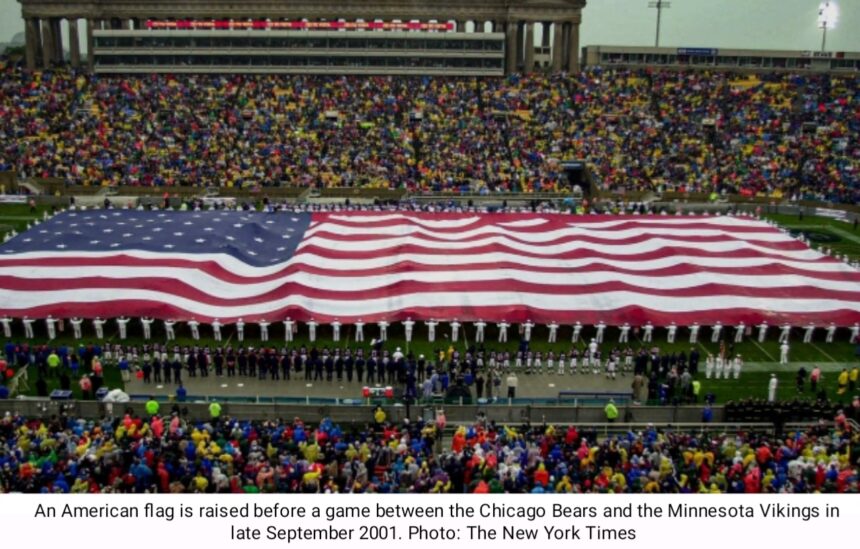
In the aftermath of the September 11, 2001 terrorist attacks, the United States faced a period of unprecedented grief, fear and uncertainty, and the country’s professional sports leagues were forced to confront a difficult question: should normal competition continue, or should games be suspended as the nation mourned? Within the National Football League, some team owners argued that the games should go ahead, reflecting a belief that maintaining the regular rhythm of American life would demonstrate that terrorism could not dictate how the country lived. Others recognized that the scale of the attacks had fundamentally changed the circumstances surrounding major public gatherings, with questions over security, public safety and the emotional condition of the country becoming impossible to ignore. The NFL ultimately postponed its scheduled games following the attacks, marking an extraordinary interruption to one of the most commercially important sports leagues in the United States. At the time, the decision carried significance far beyond football. The attacks had killed thousands of people in New York, Washington and Pennsylvania and triggered sweeping changes across American politics, security and public life. With airports closed, security measures dramatically increased and large public gatherings under heightened scrutiny, staging football games as if nothing had happened would have been difficult to reconcile with the national mood. The postponement gave players, coaches, team employees and millions of fans time to process the events while the country began to respond to the crisis. When professional football eventually returned, the games took on a different meaning. Stadiums became places where players and spectators could honor those who had died, recognize first responders and express solidarity with a country still struggling to understand the scale of what had happened. Flags, moments of silence and tributes became part of the return to competition, while the games themselves offered one of many paths toward a gradual restoration of everyday life. Looking back more than two decades later, the decision to suspend the NFL schedule remains an important moment in American sports history because it demonstrated that professional sports cannot always be separated from the wider society in which they operate. The debate over whether the games should continue also reflected a broader question that emerged throughout the United States after the attacks: how quickly should a nation attempt to return to normal when thousands of families are still grieving and the wider public remains under threat? Those who supported continuing the games believed that preserving normal life could itself be an act of resilience. The decision to postpone, however, reflected the reality that the country was experiencing an extraordinary national trauma and that football could wait. When the NFL eventually returned to the field, it did so in an America that had changed dramatically, with security, politics and public consciousness all transformed by the attacks. The episode remains a reminder that sport is deeply connected to the society around it and that, during moments of national crisis, the decision to stop can carry as much meaning as the decision to play.
NFL stopped in the United States after 9/11, an important decision in history