
Israeli Prime Minister Benjamin Netanyahu has rejected a 15-point U.S.-backed plan for Gaza that would link the disarmament of Hamas to a phased withdrawal of Israeli forces from the Palestinian enclave, raising fresh uncertainty over Washington’s efforts to secure a political pathway out of the devastating conflict.
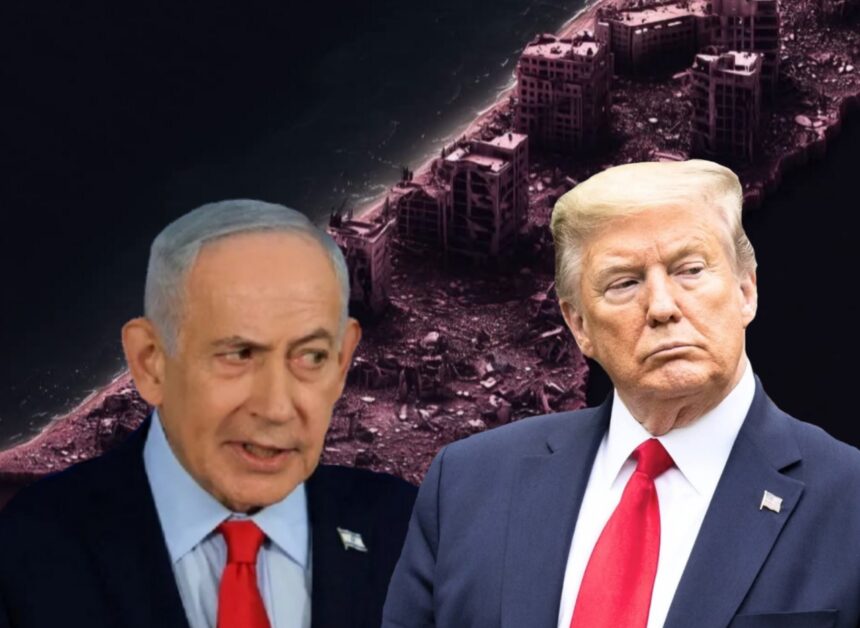
Speaking ahead of a cabinet meeting on Sunday, Netanyahu said Israel would not accept the 15-point document and insisted that Israeli forces would remain in Gaza until Hamas had been fully disarmed. His comments highlighted a major disagreement with the framework promoted by U.S. President Donald Trump, who has presented the proposal as a potential basis for ending the conflict and establishing a new form of Palestinian governance in Gaza.
Netanyahu said the issue was not simply whether Hamas would surrender some of its weapons, but whether the group would undergo what he described as genuine and comprehensive disarmament. He said this would have to include both heavy and light weapons, arguing that Israel could not accept what he characterized as a symbolic or incomplete surrender of Hamas’s military capabilities.
The Israeli prime minister also said discussions with Washington were continuing, acknowledging that some American ideas were acceptable to Israel while others were not. His remarks suggested that significant negotiations remain ahead between the two close allies over the sequencing of Israeli withdrawal, Hamas disarmament and the future administration of Gaza.
Trump unveiled the 15-point framework last month, saying it was designed to achieve the complete disarmament of Hamas and other armed groups in Gaza while providing for an Israeli military withdrawal as the disarmament process progressed. The U.S. president described the proposal as a major step towards ending the war and creating conditions for Gaza to be governed by a new Palestinian administration.
But the plan has faced strong resistance from members of Netanyahu’s right-wing governing coalition, who have argued that Israeli forces should not withdraw before Hamas has been completely disarmed. Their position differs from the sequencing outlined in the U.S. framework, which envisages Israeli forces withdrawing progressively as the disarmament process advances.
The dispute reflects a deeper disagreement over how security arrangements in postwar Gaza should be implemented. Israeli officials remain concerned that any withdrawal before Hamas’s military infrastructure is fully dismantled could allow the group to rebuild its capabilities. Palestinian officials and Hamas, meanwhile, have demanded that Israel first fulfil obligations associated with previous ceasefire arrangements.
Hamas officials have said progress on any new roadmap should be linked to measures including increased humanitarian aid entering Gaza and an Israeli withdrawal to positions held when the previous truce took effect. The group’s position indicates that the two sides remain far apart over the order in which military, humanitarian and political measures should be implemented.
The issue of who would control security in Gaza after a disarmament agreement has also emerged as a major point of contention. A person briefed on the discussions said Israel had concerns about a proposal under which Hamas would hand over its weapons to a newly established Palestinian police force. Israel is also concerned about the potential role of Qatar and Turkey in Gaza’s future political and security arrangements, the person said.
Any agreement would therefore have to address several difficult questions simultaneously: how Hamas would surrender its weapons, who would take control of Gaza’s security institutions, when Israeli forces would withdraw, how humanitarian assistance would be delivered and who would govern the territory after the war.
Netanyahu’s position also carries significant domestic political implications. His governing coalition has faced pressure from far-right partners who have consistently opposed concessions to Hamas and demanded that Israel retain military control until the group’s capabilities have been eliminated. With parliamentary elections expected in October and opposition parties performing strongly in opinion polls, Netanyahu faces a delicate political balance between maintaining support from his coalition and responding to pressure from Washington.
For the Trump administration, the Israeli prime minister’s rejection represents another challenge to its attempt to turn the Gaza conflict into a broader political settlement. Washington has sought to combine Hamas’s disarmament with an Israeli withdrawal and the creation of a new Palestinian governing structure, but the latest Israeli position suggests that the parties have yet to agree on the basic sequencing of those steps.
The disagreement also comes as Gaza faces an enormous humanitarian and reconstruction challenge after prolonged fighting. Large areas of the territory have been devastated, millions of Palestinians have been displaced and international agencies have repeatedly stressed the need for sustained humanitarian access and reconstruction assistance.
The immediate question is whether Washington can persuade Israel to accept a phased withdrawal framework while securing credible guarantees over Hamas’s disarmament. At the same time, any agreement would require Hamas to accept a new security and political arrangement and provide assurances that its military infrastructure would not be rebuilt.
For now, Netanyahu’s rejection of the 15-point document underscores the gap between the Trump administration’s vision for Gaza and the Israeli government’s insistence that security must come first. Unless the two sides can bridge that divide, the proposed roadmap for ending the war and establishing a new political order in Gaza is likely to face significant obstacles.