

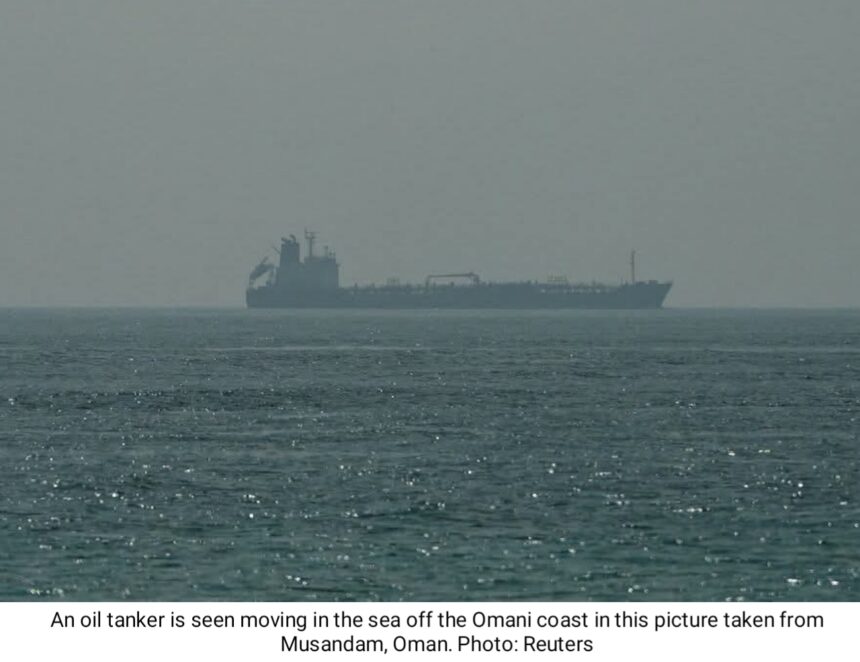
SINGAPORE, September 28, 2026: Oil prices rose more than 1% on Monday after U.S. President Donald Trump rejected an Iranian proposal aimed at resolving the conflict between Washington and Tehran, while indicating that American negotiators could hold further talks with Iran this week.
The latest developments have kept geopolitical risks elevated across the Middle East and renewed concerns about the security of global energy supplies. At the same time, crude exports from major Middle Eastern producers have begun to recover, helped by increased flows through the Strait of Hormuz.
Brent crude futures rose $1.32, or 1.27%, to $105.64 a barrel by 0036 GMT. U.S. West Texas Intermediate crude was trading at $93.11 a barrel, up 70 cents, or 0.76%.
The rise came as traders assessed the impact of continuing military tensions, attacks involving Yemen’s Houthi movement and uncertainty over the future of U.S.-Iran diplomacy.
Trump Rejects Iranian Peace Proposal
Iran presented a peace proposal last week during the United Nations General Assembly in New York. Tehran said the proposal had been transmitted to Washington through Qatari mediators as part of diplomatic efforts to find a way out of the conflict.
Trump said on Saturday that he had rejected the proposal. However, in a telephone interview with Axios on Sunday, he indicated that U.S. negotiators could participate in further discussions with Iran during the week.
The mixed signals have left financial and energy markets watching the diplomatic process closely.
A rejection of the proposal has increased uncertainty over whether the two sides can reach an agreement that would reduce military tensions and improve conditions for energy shipments through the region.
The Strait of Hormuz remains at the centre of these concerns because of its importance to global oil and gas transportation.
Strait of Hormuz Remains a Major Energy Concern
The Strait of Hormuz is one of the world’s most important energy corridors. Large volumes of crude oil and other energy products from Gulf producers pass through the narrow waterway before reaching international markets.
The conflict has disrupted normal shipping patterns and created uncertainty for oil traders, shipping companies and energy consumers.
However, preliminary data from commodities intelligence firm Kpler showed that crude shipments through the strait were recovering in September.
Oil flows through the Strait of Hormuz were expected to reach around 7.4 million barrels per day this month, according to the data cited by Reuters.
The recovery is significant because shipments through the waterway had fallen sharply after the conflict began.
Although the latest figures indicate that some normal flows are returning, the situation remains below pre-conflict levels. Any further military escalation could again disrupt shipping and put upward pressure on international oil prices.
Middle East Oil Exports Rebound
Crude exports from several major Middle Eastern producers also increased in September.
According to preliminary Kpler data, combined crude exports from key producers in the region were expected to reach 12.8 million barrels per day in September, the highest level since the conflict began in February.
Saudi Arabia and the United Arab Emirates were among the countries contributing to the increase.
The recovery suggests that regional producers have been able to restore part of their export capacity despite continuing security problems.
However, the September figure remains significantly below the level recorded before the conflict.
Kpler data showed that combined crude exports from the major regional producers were around 18.8 million barrels per day in February, before the conflict significantly affected regional supply routes.
That means September exports remain roughly 6 million barrels per day below the February level.
The gap highlights the continuing impact of the conflict on the Middle East’s energy infrastructure and shipping network.
Saudi Arabia Increases Oil Shipments
Saudi Arabia has played a major role in the recovery of regional oil exports.
Kpler’s preliminary data indicated that Saudi crude exports could reach approximately 5.4 million barrels per day in September, compared with around 2.446 million barrels per day in August.
The increase followed changes in Saudi Arabia’s export routes after attacks damaged parts of the country’s East-West pipeline system.
Saudi Arabia subsequently redirected more crude toward its eastern export facilities, particularly the Ras Tanura terminal on the Persian Gulf.
The shift is important because it means a larger share of Saudi oil exports is now moving through routes that ultimately depend on the Strait of Hormuz.
According to the data cited by Reuters, Saudi crude exports from Ras Tanura were expected to reach approximately 3.6 million barrels per day in September.
This change has helped Saudi Arabia maintain international shipments despite disruptions affecting other export routes.
At the same time, greater reliance on the Persian Gulf route means that the security of the Strait of Hormuz has become even more important for maintaining Saudi oil exports.
Houthi Attacks Add to Regional Risks
Security concerns are not limited to the Strait of Hormuz.
Yemen’s Iran-aligned Houthi movement has continued to pose a security challenge in the region. Saudi Arabia’s Saudi-led coalition said early on Saturday that it had intercepted two ballistic missiles and two drones launched toward the kingdom by the Houthis.
Such incidents have added to concerns about the security of regional infrastructure and shipping routes.
The attacks also demonstrate how developments in different parts of the Middle East can affect the global energy market.
If attacks increase, shipping companies could face higher security costs and may be forced to alter routes. Any major disruption to oil infrastructure or shipping lanes could reduce supplies reaching international markets.
Energy traders are therefore monitoring developments involving Saudi Arabia, Yemen, Iran and the wider Gulf region.
U.S. Diesel Market Creates Additional Pressure
The Middle East is not the only source of uncertainty in the oil market.
The U.S. refined fuel market is also facing pressure, particularly because of high diesel prices.
ANZ analysts said refined oil products remained a major pressure point, with record U.S. diesel prices increasing inflation concerns and prompting renewed discussion about possible restrictions on diesel exports.
The possibility of U.S. restrictions has become another factor affecting international energy markets.
If the United States limits diesel exports, supplies available to foreign markets could become tighter. European markets could be particularly sensitive because they rely partly on U.S. refined fuel supplies.
A reduction in American exports could therefore increase competition for diesel and other refined products in international markets.
The situation creates a complicated picture for oil traders. While crude supplies from parts of the Middle East are recovering, refined fuel markets remain under pressure.
Brent and WTI Show Different Trends
Oil benchmarks have also moved differently in recent trading sessions.
Brent crude gained around 0.4% last week, while U.S. WTI crude fell approximately 7.9%.
The sharp decline in WTI was partly linked to concerns over possible U.S. restrictions on diesel exports and their potential effect on domestic refining activity.
Traders have been weighing the impact of high diesel prices against broader concerns about crude supply.
The difference between Brent and WTI also reflects the different factors affecting international and U.S. oil markets.
Brent is particularly sensitive to developments affecting international crude supplies, especially disruptions in major producing regions. WTI is more closely connected to U.S. production, refining and domestic market conditions.
The latest increase in both benchmarks on Monday suggests that geopolitical concerns were once again becoming a major influence on prices.
Diplomacy Could Determine the Next Market Move
The future direction of oil prices will depend heavily on developments between Iran and the United States.
If Washington and Tehran resume serious negotiations and reach an agreement, concerns over regional supply disruptions could ease.
Improved diplomatic relations could also support the normalization of shipping through the Strait of Hormuz.
However, continued military confrontation could have the opposite effect.
Any renewed attacks on energy infrastructure, shipping routes or Gulf facilities could reduce oil exports and increase the risk premium built into global crude prices.
For traders, the coming days could therefore be particularly important.
Markets will be watching whether U.S. and Iranian officials hold new discussions, whether the two sides make progress toward a diplomatic settlement and whether the security situation around the Strait of Hormuz improves.
Hormuz Shipping Remains Critical
The recovery in oil flows through the Strait of Hormuz provides some evidence that regional exporters are adapting to the conflict.
But the importance of the waterway means that even a limited disruption could have international consequences.
The increase in Saudi exports is particularly significant because more crude is being moved toward the country’s eastern export terminals. Those shipments depend heavily on safe passage through the Gulf and the Strait of Hormuz.
For oil-consuming countries, the issue goes beyond crude prices.
A prolonged disruption could affect transportation costs, fuel prices, inflation and industrial production in countries that depend on imported energy.
For this reason, developments around the Strait are being closely followed by governments, central banks, energy companies and financial markets.
A Fragile Recovery
The latest export figures show that Middle Eastern oil supplies are recovering, but they do not indicate that the regional energy market has returned to normal.
September’s estimated 12.8 million barrels per day in crude exports from key Middle Eastern producers represents the strongest monthly level since the conflict began. Yet the figure remains well below the approximately 18.8 million barrels per day recorded in February.
The difference shows how much supply capacity and shipping activity have been affected by the conflict.
The recovery also remains vulnerable to further attacks or a renewed escalation.
For international oil markets, the key question is whether the September recovery can continue.
If shipping through the Strait of Hormuz remains relatively stable and regional producers continue increasing exports, supply pressures could gradually ease.
If tensions rise again, however, the current recovery could quickly come under pressure.
What Comes Next
The international oil market is now being influenced by two opposing forces.
On one side, Middle Eastern crude exports are recovering and oil flows through the Strait of Hormuz are increasing. Saudi Arabia and the United Arab Emirates have helped lift regional shipments, while exporters are adapting to damaged infrastructure and changing shipping routes.
On the other side, geopolitical risks remain high. The rejection of Iran’s peace proposal by Trump, the possibility of further military confrontation and continued Houthi attacks are keeping traders cautious.
The coming week could therefore be important for both diplomacy and energy markets.
Further U.S.-Iran talks could provide new information about the direction of the conflict. At the same time, any change in shipping activity through the Strait of Hormuz could have an immediate impact on oil prices.
For now, the market remains caught between a gradual recovery in physical oil flows and continuing geopolitical uncertainty.
The latest rise in oil prices reflects that tension. Although Middle Eastern producers are managing to restore part of their exports, the security of major energy routes remains uncertain.
As long as the conflict continues, the Strait of Hormuz will remain one of the most closely watched points in the global energy market.
Source: Reuters