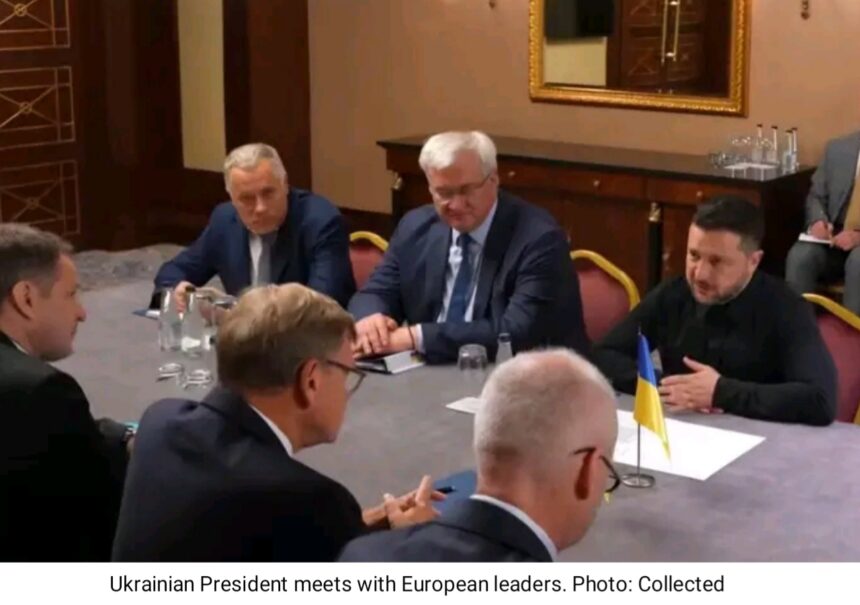
KYIV, August 23, 2026 — A high-level gathering of European allies in Kyiv on the eve of Ukraine’s Independence Day is being seen as a significant political signal of continued Western support for Ukraine as the Russia-Ukraine war enters another tense phase. On August 23, during Ukraine’s National Flag Day observances, President Volodymyr Zelenskyy welcomed several European leaders and senior officials to the capital.
Ukraine is preparing to mark its 35th Independence Day on August 24. The presence of European leaders in Kyiv during wartime represents more than a symbolic show of solidarity. It also reflects efforts by Western countries to strengthen coordination over Ukraine’s military capabilities, air defenses and long-term security guarantees. A major meeting of allied countries supporting Ukraine is expected on August 24, with continued military and security assistance high on the agenda.
Europe Steps Up Air-Defense Support
Air defense has become one of Kyiv’s most urgent priorities. As the intensity of Russian missile and drone attacks has increased, Ukraine has pressed its Western allies for additional defense systems and interceptor missiles, particularly to strengthen its ability to counter long-range missile strikes. Shortages of ammunition for U.S.-supplied air-defense systems have added to the pressure on Ukraine’s defenses.
Against this backdrop, French President Emmanuel Macron has pledged to accelerate deliveries of French military equipment and missiles to Ukraine. In recent discussions with Zelenskyy, Macron also expressed support for strengthening Ukraine’s air defenses and expanding technological and licensing cooperation related to missile production.
A new-generation air-defense system jointly developed by France and Italy is also being viewed as a potentially important addition to Ukraine’s defensive capabilities. At the same time, European countries are continuing efforts to expand their own missile-defense capabilities and reduce reliance on the United States.
Major Meeting of Allied Countries
The meeting of allied countries is expected to become a central focus of Western diplomatic activity surrounding Ukraine’s Independence Day. It is expected to be jointly led by French President Emmanuel Macron, German Chancellor Friedrich Merz and British Prime Minister Andy Burnham. European Council President Antonio Costa is expected to attend in Kyiv, while NATO Deputy Secretary General Radmila Shekerinska is expected to participate by video link.
One of the main objectives of the meeting is to strengthen Ukraine’s defense capabilities and advance European cooperation on long-term security guarantees. The presence of Western leaders in Kyiv therefore signals that European support for Ukraine extends beyond weapons deliveries to a broader political and security partnership.
Russia Issues Counter-Warning
Meanwhile, Russian President Vladimir Putin has issued a strong response to Ukrainian drone attacks on Russian economic and energy infrastructure. Putin said Ukraine’s attacks on Russia’s economic infrastructure were pushing the conflict toward a point at which Moscow could respond by striking Ukraine’s “most sensitive economic sectors.”
In recent weeks, Ukraine has intensified drone attacks on oil refineries, storage facilities and other economic infrastructure inside Russia. Moscow has responded with strikes against economic infrastructure, ports and other important facilities in Ukraine. As a result, the conflict is increasingly extending beyond the battlefield, with economic and energy infrastructure on both sides becoming direct targets of military operations.
Growing Concerns Over Civilian Safety
The arrival of Western allies in Kyiv comes as Russian attacks continue to cause casualties across Ukraine. A recent drone strike on a shopping center in the city of Kryvyi Rih reportedly killed at least 16 people and injured more than 100 others. Missile and drone attacks have also continued across several Ukrainian regions.
The attacks have further highlighted Ukraine’s urgent need to expand its air-defense capacity. Zelenskyy has repeatedly called on Western partners to provide additional interceptor missiles and defense systems, particularly to counter Russian long-range missile attacks.
Prospects of a Prolonged War
The presence of European leaders in Kyiv comes at a time when diplomatic efforts to end the war have yet to produce a major breakthrough. At the same time, both Russia and Ukraine continue to intensify attacks against each other’s military and economic infrastructure.
The August 24 diplomatic meeting could therefore prove significant beyond its symbolic message of solidarity. Discussions on Ukraine’s future defense capabilities, Europe’s security architecture and the strategy for maintaining long-term pressure on Russia could shape the next phase of the conflict.
Ukraine is preparing to celebrate its Independence Day under wartime conditions. The gathering of Western allies in Kyiv sends a clear political message that Europe remains committed to supporting Ukraine as the conflict continues. At the same time, Putin’s warning underscores the risk that attacks on military, economic and energy infrastructure could further widen the scope of the war.