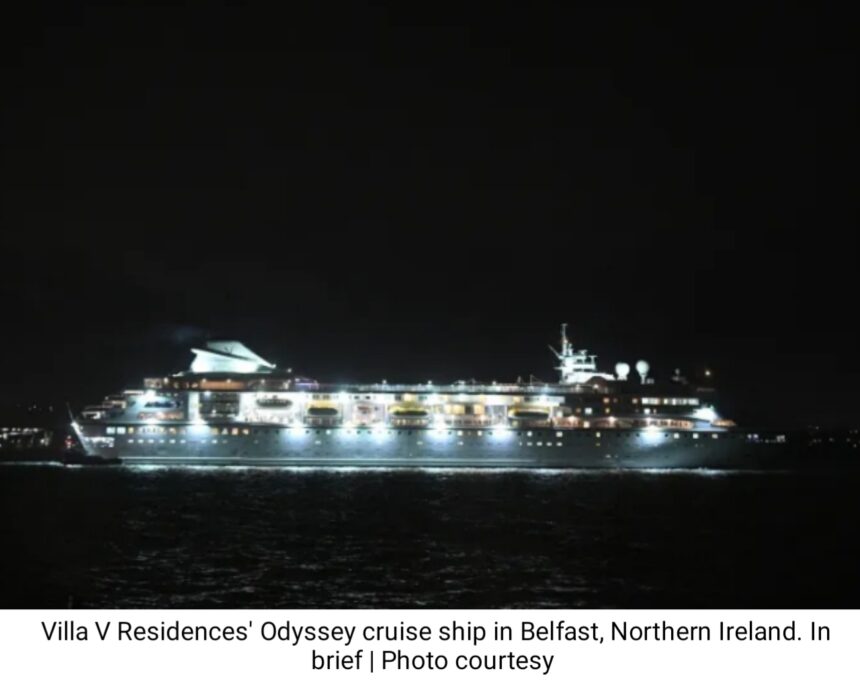
Villa Vie Residences has suspended operations of its residential world cruise in Cambodia after a sharp increase in fuel costs pushed its existing business model under severe financial pressure, bringing an abrupt pause to a voyage marketed as a continuous journey around the world. The company announced on Tuesday, October 27, that its ship, the Villa Vie Odyssey, would enter a temporary lay-up while management works to restructure the business and secure additional financing. Residents were instructed to leave the vessel in Cambodia, while crew members remained on board to maintain the ship and its essential systems. The suspension has disrupted the plans of people who had chosen to live aboard the vessel for an extended period, with some having purchased or leased cabins as an alternative to conventional housing and retirement arrangements. The company said its immediate priorities were to support residents, crew members and employees while it examined options to restore the business to a financially sustainable position. However, it has not confirmed that new financing will be secured or that the cruise will resume.
Fuel expenses rise sharply
At the centre of the crisis is a steep increase in the cost of operating the ship. According to Villa Vie Residences, monthly fuel expenses that historically averaged approximately $1,800 per cabin have recently climbed to an estimated $6,000 to $8,000 in parts of Asia. Depending on the actual cost within that range, the increase represents more than three times the historical average and, at the upper end, more than four times that level. Such a rise creates a serious challenge for a company whose business model depends on keeping a vessel moving while providing accommodation and residential services to its occupants.
The company said it could not reasonably transfer the entire increase to residents, while continuing to absorb the additional expense had become financially unsustainable. The gap between the cost of operating the ship and the revenue available to cover those costs left management unable to continue the voyage under its existing arrangements.
The figures published by the operator are estimates and refer to an equivalent per-cabin calculation rather than necessarily representing the fuel bill for an individual cabin. They illustrate the scale of the pressure facing the business, although the company has not publicly established a final cost for every aspect of the suspension.
The announcement also points to the limits of the measures the company had already taken to reduce expenses. Villa Vie said it had slowed the ship’s itinerary and spent more time in port in an effort to cut fuel consumption. Those changes, however, did not offset the increase sufficiently to prevent continued operating losses.
Residents told to leave the ship
The decision to suspend operations turned an ordinary port stop into a major disruption for residents aboard the Odyssey. In a message to passengers, chief executive Kathy Villalba said the company had been unable to secure the fuel required to continue operating the vessel and that the ship would enter a temporary lay-up.
The message stated: “Unfortunately, we were unable to secure the fuel necessary to continue operations.”
Residents were told to disembark in Cambodia, while crew members would remain aboard to maintain the vessel and its essential systems. The instruction meant that people who had expected to continue travelling around the world suddenly had to make arrangements on land, including accommodation, transportation and decisions about their next destination.
The abrupt change is particularly significant for those who had organised their daily lives around the ship. Unlike passengers on a conventional holiday cruise, residential cruise occupants may treat their cabins as their principal homes for months or years. A suspension can therefore affect their housing arrangements, personal belongings, travel plans and access to the services they expected to receive as part of their residential packages.
Reports from passengers and cruise-industry publications indicate that residents were given a short period to leave the vessel. The company has said it is working with residents to coordinate disembarkation and identify temporary living arrangements. The precise circumstances and needs of individual residents may vary, and the arrangements available to them will be an important part of the company’s response to the suspension.
A residential cruise model faces a major test
Villa Vie Residences operates a concept that differs from a standard cruise holiday. Rather than selling only short trips with a fixed departure and return date, the company offers people the opportunity to live aboard a ship while it travels between destinations around the world. Depending on the arrangement, residents can purchase or lease cabins and remain on board for extended periods.
The Villa Vie Odyssey began its continuous world voyage in 2024, departing from Belfast, Northern Ireland, in October of that year. Its itinerary was designed around ongoing international travel, giving residents the opportunity to visit multiple destinations without repeatedly booking flights and hotels or moving between temporary homes.
For people attracted to this arrangement, the appeal lies in combining accommodation, travel and life aboard a vessel. Residents can maintain a familiar living space while the ship moves between ports, potentially avoiding some of the logistical demands associated with organising international travel independently.
But the model also creates a particular financial vulnerability. A residential ship must continue meeting substantial operating expenses even when residents remain aboard for long periods. Fuel, crew wages, maintenance, port charges, insurance and other costs must be covered through the company’s revenue and available capital. If fuel prices rise rapidly, an operator may find it difficult to adjust its income quickly enough to compensate.
The current suspension demonstrates how a long-term residential arrangement can be affected by costs that are largely outside the control of individual occupants. Residents may have committed substantial sums to life aboard the ship, while the operator must maintain sufficient cash flow to keep the vessel moving and its services functioning.
Middle East conflict adds pressure to the travel industry
Villa Vie has linked the sharp rise in fuel costs to the wider conflict that began in late February. The company said the increase in fuel expenses in the regions where it had been operating placed its business under unsustainable financial pressure.
The wider energy market can affect shipping through changes in crude oil prices, refined marine fuel prices, transport costs and regional supply conditions. Disruptions to important energy routes can also influence fuel availability and the cost of securing supplies. For companies operating ships across several regions, the effects may differ from one port or market to another.
However, the company’s announcement does not provide a complete breakdown of the factors behind the increase from $1,800 to as much as $8,000 per cabin per month. It would therefore be premature to attribute the entire rise to any single event or market development without additional financial and fuel-supply data.
What is clear from the company’s own account is that the increase was too large for its existing operating arrangements to absorb. Slowing the itinerary and spending more time in port were insufficient to eliminate the shortfall, leaving management to choose between continuing to incur losses and suspending operations while it sought a financial solution.
The episode highlights the exposure of travel businesses to sudden operating-cost increases. Airlines, shipping companies and cruise operators can face similar pressure when fuel becomes significantly more expensive, although their ability to respond depends on their contracts, available capital, pricing structures and the flexibility of their operations.
Company seeks restructuring and new financing
Villa Vie Residences said it was evaluating restructuring and recapitalisation options over the next 60 days. Restructuring can involve changes to a company’s financial obligations, operating arrangements or business structure, while recapitalisation generally involves securing new capital or reorganising existing financing to improve its financial position.
For Villa Vie, the immediate challenge is to find a way to meet its obligations, support those affected by the suspension and determine whether the residential cruise model can continue under revised financial arrangements.
New financing could provide funds to cover operating expenses and help the company prepare for a possible return to service. A restructuring could also require management to reconsider costs, routes, contractual arrangements or the way residential services are priced. These are potential approaches rather than confirmed decisions, and the company has not announced a completed transaction.
The operator has also acknowledged that there is no guaranteed outcome. As of its October 27 announcement, no financing deal or transaction had been finalised.
That uncertainty leaves important questions unanswered. Residents will want clarity about temporary accommodation, access to their belongings, future travel arrangements and the status of any cabin purchase or lease agreements. Crew members and other employees may also need information about their employment and the vessel’s future operating plans.
The company will need to provide clear updates as its restructuring work progresses. Until a financial arrangement is secured and the operational requirements are met, there is no confirmed date for the resumption of the continuous voyage.
What happens to the Villa Vie Odyssey now?
During the temporary lay-up, crew members are expected to remain aboard to maintain the ship and its essential systems. A lay-up is a period when a vessel is withdrawn from normal commercial operations, either temporarily or for a longer period, while remaining subject to appropriate maintenance and safety requirements.
The term does not, by itself, establish whether a ship will return to service. That depends on the owner’s financial position, the vessel’s technical condition, the availability of fuel and other supplies, and any necessary operational approvals.
For the Odyssey, the next stage will depend heavily on the outcome of Villa Vie’s efforts to obtain new capital and restructure its business. The ship’s continued maintenance is necessary while those discussions take place, but maintenance alone cannot resolve the financial problems that forced the suspension.
Residents, meanwhile, face more immediate practical concerns. Temporary accommodation may help people who cannot leave Cambodia straight away, but it does not automatically resolve the cost of onward travel or the longer-term question of where they will live. The company’s ability to communicate its plans and coordinate assistance will be closely watched by those affected.
The suspension also raises broader questions about the financial safeguards available to people who choose residential cruising as a long-term living arrangement. Prospective residents may want to understand how cabin payments are protected, what happens if a voyage is suspended, whether accommodation is guaranteed during operational interruptions and what contractual rights apply if a company cannot resume service.
Those questions cannot be answered fully from the suspension announcement alone. The relevant terms will depend on individual contracts and the company’s financial and legal arrangements.
An uncertain future for the endless-cruise concept
The suspension of the Villa Vie Odyssey does not establish that residential cruising as a concept is unworkable. It does, however, show the risks involved when a business depends on continuous ship operations and faces a sudden increase in a major expense.
A residential cruise operator must balance the expectations of people who may regard the vessel as their home against the commercial reality of running a ship. Residents need continuity and reliable services, while the operator needs enough revenue and capital to cover fuel, staffing, maintenance and other expenses. A sharp and sustained increase in costs can strain that balance, especially when the company cannot pass the full increase on to customers.
For Villa Vie Residences, the next 60 days of restructuring and recapitalisation efforts may help determine whether the Odyssey can return to its planned voyage under a revised financial model. Yet the company’s own statement makes clear that the outcome remains uncertain.
For now, the continuous world cruise has been brought to a halt in Cambodia. The vessel’s crew remains aboard to maintain it, while residents face an unexpected interruption to their lives at sea. Whether the journey resumes will depend on the company’s ability to secure financing, address the operating-cost shortfall and establish a sustainable path forward.