Russia has reaffirmed its support for Iran, with Foreign Minister Sergey Lavrov describing Tehran’s objectives as justifiable and accusing the United States and Israel of launching military operations against Iran without provocation. The statement came just hours after US President Donald Trump questioned the extent of Moscow’s assistance to Tehran, highlighting the competing diplomatic positions of Washington and Moscow amid continuing regional tensions.
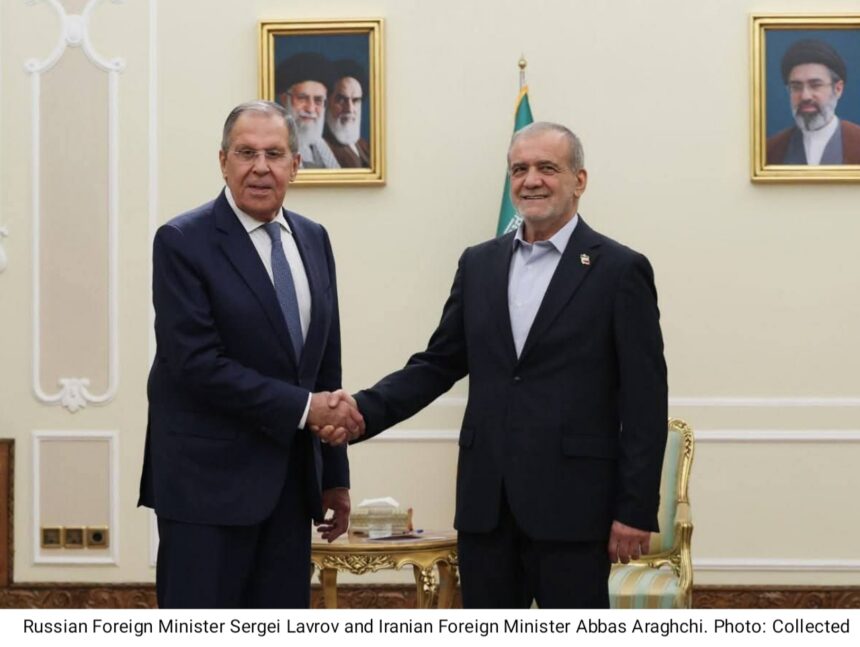
Lavrov made the remarks on Monday, October 19, during a joint press conference in Tehran with Iranian Foreign Minister Abbas Araghchi. He said Russia considered Iran’s objectives just as legitimate as its own, signalling that Moscow had no immediate intention of withdrawing its political support for the Iranian government.
The meeting took place against a backdrop of strained relations between Iran and the United States, continuing tensions involving Israel, and broader disagreements over regional security, international sanctions and energy supplies. Russia’s renewed expression of support also comes as the Trump administration attempts to maintain diplomatic channels with Moscow over the war in Ukraine.
Moscow Challenges Washington’s Assessment of Russian Support
Trump had earlier written on his Truth Social platform that Russia was doing very little, if anything, to help Iran compared with what Moscow could potentially provide. His remarks suggested that Washington viewed Russia’s practical assistance to Tehran as limited, despite the countries’ growing diplomatic engagement and strategic cooperation.
“I want it to stay that way,” Trump wrote in his post, referring to the limited level of Russian assistance he described.
Lavrov’s comments in Tehran offered a contrasting message. While the Russian foreign minister did not publicly provide a detailed account of the scale of Moscow’s assistance, he reiterated Russia’s political backing for Iran and said his country remained prepared to help find a diplomatic solution to the crisis.
The difference between the two statements illustrates the competing narratives surrounding Russia’s relationship with Iran. Washington has questioned the extent of Moscow’s contribution, while the Kremlin continues to present itself as a diplomatic partner willing to support Tehran and oppose military escalation.
However, political declarations and practical military assistance are not the same. Lavrov’s public statements confirmed Russia’s diplomatic position, but they did not establish the precise scale of any military support Russia may or may not be providing to Iran.
That distinction is important as governments and analysts assess the relationship between Moscow and Tehran. Public expressions of solidarity can carry diplomatic significance even when the details of military cooperation remain unclear.
Russia Accuses the United States and Israel of Escalating the Crisis
During his meeting with Araghchi, Lavrov accused the United States and Israel of carrying out military action against Iran without provocation. He argued that their actions had contributed to the crisis and reiterated Moscow’s willingness to help the parties find a mutually acceptable way forward.
According to Lavrov, Russia had again communicated its readiness to assist efforts aimed at overcoming what he described as an artificially created crisis.
His remarks reflect Moscow’s broader criticism of US and Israeli policies in the Middle East. Russia has repeatedly sought to present itself as an alternative diplomatic actor in regional disputes, particularly where its positions differ from those of Western governments.
Washington and Israel, however, have their own security arguments regarding Iran. Their assessments of Tehran’s regional activities and the risks posed by its policies differ sharply from those advanced by the Iranian government and its Russian partner.
The competing interpretations make diplomatic negotiations more complicated. Any lasting settlement would require the parties to address immediate security concerns, establish credible assurances against renewed attacks and agree on a framework for preventing further escalation.
Lavrov welcomed Tehran’s stated interest in pursuing diplomacy and said Moscow remained ready to contribute to efforts to reduce tensions. His comments indicated that Russia wanted to preserve a role in negotiations rather than allow the crisis to be shaped exclusively by Washington and its allies.
Moscow Calls for Stability in the Persian Gulf and Strait of Hormuz
Lavrov also called for a return to conditions in the Persian Gulf and the Strait of Hormuz that existed before the outbreak of the conflict. His remarks placed maritime security and freedom of navigation among the key issues that must be addressed if tensions are to ease.
The Strait of Hormuz is one of the world’s most important energy transit routes, linking the Persian Gulf with international shipping lanes through which substantial volumes of oil and other energy products reach global markets. Any disruption to commercial shipping in the area can create uncertainty for energy producers, shipping companies, import-dependent economies and financial markets.
For countries that rely heavily on imported fuel, prolonged instability in the region can increase transportation costs and place additional pressure on domestic prices. Energy markets can also react to the possibility of supply disruptions before any major shortage actually occurs.
Lavrov’s call for restored freedom of navigation therefore has implications beyond the immediate political dispute. A reduction in military tensions around the Strait of Hormuz could help improve confidence in maritime trade and reduce the risk of further disruption to international energy supplies.
The Russian foreign minister also stressed the importance of preventing renewed military attacks. Such assurances would be central to any diplomatic arrangement, since negotiations would be difficult to sustain if the parties believed that a new round of strikes could begin at any time.
Nevertheless, calls for de-escalation do not in themselves establish an agreement. Progress would depend on the willingness of the governments involved to negotiate, observe any commitments they make and address disagreements over security and regional influence.
Russia Says It Is Providing Humanitarian Assistance to Iran
Alongside its diplomatic position, Moscow has highlighted humanitarian assistance as another part of its engagement with Tehran. Lavrov said Russia was helping Iran with supplies that included medicines and regular food deliveries.
He also said Moscow had worked at the United Nations to prevent efforts to legitimise US and Israeli attacks against Iran. The statement reflects Russia’s intention to use international diplomatic institutions to challenge measures it considers unfavourable to Tehran.
Russia’s approach combines political support, diplomatic engagement and economic cooperation. However, the precise scope of the reported humanitarian deliveries and the arrangements governing their distribution were not detailed in the statements described in the report.
Humanitarian assistance can become particularly important during periods of military confrontation, when supply chains, access to essential goods and public services may face additional pressure. Medicines and food supplies are among the items that can have an immediate effect on civilian welfare.
At the same time, humanitarian assistance should be distinguished from military aid. The announcement of food and medical supplies does not establish that Russia is providing weapons, military personnel or other forms of direct operational support.
That distinction is relevant to Trump’s remarks, which questioned the extent of Russian assistance to Iran. Without further information about the nature and scale of Moscow’s activities, the precise gap between political support and material assistance remains difficult to assess.
Moscow Rules Out Abandoning Economic Agreements With Tehran
Lavrov also made clear that Russia did not intend to abandon its economic and investment agreements with Iran despite the difficult circumstances.
He said Moscow had no plans to withdraw from implementing existing arrangements in the economic and investment sectors. The statement suggests that Russia wants to maintain its long-term economic relationship with Tehran even as the conflict creates additional political and commercial uncertainty.
Economic cooperation can give countries a reason to maintain diplomatic engagement during periods of international tension. For Russia and Iran, continued commercial ties also provide a channel through which the two governments can pursue shared interests while facing pressure from Western governments.
However, maintaining agreements does not necessarily mean that every project will proceed without difficulty. Sanctions, payment restrictions, logistical problems, insurance costs and uncertainty surrounding trade routes can complicate cross-border economic activity.
The long-term effects of the current crisis will depend partly on whether Moscow and Tehran can continue implementing their agreements and whether regional security conditions allow trade and investment to operate with greater predictability.
Russia’s public commitment to preserving these arrangements indicates that Moscow is seeking continuity rather than a reduction in economic engagement with Iran.
Trump Keeps His Focus on Ukraine Peace Negotiations
Trump’s comments about Russia’s assistance to Iran were part of a broader statement in which he also discussed the war in Ukraine and the possibility of reaching a negotiated settlement.
The US president argued that increasing economic pressure on Moscow could make it more difficult to keep Russia engaged in peace negotiations. He said he did not want to take steps that might push the Russian government away from the negotiating table while efforts to end the war continued.
The position reflects a diplomatic calculation: Washington may seek to maintain pressure on Russia while also leaving room for negotiations that could bring an end to the conflict.
The balance between those objectives remains contentious. Critics of easing restrictions on Russia argue that reduced economic pressure could increase Moscow’s resources while the war continues. Supporters of a more flexible approach contend that negotiations may require incentives and practical steps to keep communication open.
Trump’s position also reflects the difficulty of managing several international crises at once. The United States must weigh its policies toward Iran against its efforts to influence Russia’s conduct in Ukraine, while considering the effects of energy prices, sanctions and wider geopolitical competition.
A decision intended to support negotiations on one issue can have consequences for another. Relations with Moscow, for example, are affected by both the war in Ukraine and Russia’s diplomatic relationship with Tehran.
This creates a complicated policy environment in which Washington must consider whether measures designed to advance one objective could weaken another.
Trump Criticises Zelenskyy Over Attacks on Russian Oil Refineries
In the same Truth Social post, Trump criticised Ukrainian President Volodymyr Zelenskyy over continued Ukrainian attacks on Russian oil refineries.
Trump argued that the attacks were affecting global diesel supplies and harming American farmers, businesses and consumers. He placed responsibility for those effects on Ukraine’s strikes rather than on Russia’s invasion of Ukraine or the conflict involving Iran.
He also praised Russia’s reported willingness to supply diesel to international markets at comparatively low prices and accused Zelenskyy of showing insufficient interest in ending the war.
Trump’s comments represent his assessment of the economic and political consequences of the attacks. They should not be treated as an independently established determination that Ukraine’s actions are solely responsible for changes in global diesel supplies or prices.
Energy markets are influenced by a range of factors, including production levels, refinery capacity, shipping costs, sanctions, inventories, seasonal demand and geopolitical risks. Attacks on energy infrastructure can affect supplies, but their wider consequences depend on the condition of the facilities involved and the availability of alternative sources.
Ukraine has pursued strikes against Russian military and energy-related targets during the war. The strategic purpose and consequences of individual attacks vary, and their impact on international markets cannot be determined solely from political statements.
Trump’s criticism nevertheless underscores the growing importance of energy policy in discussions about the war. Oil products such as diesel are essential to agriculture, freight transport, construction and industrial activity, making changes in supply and price politically sensitive.
US Eases Some Restrictions on Russian Energy Supplies
The report also comes amid US decisions to suspend a new package of sanctions against Russia and relax certain restrictions affecting Russian diesel. Those measures have prompted criticism from people concerned that easing restrictions could increase Russian revenue while the war in Ukraine continues.
The White House has presented the policy as part of efforts to keep peace negotiations moving and reduce pressure on global energy markets.
The debate highlights a recurring challenge in sanctions policy. Restrictions can be designed to impose economic costs on a government, but they may also influence international trade, commodity prices and the availability of essential supplies.
Relaxing restrictions can improve access to certain products or reduce market uncertainty, but it may also create additional revenue opportunities for the country concerned. The actual effects depend on the scope of the measures, how markets respond and whether other restrictions remain in place.
In Russia’s case, the issue is particularly sensitive because energy exports are an important source of government revenue. Any policy change affecting the sale of Russian oil products can therefore carry both economic and geopolitical consequences.
Washington faces the task of balancing its stated goal of ending the war with the need to avoid measures that could undermine pressure on Moscow. The effects of the recent decisions will depend on how they are implemented and whether they form part of a broader negotiating strategy.
A Diplomatic Challenge for Washington, Moscow and Tehran
Russia’s renewed support for Iran highlights the difficulty of separating the different conflicts and diplomatic calculations shaping international politics.
For Moscow, maintaining relations with Tehran can preserve an important regional partnership and provide an opportunity to challenge US and Israeli policies. Continued economic agreements may also help sustain bilateral ties during a period of uncertainty.
For Tehran, Russian diplomatic backing offers an additional international partner at a time of heightened tension. Moscow’s willingness to discuss mediation could provide another channel for communication, although the effectiveness of that role would depend on whether the parties accept its involvement and whether Russia can help bridge their differences.
For Washington, the situation presents competing priorities. The Trump administration has expressed interest in ending the war in Ukraine through negotiations while also addressing the confrontation involving Iran. Its decisions on sanctions, energy supplies and relations with Moscow could influence how other governments interpret US policy.
Yet Russia’s declaration of support for Iran does not necessarily mean that Moscow is prepared to take every possible step on Tehran’s behalf. Diplomatic solidarity, humanitarian assistance, economic cooperation and direct military involvement are separate forms of engagement, and the available statements do not establish that they are all taking place at the same level.
The same caution applies to the possibility of a wider strategic alignment. Shared opposition to particular US policies can encourage cooperation between Russia and Iran, but their interests are not automatically identical on every regional or international issue.
What Happens Next?
The immediate question is whether the diplomatic messages exchanged by Washington and Moscow will translate into practical efforts to reduce tensions involving Iran.
Lavrov has said Russia is ready to help pursue a mutually acceptable solution and has called for freedom of navigation and guarantees against renewed attacks. These proposals point toward several possible areas of negotiation, including maritime security, the prevention of further military action and the restoration of conditions that allow commercial shipping to operate safely.
However, a diplomatic opening would need to be followed by concrete steps. The governments involved would have to identify acceptable terms, establish reliable channels of communication and address the security concerns that have contributed to the confrontation.
The economic dimension will remain important as well. Russian energy exports, sanctions policy and the security of shipping routes could all influence the calculations of governments seeking to reduce the costs of continued conflict.
For now, Moscow’s message is clear: Russia intends to maintain its diplomatic and economic relationship with Iran and remains willing to participate in efforts to resolve the crisis. Trump’s remarks, meanwhile, show that Washington is assessing Russia’s role through the wider context of its policies toward Iran, Ukraine and international energy markets.
Whether these competing positions lead to negotiations or deepen existing divisions will depend on the actions that follow the public statements. The latest exchange demonstrates that the relationship between Russia, Iran and the United States remains closely linked to wider questions of war, energy security and the future of international diplomacy.
Source: Euronews