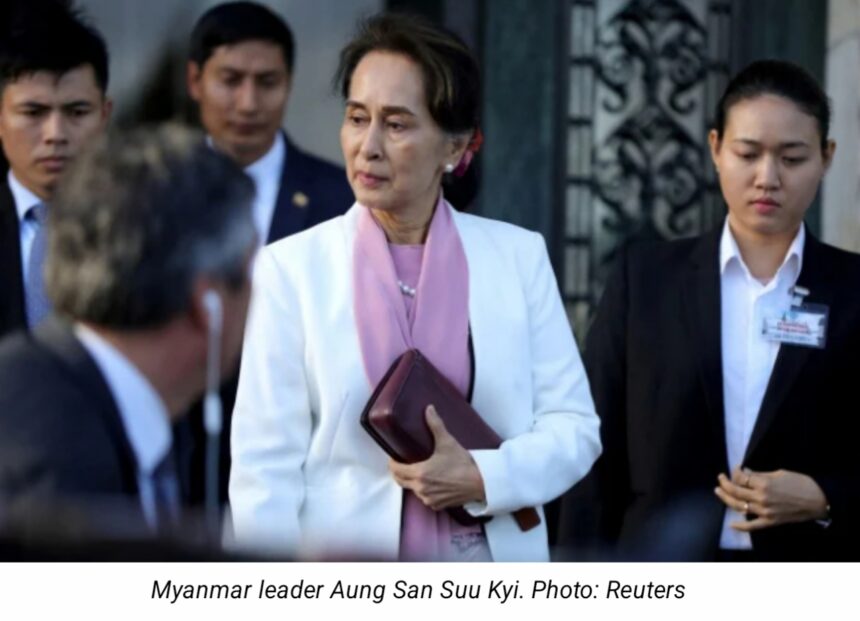
More than five years after Myanmar’s military overthrew the elected government, the fate of Nobel Peace Prize laureate and former State Counsellor Aung San Suu Kyi remains one of Southeast Asia’s greatest political mysteries. Despite repeated assurances from Myanmar’s military authorities that the 81-year-old democracy icon is alive and in good health, no independent observer, diplomat, legal representative, or family member has been allowed to see her since late 2022. The prolonged secrecy surrounding her condition has intensified international concern and fueled speculation about her health, whereabouts, and even whether she is still alive.
The uncertainty has become deeply personal for Suu Kyi’s younger son, Kim Aris, who has spent recent months traveling across the world, urging governments and international organizations to demand proof that his mother is alive. His campaign has gained additional emotional significance following the death of Suu Kyi’s beloved dog, Tae Chit Toe, which passed away at the age of fifteen at her family home in Yangon. The dog, given to Suu Kyi by Aris after her release from house arrest in 2010, reportedly waited faithfully for her return until its final days, symbolizing the prolonged separation imposed by Myanmar’s military rulers.
Since the military coup of February 2021, led by Senior General Min Aung Hlaing, Suu Kyi has been subjected to a series of closed-door trials widely condemned by the international community as politically motivated. She received lengthy prison sentences on multiple charges ranging from corruption to violations of state secrecy laws. Following the conclusion of those proceedings in late 2022, she disappeared entirely from public view. Even her lawyers have been denied access, while independent verification of reports regarding her detention has become virtually impossible.
Earlier this year, Myanmar’s military government claimed that Suu Kyi had been transferred from prison to house arrest. However, diplomats seeking permission to visit her have consistently been refused. Authorities continue to insist that she is “in good health” but have provided no credible evidence to support their claims. A single photograph released during the reported transfer appeared to show Suu Kyi speaking with military and police officials inside an unidentified building, yet no information has been provided regarding when or where the image was taken. Kim Aris has publicly questioned the authenticity and timing of the photograph, arguing that if his mother is indeed under house arrest, it is almost certainly not at her former residence in Yangon, while her house in Naypyidaw has reportedly already been demolished.
The secrecy surrounding Suu Kyi has become an increasingly significant diplomatic issue. During recent meetings with Myanmar’s military leader, Indian Prime Minister Narendra Modi reportedly raised concerns about Suu Kyi’s situation. Similarly, United Nations Special Envoy on Myanmar Julie Bishop requested permission to meet her during discussions with Min Aung Hlaing. Diplomats familiar with those meetings say the military leader reacted angrily whenever Suu Kyi’s name was mentioned, refusing to engage in meaningful discussion about her condition.
Some diplomats privately fear that the unusually hostile response could indicate that Myanmar’s military is unable to provide credible proof that Suu Kyi is alive or in stable health. Others, however, caution against such conclusions. Morgan Michaels, a Myanmar expert at the International Institute for Strategic Studies in London, argues that concealing the death of such a globally recognized political figure for an extended period would be extraordinarily difficult. Other diplomatic observers believe the military’s refusal stems less from concerns about her health and more from General Min Aung Hlaing’s longstanding political hostility toward his most influential rival.
The uncertainty surrounding Suu Kyi also reflects the broader crisis engulfing Myanmar. Since the 2021 coup, the country has descended into one of the world’s most complex internal conflicts. Numerous ethnic armed organizations have joined forces with newly formed resistance groups representing Myanmar’s ethnic Bamar majority, creating an unprecedented nationwide movement against military rule. While Suu Kyi remains an iconic figure among millions of supporters, her relationship with many ethnic minority groups remains complicated because of criticism directed at her government’s handling of minority rights during her years in power.
Despite these divisions, Suu Kyi continues to command enormous symbolic influence among Myanmar’s majority population. Her supporters continue to commemorate her birthday and express loyalty despite severe risks. Reports indicate that authorities recently arrested a member of her National League for Democracy party simply for organizing charitable food donations to Buddhist monks in her honor, highlighting the military government’s continued sensitivity to her political legacy.
Meanwhile, Myanmar’s military leadership is seeking greater international legitimacy by attempting to restore full participation within the Association of Southeast Asian Nations (ASEAN) and reclaim the country’s diplomatic standing at the United Nations. Since the coup, Myanmar’s UN seat has remained occupied by a representative appointed by the ousted civilian government. Many diplomats believe that allowing access to Suu Kyi—or releasing her altogether—could significantly improve relations between the junta and the international community. Yet the military leadership has shown little willingness to take such steps.
Beyond Suu Kyi’s personal fate lies an even broader humanitarian catastrophe. According to the Assistance Association for Political Prisoners (AAPP), more than 14,500 political prisoners remain detained across Myanmar. Prison conditions are reported to be extremely harsh, with inadequate medical care, overcrowding, and severe heat. More than 60 political detainees have reportedly died in custody this year alone. Combined with ongoing armed conflict, widespread displacement, economic collapse, and persistent human rights abuses, Myanmar’s crisis continues to affect tens of millions of civilians.
As international attention focuses on the unanswered questions surrounding Aung San Suu Kyi, human rights advocates warn that the suffering of Myanmar’s broader population must not be overlooked. Whether she remains alive, critically ill, or simply hidden from public view, the continued secrecy surrounding the country’s most prominent political leader has become a powerful symbol of Myanmar’s democratic collapse. Until credible information about her condition emerges and meaningful political dialogue resumes, both her personal fate and Myanmar’s wider humanitarian tragedy will remain among the world’s most urgent unresolved crises.
Aung San Suu Kyi in the silent darkness of Myanmar: Alive or dead – the mystery is growing around the world, the junta government is under diplomatic pressure