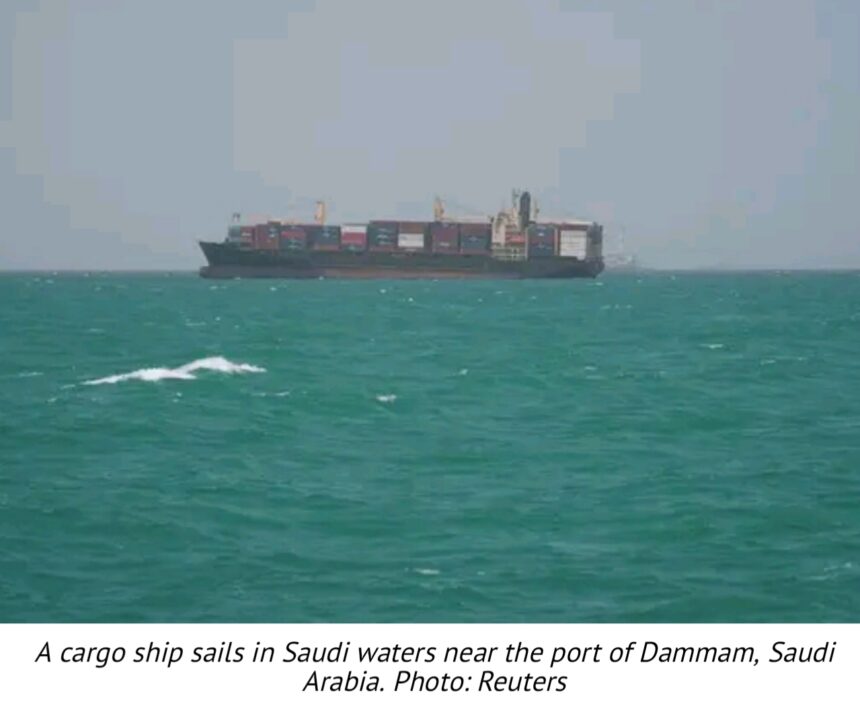
According to Saudi Arabia’s state news agency, citing an official from the General Transport Authority, the vessel sustained only minor damage to its hull during the incident. Following immediate safety inspections, authorities confirmed that the ship remained seaworthy and that all crew members were safe and unharmed. After the assessment was completed, the vessel resumed its voyage and continued towards its scheduled destination without further incident.
The attack comes at a time when the Red Sea remains at the centre of growing regional tensions and persistent threats to international shipping. As one of the world’s busiest trade routes, the waterway serves as a vital link between Europe, Asia and the Middle East, carrying a significant share of global oil, liquefied natural gas, manufactured goods and commercial cargo. Any disruption in this strategic corridor has the potential to affect global supply chains, increase shipping costs, raise insurance premiums and create volatility in international energy markets.
Saudi authorities have not yet disclosed the nature of the attack or identified those responsible. An investigation is expected to determine the circumstances surrounding the incident, while regional and international maritime security organisations continue to closely monitor developments. The latest attack underscores the fragile security environment in the Red Sea, where commercial vessels have increasingly faced threats from missiles, drones and other forms of maritime attacks in recent months.
Although the damage to the vessel was limited and no casualties were reported, the incident serves as another reminder of the growing challenges confronting global maritime trade. Shipping companies operating in the region continue to face heightened operational risks, forcing many to strengthen security measures, reassess sailing routes and prepare for potential disruptions. Analysts warn that if attacks on commercial shipping continue, the consequences could extend well beyond the region, placing additional pressure on global trade, energy security and the stability of international shipping networks.
The successful continuation of the vessel’s voyage demonstrates the effectiveness of emergency safety procedures, but the broader security concerns remain unresolved. With geopolitical tensions continuing to shape the maritime landscape of the Red Sea, governments and international partners are expected to intensify efforts to safeguard one of the world’s most critical sea lanes and ensure the uninterrupted flow of global commerce.
Maritime security crisis deepens in Red Sea, Saudi ships attacked