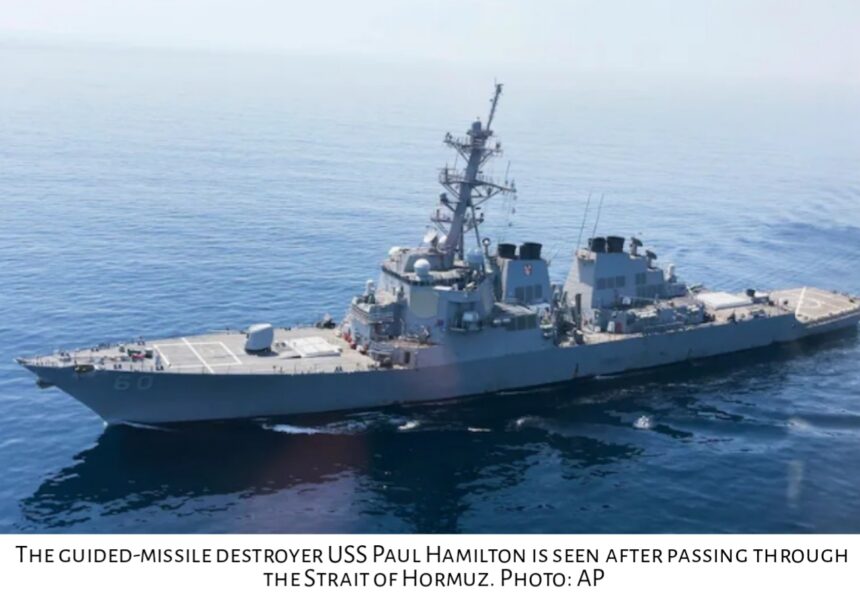
The United States is facing growing pressure on its naval missile defense capabilities as a shortage of Navy destroyers raises difficult strategic choices over the allocation of military resources, according to a report by The Washington Post citing anonymous U.S. officials. The report says the top U.S. military commander in Europe has privately warned the Pentagon that the limited number of available destroyers is stretching American forces thin, creating the possibility that Washington could eventually be forced to prioritize defending the U.S. homeland over deploying additional assets to protect Israel from potential Iranian ballistic missile attacks. The reported warning highlights the mounting strain on the U.S. Navy as it attempts to sustain simultaneous security commitments across Europe, the Middle East, and the Indo-Pacific amid an increasingly volatile global security environment. Guided-missile destroyers equipped with advanced air and missile defense systems have become a central element of U.S. efforts to counter ballistic missile threats and support allied defenses, particularly during periods of heightened regional tensions involving Iran and Israel. According to the report, senior military planners are reassessing how finite naval assets should be distributed if multiple crises emerge at the same time, balancing commitments to allies with the fundamental mission of protecting the American homeland. The reported assessment comes as Washington continues to emphasize its commitment to Israel’s security while also responding to a widening range of global military demands, including deterrence operations in Europe and expanding strategic competition in the Indo-Pacific. Defense analysts say the reported concerns underscore the growing challenge of maintaining credible missile defense coverage across multiple theaters without significantly expanding available naval resources. If such resource constraints persist, they could influence future U.S. force posture, alliance planning, and broader strategic decision-making, particularly during any period of simultaneous regional conflicts. The Pentagon has not publicly confirmed the reported internal assessment, and the details remain based on anonymous officials cited by The Washington Post. Nevertheless, the report has renewed attention on the increasing demands placed on the U.S. military and the difficult trade-offs that could arise if global security crises continue to intensify simultaneously.
In the destroyer crisis, Washington may prioritize protecting its own territory over that of the United States and Israel