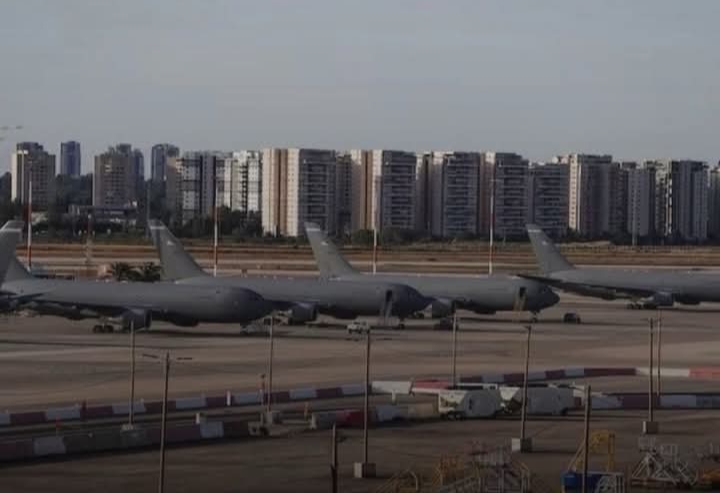
Fresh concerns are mounting over the risk of a wider conflict in the Middle East following reports that the United States is preparing to deploy additional aerial refuelling aircraft to Israel, a move that military analysts say could significantly enhance the operational range and endurance of Israeli combat aircraft in the event of a prolonged military campaign. The development comes amid renewed tensions between Israel and Iran after weeks of escalating exchanges involving missiles, drones and threats of further retaliation, raising fears that the fragile regional security environment could deteriorate rapidly. While U.S. and Israeli officials have described military deployments as defensive measures intended to strengthen deterrence and readiness against potential threats, Iranian officials have portrayed the moves as evidence of increasing military pressure and warned that any new attack would trigger a forceful response. Security experts note that aerial refuelling capabilities are a critical component of long-range air operations, allowing fighter jets and bombers to remain airborne for extended periods and conduct missions far beyond their normal operational radius. The reported deployment has therefore attracted close attention from governments and defence analysts across the region, many of whom fear that continued military buildups could increase the likelihood of miscalculation or unintended escalation. The strategic importance of the Strait of Hormuz, through which a substantial share of the world’s seaborne oil exports passes, has further intensified international concern, as any disruption to shipping routes could send shockwaves through global energy markets and international trade. Diplomatic efforts aimed at reducing tensions have continued, with several regional and international actors urging restraint and calling for dialogue to prevent another large-scale confrontation. The United Nations and multiple governments have reiterated the importance of adhering to international law, protecting civilians and pursuing diplomatic solutions rather than military escalation. Analysts caution that although none of the principal actors may seek a full-scale regional war, the combination of heightened military deployments, retaliatory threats and an increasingly volatile security environment leaves little room for error. They warn that even a limited exchange could quickly expand into a broader conflict with severe humanitarian, economic and geopolitical consequences extending far beyond the Middle East, underscoring the urgent need for sustained diplomacy and crisis management.
More US refueling planes in Israel, fear of military conflict across the Middle East