
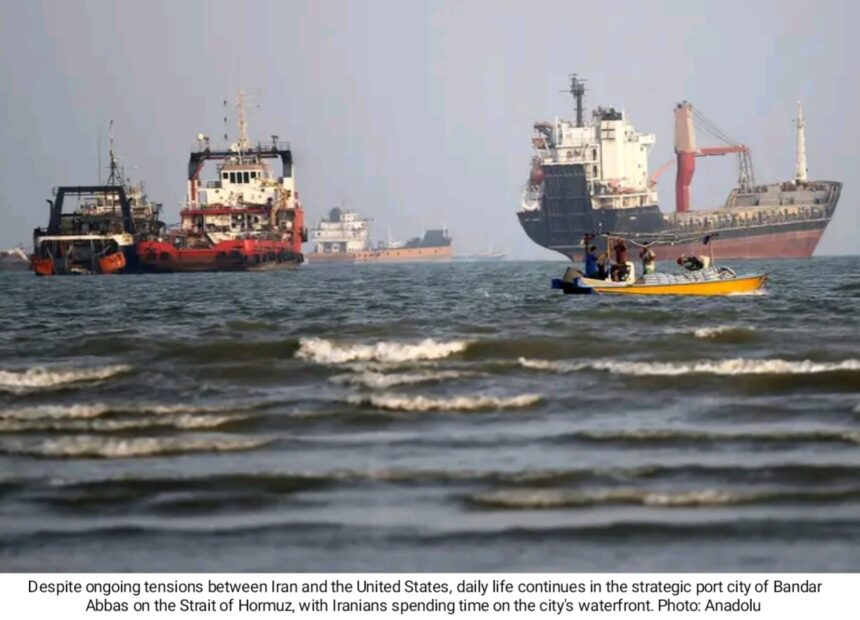
The strategic balance around the Strait of Hormuz is changing as crude oil shipments through the vital waterway recover after months of disruption caused by the conflict between Iran and the United States. The recovery has raised questions about whether Tehran’s ability to use the strait as economic and diplomatic leverage is weakening, even as the wider security situation remains unstable and negotiations between Iran and the United States continue.
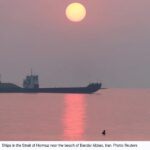
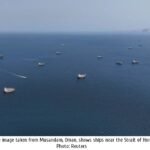
The Strait of Hormuz is one of the world’s most important energy routes. It connects the Persian Gulf with the Gulf of Oman and the wider Indian Ocean, providing a major passage for oil and other energy products from several Gulf producers. Any prolonged disruption in the waterway can therefore affect international energy markets, shipping costs and economies far beyond the Middle East.
According to data cited by Reuters from commodity analytics firm Kpler, crude oil exports from major Middle Eastern producers reached an estimated 16.328 million barrels per day in September. That was the highest monthly level since the conflict began in late February. Exports through the Strait of Hormuz were expected to reach about 9.719 million barrels per day during September.
The figures indicate a substantial recovery, although regional exports remain below their pre-war level. Kpler estimated that Middle Eastern crude exports were still about 3.2 million barrels per day below the 19.513 million barrels per day recorded in February. In other words, the flow of oil has improved considerably, but the energy corridor has not returned to normal conditions.
Saudi Arabia has played a major role in the recovery. Its exports were estimated at around 5.4 million barrels per day in September, compared with 2.446 million barrels per day in August. The increase came as Saudi Arabia adjusted its export routes after attacks damaged part of its East-West pipeline infrastructure, increasing the importance of shipments through the Gulf route.
For Iran, the recovery in shipping creates a complicated strategic situation. Tehran has long viewed its geographical position around the Strait of Hormuz as an important source of influence. During the current conflict, restrictions on shipping through the waterway became closely linked to the military confrontation and the economic pressure imposed on Iran.
The reopening or partial restoration of maritime traffic could reduce some of the immediate pressure on global energy markets. At the same time, however, it could weaken one element of Iran’s bargaining position if oil and commercial vessels continue to pass through the strait despite the unresolved conflict.
Iran disputes the idea that its influence over Hormuz has disappeared. Hossein Mohebbi, a spokesperson for Iran’s Islamic Revolutionary Guard Corps, said the military conflict in the strait was continuing. His comments indicate that Tehran still regards the waterway as an active part of the confrontation rather than a completely restored commercial route.
The security situation also remains uncertain. The United Kingdom Maritime Trade Operations centre reported that unknown projectiles struck three ships in the waterway on Tuesday, including a crude oil tanker, according to the Al Jazeera report. Such incidents underline why the recovery in oil flows should not be interpreted as a complete return to normal maritime conditions.
The cost of shipping also reflects the continuing risks. Tanker insurance rates remain elevated because insurers and shipping companies continue to face uncertainty about attacks, military operations and the possibility of another disruption. Even when vessels can pass through Hormuz, higher insurance and security costs can make transportation more expensive.
Oil prices provide another indication of the uncertainty. Brent crude fell to around $102.59 a barrel on Tuesday as traders responded to signs that Middle Eastern exports were recovering. Despite that decline, the benchmark was still heading for a monthly increase of roughly 13 percent in September, according to the Al Jazeera report.
The market therefore appears to be responding to two competing developments. On one side, the increase in crude shipments suggests that some of the physical supply disruption is easing. On the other, investors remain concerned that military escalation could quickly interrupt those flows again.
This uncertainty is particularly important because the Strait of Hormuz is not simply a regional shipping route. Before the conflict, large numbers of commercial vessels crossed the waterway every day, including oil tankers carrying millions of barrels of crude. Reuters reported that 19 very large crude carriers, each capable of carrying about two million barrels, passed through the strait during one recent week.
Shipping data also has limitations. Some vessels may travel with their tracking systems switched off, meaning publicly available vessel-tracking information cannot capture every movement. As a result, estimates of traffic through Hormuz should be treated as indicators rather than a complete record of every vessel crossing the waterway.
The economic pressure on Iran is another major factor in the negotiations. Iran has faced extensive sanctions for years, and the latest conflict has added military and logistical pressure to an already difficult economic environment.
According to official Iranian data cited by Al Jazeera, Iran’s gross domestic product contracted by 10.1 percent year on year between March 21 and June 20. The country’s oil and gas sector contracted by 26.4 percent over the same period. Inflation has also remained extremely high, while the Iranian rial has weakened sharply against the US dollar.
These economic conditions increase the importance of oil exports and access to foreign currency. Restrictions on Iranian shipping and exports can therefore have consequences well beyond the energy sector, affecting government revenues, businesses and ordinary households.
Iranian officials and analysts, however, have argued that economic pressure does not automatically mean Tehran will accept Washington’s conditions. Negar Mortazavi, an Iran-focused political analyst cited by Al Jazeera, said Iran has previously demonstrated a willingness to tolerate significant economic pressure rather than accept an agreement entirely on US terms.
The United States is also experiencing economic consequences from the conflict. Higher energy costs have contributed to pressure on consumers, while diesel prices in the United States have risen sharply. The Trump administration has discussed measures related to fuel exports as it attempts to manage domestic energy costs.
This creates a broader economic dimension to the conflict. Iran is under pressure from sanctions and restrictions on energy exports, while the United States and other economies remain exposed to the global consequences of higher oil prices and disrupted shipping.
The Strait of Hormuz therefore functions as both a physical energy corridor and a bargaining point in diplomacy. Any agreement that restores reliable commercial traffic could have an immediate effect on energy markets, shipping insurance and regional trade.
Diplomatic contacts between Washington and Tehran have continued despite the military confrontation. At the United Nations General Assembly in New York, US special envoys Steve Witkoff and Jared Kushner met Iranian Foreign Minister Abbas Araghchi for indirect discussions. US President Donald Trump later described the encounter as productive.
Iran subsequently proposed a seven-day roadmap under which the Strait of Hormuz would be reopened and normal maritime traffic restored if Washington accepted a series of conditions. Those conditions included an end to the naval blockade, sanctions relief and the release of frozen Iranian funds.
Trump rejected the proposal in its presented form, while US officials continued to insist that the nuclear issue must remain part of any broader agreement. Reuters later reported that Araghchi received US feedback on the Iranian proposal through Qatari mediators. The discussions suggest that negotiations have not completely broken down, although major differences remain over the order and timing of possible measures.
The question of sequencing is important. Iran wants immediate steps that could reduce military and economic pressure, while Washington has continued to push for commitments linked to Iran’s nuclear programme and other security concerns. Each side is therefore seeking assurances before making concessions.
The Strait of Hormuz sits at the centre of this dispute because its reopening could become one of the first visible signs of de-escalation. If shipping becomes more predictable, insurance costs could gradually fall and oil markets could receive additional reassurance. If attacks or military confrontations continue, however, the recent recovery in traffic could quickly reverse.
The situation also affects countries that are not directly involved in the conflict. Major Asian economies depend heavily on Middle Eastern energy supplies, and any renewed disruption could increase transportation and production costs. European economies could also face higher energy prices through global market effects.
For Gulf states, the stakes are even more direct. Saudi Arabia, the United Arab Emirates, Qatar, Kuwait, Oman and Iraq all have economic interests tied to the security of regional energy routes. Their ability to export oil and gas depends partly on maintaining secure maritime connections with international markets.
The recent recovery in oil exports therefore does not mean that the strategic importance of Hormuz has declined. Instead, it shows how quickly shipping patterns can change when producers find alternative routes or when security conditions improve.
For Iran, the challenge is to preserve its influence over the waterway without creating a level of disruption that could further damage its own economy. For the United States, the challenge is to maintain pressure on Tehran while limiting the economic consequences of a prolonged energy crisis. For international markets, the key question is whether the recent recovery in oil flows can continue.
The coming weeks could provide clearer evidence. Continued increases in tanker traffic, lower insurance costs and more stable oil prices would indicate that commercial confidence is returning. New attacks, renewed military operations or restrictions on shipping could produce the opposite effect.
For now, the evidence points to a partial recovery rather than a return to normality. Middle Eastern crude exports have climbed significantly from the lows seen during the conflict, but they remain below pre-war levels. Oil is moving through Hormuz again in larger volumes, yet security risks and insurance costs remain high.
The future of the Strait of Hormuz will therefore remain closely connected to the diplomatic efforts between Iran and the United States. If negotiations produce a broader ceasefire or agreement, the waterway could gradually return to more predictable commercial activity. If talks fail and military confrontation resumes, the economic and strategic importance of Hormuz could once again become central to the conflict.
For Tehran and Washington, the negotiations are about much more than oil shipments. They involve sanctions, military pressure, Iran’s nuclear programme, regional security and the future balance of power in the Middle East. The Strait of Hormuz is where many of these issues meet.
As September comes to an end, the recovery of oil flows has changed the immediate picture, but it has not removed the underlying risks. Iran still retains significant geographical influence around the waterway, while the United States and its partners retain substantial military and economic tools. The direction of the conflict will depend largely on whether diplomacy can turn the recent movement toward greater shipping activity into a lasting reduction in tensions.
For global energy markets, the message is straightforward: more oil is moving, but the route is still exposed to geopolitical risk. Until a wider political settlement is reached, the Strait of Hormuz will remain one of the most closely watched points in the global energy system.