
Iranian Supreme Leader Ayatollah Sayyid Mojtaba Khamenei has said that more than 30 million people across Iran have declared their readiness to sacrifice their lives for the country, as Tehran continues to present national mobilisation as a central part of its response to the ongoing confrontation with the United States and Israel.
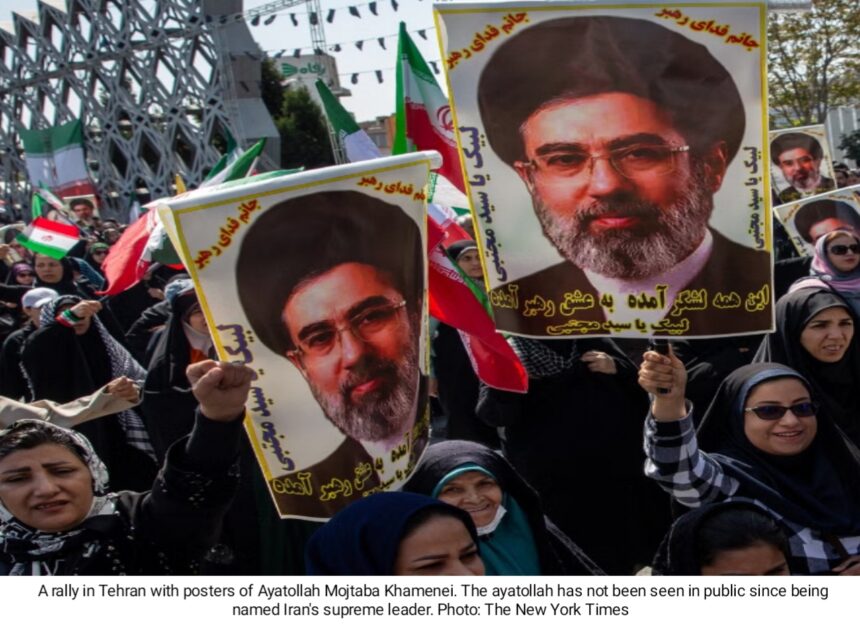
In a message issued on September 28, Khamenei said that expressions of readiness were continuing across Iran, including declarations for organised and armed participation. His remarks came as the Iranian government has expanded a nationwide volunteer campaign known as “Janfada-ye Iran,” or “Sacrifice for Iran,” which has included large public rallies, military-style demonstrations and basic weapons training for volunteers.
The figure of more than 30 million, however, has not been independently verified. Iranian officials and state-linked organisations have repeatedly cited the number, while international news organisations including the Associated Press have reported that they could not independently confirm the scale of the claimed mobilisation. Iran has a population of roughly 90 million, meaning that the government’s figure would represent about one-third of the country’s population.
Khamenei’s latest statement therefore carries significance primarily as an official description of the Iranian government’s mobilisation campaign rather than as an independently established measure of public support.
A campaign built around national mobilisation
The “Janfada” campaign has emerged as one of the most visible examples of Iran’s effort to organise civilian participation during the current conflict.
The campaign’s name refers to people prepared to sacrifice themselves for Iran. Iranian officials have presented it as a national defence initiative intended to prepare civilians to assist the country during wartime.
The campaign became increasingly visible in September. On September 18, hundreds of thousands of people took part in a government-organised military-style parade in Tehran. The event included members of the Islamic Revolutionary Guard Corps, women carrying rifles, military vehicles and displays of Iranian drones and other weapons.
The Associated Press described the gathering as the largest government-organised demonstration of defiance since the war began. Iranian officials used the event to emphasise national unity and readiness to defend the country.
Iranian authorities said that more than 30 million people had registered with the campaign. The Associated Press, however, said it could not independently confirm the figure.
That distinction is important because the number is being used by Iranian officials as evidence of broad national mobilisation, while independent observers do not have access to the underlying registration data.
The campaign has nevertheless produced visible activity on the ground. Thousands of people participated in public demonstrations in Tehran, while organisers announced further training programmes for volunteers.
On September 25, thousands of motorcyclists also took part in a Tehran parade associated with the campaign. Spain’s EFE news agency reported that the event included police officers, soldiers and civilians and was part of the government-backed effort to recruit and prepare volunteers for national defence.
Claims of armed participation
Khamenei’s September 28 message went beyond a general expression of national solidarity.
According to reports on his statement, he said that more than 30 million Iranians had declared their willingness to sacrifice themselves and that, when participants were later asked to renew their declarations for organisational purposes, more than 500,000 responded within the first 100 minutes.
Shafaq News reported that Khamenei described armed readiness as continuing across Iran. The statement linked the mobilisation to the broader conflict and to Iran’s position over the Strait of Hormuz.
Iran International also reported Khamenei as saying that more than 30 million people had declared themselves ready for self-sacrifice and that a capacity of 500,000 people for an organisational call-up had been filled within 100 minutes.
The figures should again be understood as claims from Iranian authorities. They do not establish that 30 million people have been independently verified as ready for military service or combat.
The distinction between registering support, declaring readiness and actually becoming part of an organised armed force is also important. Registration in a mobilisation campaign does not necessarily mean that every participant has received military training, been assigned a role or been incorporated into Iran’s formal military structure.
Tehran’s public display of military readiness
The campaign has coincided with a series of highly public demonstrations of military preparedness.
During the September 18 parade in Tehran, Iranian forces displayed drones, anti-aircraft equipment and other military hardware. Participants carried Iranian flags and images of Supreme Leader Mojtaba Khamenei and his father, former Supreme Leader Ali Khamenei.
The parade also featured women associated with the Revolutionary Guard carrying rifles and military personnel displaying weapons.
According to the Associated Press, the event was organised as a show of defiance after months of war and came at a time when Iran was facing economic pressure, sanctions and disruption to maritime traffic around the Strait of Hormuz.
EFE later reported that the campaign had entered a training phase, with organisers saying that around 500,000 volunteers had taken part in military training. EFE also reported Iranian claims that the wider campaign had about 30 million members nationwide.
The scale of the public demonstrations provides evidence that the campaign is a real and organised political and social mobilisation effort. It does not, however, independently establish the much larger national registration figure claimed by Iranian officials.
The Strait of Hormuz remains central
Khamenei’s September 28 message also focused heavily on the Strait of Hormuz and the surrounding waters.
He argued that hostile forces that had previously operated south of Iran were no longer advancing beyond the Arabian Sea because of what he described as strikes by Iranian fighters and defenders of the Strait of Hormuz.
He further said that the time would come when the Arabian Sea would also be cleared of those forces.
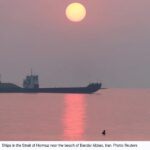
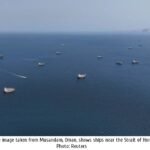
The Strait of Hormuz has been at the centre of the wider confrontation because it is one of the world’s most important maritime routes for energy shipments. Any prolonged disruption in the waterway has consequences far beyond Iran and the immediate military confrontation.
The Associated Press reported in September that Iran had displayed drones used against ships in the Strait and that attacks and threats in the area had severely affected Gulf shipments of oil and natural gas. The agency also reported that overall shipping traffic remained sharply below pre-war levels.
The Iranian government has repeatedly portrayed control and defence of the Strait as a matter of national sovereignty. Khamenei’s latest remarks place the civilian mobilisation campaign within the same broader framework.
Why the 30 million figure matters
The number of 30 million is politically significant because of its scale.
Iran has a population of roughly 90 million. If the government’s figure were accurate, it would mean that approximately one out of every three people in the country had registered some form of readiness through the campaign.
But registration figures can mean different things depending on how a programme is organised. A person may register online, attend a public event, express political support or volunteer for future activities without becoming a combatant.
This is why the wording used by Iranian authorities and the independent reporting around it need to be separated.
Iranian officials describe the campaign as evidence of broad public readiness. International news organisations have reported the official claims while noting that they could not independently verify the total.
The Associated Press specifically reported in May that Iranian officials had said more than 30 million people had volunteered through online registration or public gatherings, but the agency could not independently confirm the figure.
That same figure has since appeared repeatedly in Iranian official messaging and in reporting about the September mobilisation campaign.
A message aimed at both domestic and foreign audiences
The campaign also serves a wider communications purpose.
Inside Iran, the government is seeking to demonstrate that the country remains organised despite prolonged conflict and economic pressure. Large rallies and military-style parades provide highly visible evidence of state mobilisation.
Outside Iran, the same images communicate a different message: that any attempt to pressure Tehran militarily could face a large civilian mobilisation.
The September 18 parade was particularly important in this respect. Hundreds of thousands of people were brought together in Tehran while senior Iranian political and military officials watched the proceedings.
Iranian officials presented the event as evidence that the country was prepared to defend itself. The participation of civilians alongside military and paramilitary personnel blurred the visual boundary between formal military forces and the wider mobilisation campaign.
The campaign therefore appears to have two connected dimensions. One is practical, involving registration and training. The other is symbolic, presenting an image of national unity and resistance.
Iran’s difficult domestic environment
The mobilisation campaign is taking place against a difficult domestic backdrop.
Iran has faced serious economic pressure during the conflict, including sanctions, restrictions on trade and disruption to shipping. The country has also experienced major political unrest.
The Associated Press reported that large protests earlier in 2026 began with economic grievances and later developed into wider opposition to the political establishment. Iranian authorities responded with a major security crackdown.
Against this background, the government’s effort to demonstrate public unity has an additional domestic dimension.
The authorities want to show that the war has brought people together around national defence rather than producing political fragmentation.
That does not mean that all Iranians share the same political position. A government-organised rally demonstrates participation by those who attend, but it cannot by itself measure the views of an entire population.
This is another reason why the 30 million figure requires caution.
Iran’s military structure and civilian volunteers
Iran already has a large and complex security structure that includes the regular armed forces, the Islamic Revolutionary Guard Corps and the Basij organisation.
The Basij has historically played a role in mobilising civilians and supporting the state during periods of political or military tension.
The new volunteer campaign adds another layer to that mobilisation system.
The September demonstrations showed volunteers receiving or displaying weapons and participating in military-style activities. Iranian officials have described the initiative as preparation for national defence.
However, the exact relationship between the new volunteers and Iran’s formal military command structure remains less clear from publicly available information.
A large registration campaign does not automatically create a conventional military force. Training, command structures, logistics, equipment and operational assignments would all be required for volunteers to function as an organised fighting force.
A broader regional confrontation
The mobilisation campaign cannot be separated from the wider regional conflict.
Iran’s confrontation with the United States and Israel has already affected neighbouring countries, energy markets and maritime traffic.
The Strait of Hormuz has become a particularly sensitive point because of its importance to global energy transportation. Military activity around the waterway has raised concerns among shipping companies and governments across the Gulf.
Iran’s leadership has repeatedly linked the defence of the country to resistance against foreign military pressure.
Khamenei’s September 28 statement follows that same line. His message portrays the mobilisation of millions of people as part of a wider national effort to prevent Iran from returning to what he describes as conditions sought by its enemies.
The statement also invokes the memory of Iran’s earlier wars and conflicts, connecting the present confrontation with the country’s historical narrative of resistance.
What can be established independently
Several elements of the story can be independently established.
Iran has launched a campaign called Janfada-ye Iran.
Large government-organised rallies have taken place in Tehran.
Military and paramilitary personnel have participated in those events.
Weapons and military equipment have been publicly displayed.
Civilian volunteers have participated in training activities.
Iranian officials have repeatedly claimed that more than 30 million people have registered with the campaign.
What cannot currently be established with the same level of confidence is whether exactly 30 million, or more than 30 million, people have genuinely registered and whether all those people remain willing and available for organised participation.
International reporting has consistently treated the 30 million figure as an Iranian government claim rather than an independently verified statistic.
That distinction will remain important as Iran’s mobilisation campaign develops.
What comes next
The most important question is how the campaign develops beyond public demonstrations.
If the authorities continue expanding military training for volunteers, the movement could become a more formal component of Iran’s wartime mobilisation system.
If registration remains primarily symbolic or political, its main importance will be as a tool for demonstrating public support and sending a message to Iran’s adversaries.
The number of people receiving actual training, the nature of that training and whether volunteers are assigned formal responsibilities will provide more meaningful indicators of the campaign’s practical scale.
For now, the available evidence points to a large and organised mobilisation effort, accompanied by an official claim of more than 30 million registrants. The scale of that claim remains unverified by independent sources.
Khamenei’s September 28 message shows that the Iranian leadership intends to continue presenting the campaign as evidence of national readiness. His reference to armed participation also indicates that Tehran is not portraying the initiative simply as a political movement or public solidarity campaign.
As the confrontation around Iran, the United States, Israel and the Strait of Hormuz continues, the difference between political mobilisation, civilian preparedness and actual military participation will become increasingly important.
For Iran’s leadership, the message is clear: the country wants its adversaries to see a population prepared for prolonged resistance. For outside observers, however, the size and practical military significance of that mobilisation will depend on evidence that can be independently verified.