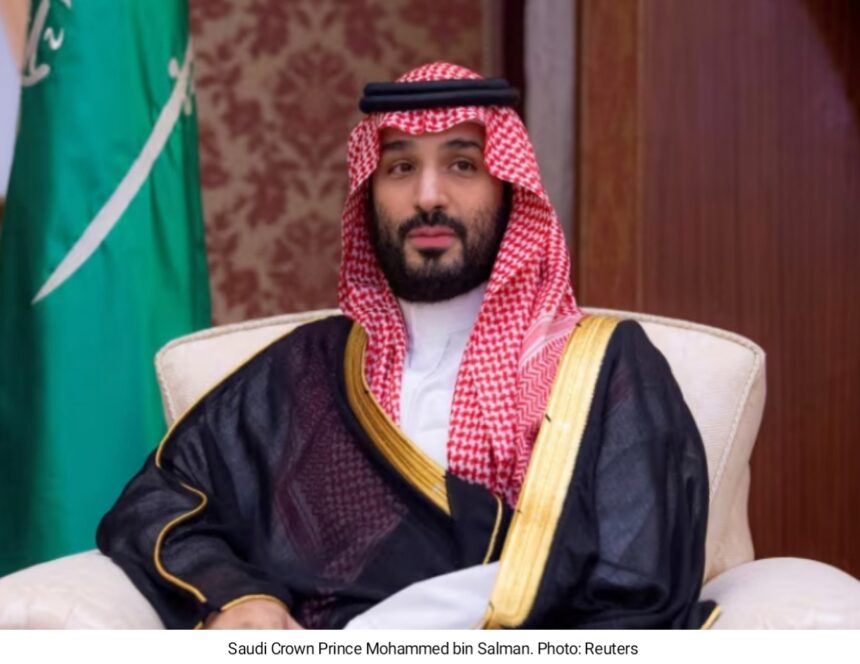
Saudi Arabia’s recent revisions to its school textbooks on Islam, Palestine and Israel have drawn praise from the Israel-based Institute for Monitoring Peace and Cultural Tolerance in School Education (IMPACT-se), which says the kingdom has removed a number of passages it considers antisemitic or hostile toward Israel and Jews. The assessment comes as tensions surrounding Jerusalem and the Al-Aqsa Mosque remain deeply sensitive, with Israeli political figures continuing to advocate controversial changes to the status quo at the holy site. In a report released in late July following a review of Saudi textbooks, IMPACT-se highlighted the removal of the statement that “Muslims will never give up Jerusalem,” arguing that the wording could suggest that Muslim control or presence in Jerusalem is under threat and portray the city primarily as a site of conflict between Muslims and other groups, particularly in relation to Israel. The organisation also welcomed the removal of several Quranic verses and hadiths from the curriculum, describing the changes as positive developments in the treatment of religious minorities. Among the passages removed was a well-known hadith describing the Prophet Muhammad’s visit to a sick Jewish boy who later accepted Islam. IMPACT-se said removing the example from the 2025 edition could reduce the impression among students that disbelief inevitably leads to destruction and could contribute to greater acceptance of religious minorities. The organisation also praised the Saudi decision to shorten or revise passages concerning disbelief and sin, while acknowledging that Saudi textbooks continue to present Islam as the natural religion of humanity. The review also identified significant changes in the way Palestine and Israel are represented in school maps and historical terminology. Earlier Saudi textbooks reportedly omitted Israel from maps and identified the entire territory as Palestine, while textbooks for the 2024–25 academic year removed the word “Palestine” as well, without explicitly naming Israel. In one 11th-grade history textbook, the term “Jewish enemy” was replaced with “Israeli occupation.” IMPACT-se said the change represented a reduction in hostility toward Israel but argued that the term “Israeli occupation” could still be interpreted as referring to Israel as a whole and therefore reflected a continued refusal to recognise the state. The issue has particular significance as the Israeli government has repeatedly rejected the establishment of a Palestinian state, with Prime Minister Benjamin Netanyahu previously declaring that a Palestinian state would not be established. At the same time, IMPACT-se criticised descriptions of Jews in some Saudi textbooks, including references portraying Jews as “cunning” or “clever.” One historical account describes an alleged attempt by Chaim Weizmann, who later became Israel’s first president, to persuade Saudi Arabia’s founder, King Abdulaziz Ibn Saud, to abandon the Palestine issue and not obstruct the ambitions of the Zionist movement. The textbook characterises Weizmann’s approach as an unacceptable attempt at bribery. IMPACT-se argues that such language reinforces stereotypes portraying Jews as conspiratorial, although historical records cited in the wider debate indicate that Weizmann did discuss financial incentives and the relocation of Palestinians in negotiations connected to the Palestine question. The controversy surrounding Saudi Arabia’s curriculum reforms comes at a particularly sensitive moment for Jerusalem. Israeli authorities have recently permitted Jewish prayer inside the Al-Aqsa Mosque compound, a development widely viewed as a further challenge to the long-standing status quo governing access and worship at one of Islam’s holiest sites. Israeli politicians and far-right activists have also repeatedly called for the destruction or replacement of the Al-Aqsa Mosque with a Jewish temple, intensifying fears among Palestinians and Muslims that the character and status of the holy site could be fundamentally altered. Meanwhile, Israeli settlement expansion in and around occupied East Jerusalem and the wider West Bank continues to fuel concerns over demographic and territorial changes. IMPACT-se, which has long campaigned for changes to school curricula across the Middle East, says its assessment is based on the principles of removing antisemitic content and promoting greater tolerance and recognition of Israel. The organisation has maintained close links with Israeli institutions and has consistently urged Arab and Palestinian educational systems to recognise Israel more explicitly. Following the publication of its latest assessment, IMPACT-se said on social media that it welcomed Saudi Arabia’s continued efforts to improve its school curriculum and address what it considers problematic material. The organisation also said that the positive changes it had identified in previous assessments concerning the portrayal of Israel and Zionism were continuing. Saudi Arabia’s curriculum reforms therefore represent a significant shift in the language used to address Jews, Israel and Jerusalem, but they remain part of a much broader and highly contested political struggle over historical memory, religious identity and the future status of Jerusalem. The changes are being closely watched not only because they indicate a transformation in Saudi educational policy, but also because they coincide with intensifying disputes over Al-Aqsa, Israeli settlement policies and the unresolved question of Palestinian statehood. For Riyadh, the reforms may reflect its broader effort to modernise educational content and reshape its international image, while for Israel and organisations such as IMPACT-se, they are being presented as evidence of a gradual transformation in Saudi attitudes toward Israel and Jewish communities. Yet the continuing dispute over Jerusalem demonstrates that changes in school textbooks alone cannot resolve the deeper political and religious tensions surrounding the Israeli-Palestinian conflict.
Saudi textbooks remove sentence ‘Muslims will never leave Jerusalem’, Palestinian name and