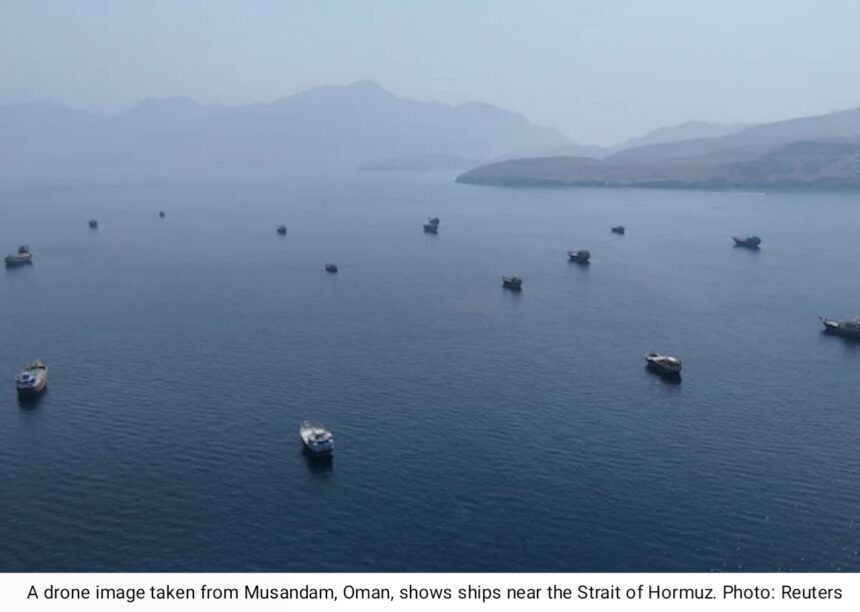
SINGAPORE, September 1, 2026: Commercial vessel traffic through the strategically vital Strait of Hormuz remained at an unusually low level on Monday, with preliminary ship-tracking data indicating that only around five vessels transited the narrow waterway, significantly below the recent 10-day average of approximately 14 vessels, highlighting the continuing disruption to maritime activity amid heightened tensions surrounding the region. According to data from maritime intelligence firm Kpler, four vessels entered the strait while only one vessel exited during the day, although the figures do not include ships that switched off their transponders and therefore could not be detected by conventional tracking systems. Notably, no liquid tankers were recorded among Monday’s visible traffic, a development that could add to concerns over the movement of crude oil and other energy commodities through one of the world’s most important maritime chokepoints. Of the vessels entering the waterway, one was an empty handy-sized gas tanker that approached the Strait of Hormuz through an Iranian route, while the remaining three were laden dry-bulk carriers. The low level of tanker traffic is particularly significant because the Strait of Hormuz serves as a critical route for global energy supplies, connecting the Persian Gulf with international shipping lanes and carrying a substantial share of the world’s seaborne oil and liquefied natural gas trade. The latest figures came shortly after Iranian media reported that a Saudi oil tanker had been stopped while travelling through the southern corridor of the strait, although there was no immediate confirmation of the incident from Saudi authorities. Any disruption involving commercial vessels in the waterway has the potential to increase shipping risks, raise insurance costs and place additional pressure on global energy markets, particularly at a time when geopolitical tensions in the Middle East remain elevated. At the same time, shipping activity through another major regional chokepoint, the Bab-el-Mandeb Strait, showed a markedly different pattern. Kpler data indicated that 27 vessels transited Bab-el-Mandeb, the highest level recorded over a three-day period, with 14 vessels entering and 13 leaving the waterway. Five of those vessels were Aframax- or Suezmax-sized crude oil tankers, suggesting that some commercial shipping activity has continued through the Red Sea gateway despite the broader security challenges affecting maritime routes across the Middle East. However, none of the vessels recorded entering or exiting Bab-el-Mandeb were very large crude carriers or liquefied natural gas tankers, indicating that the largest and most strategically important energy shipments remained limited in the available tracking data. The contrasting traffic levels at Hormuz and Bab-el-Mandeb underscore the uneven impact of regional instability on global maritime commerce, with ship operators increasingly weighing security risks, route availability, insurance costs and the potential for vessel delays when deciding how and where to move cargoes. The Strait of Hormuz remains particularly sensitive because of its narrow geography and its importance to energy-exporting states in the Gulf, meaning sustained reductions in tanker movements could have consequences well beyond the region. Although ship-tracking data provides an important indication of commercial maritime activity, the absence of vessels from tracking systems does not necessarily mean that shipping has completely stopped, as vessels operating with their transponders disabled are not reflected in the publicly observable figures. Nevertheless, the latest data points to a significant reduction in visible traffic compared with normal levels and suggests that shipping companies are continuing to exercise considerable caution when navigating the waterway. The situation also places renewed focus on the security of alternative maritime routes, including Bab-el-Mandeb, which links the Red Sea with the Gulf of Aden and provides an important connection between Europe, the Middle East and Asia. Any prolonged disruption across both chokepoints could create wider complications for global supply chains, particularly for crude oil, refined petroleum products, natural gas and other commodities dependent on maritime transportation. For international markets, the developments in and around the Strait of Hormuz will therefore remain closely watched, as even a limited reduction in shipping capacity can amplify concerns over supply security when geopolitical tensions are already putting pressure on regional trade routes. The latest vessel data ultimately highlights the continuing fragility of maritime commerce in the Middle East, with the Strait of Hormuz operating at a fraction of its recent average visible traffic while shipping through Bab-el-Mandeb remains comparatively more active, leaving global energy traders and shipping companies closely monitoring any further developments that could affect the movement of critical commodities through these strategically important waterways.
Strait of Hormuz Vessel Traffic Remains at Critically Low Levels Amid Rising Regional Tensions