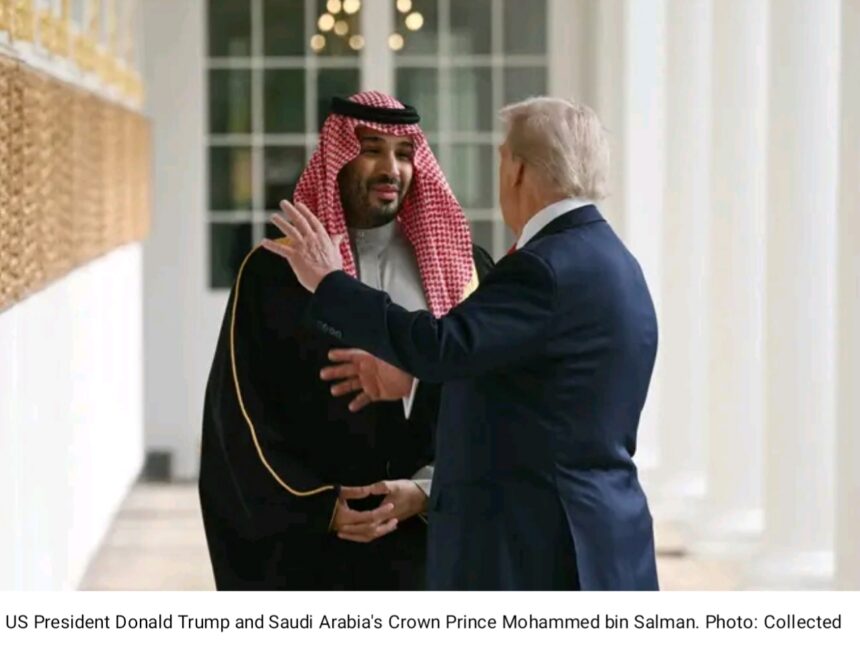
The landmark civilian nuclear cooperation agreement between the United States and Saudi Arabia has entered a period of uncertainty after US President Donald Trump introduced a new political condition, requiring Riyadh to normalise diplomatic relations with Israel before the agreement can move forward. The unexpected demand has complicated what was widely viewed as a strategic partnership designed to strengthen bilateral ties, enhance energy security, and reshape the geopolitical landscape of the Middle East.
Washington and Riyadh recently reached an agreement to cooperate on the development of a civilian nuclear programme in Saudi Arabia. The proposed 30-year partnership would enable the kingdom to access American nuclear technology, technical expertise, and regulatory support to build a modern nuclear energy sector. Saudi Arabia views nuclear power as a key pillar of its Vision 2030 economic transformation strategy, aiming to diversify its energy mix, reduce domestic oil consumption, increase crude exports, and meet the rapidly growing electricity demand driven by industrial expansion, artificial intelligence, and large-scale data centres.
However, the future of the agreement was thrown into doubt after President Trump declared that the nuclear pact would only proceed if Saudi Arabia joins the Abraham Accords and establishes formal diplomatic relations with Israel. The announcement has added a sensitive political dimension to what had previously been presented as an energy and technology agreement, significantly raising the stakes for both Washington and Riyadh.
Saudi Arabia has consistently maintained that it will not recognise Israel without a credible and irreversible pathway toward the establishment of an independent Palestinian state. That position remains unchanged despite years of diplomatic engagement between the two countries and the United States. Israel’s current government, meanwhile, continues to oppose the creation of a Palestinian state, leaving little room for compromise and making Trump’s new condition particularly difficult for Riyadh to accept.
Although the full text of the nuclear agreement has not yet been released, reports suggest that one of its key provisions could allow American companies to construct and operate a uranium enrichment facility inside Saudi Arabia under strict US oversight. Such an arrangement would enable the kingdom to develop part of the nuclear fuel cycle while maintaining American control over sensitive technologies. Nevertheless, President Trump’s recent comments indicate that domestic uranium enrichment in Saudi Arabia may no longer be guaranteed under the final agreement.
Saudi Arabia’s Ministry of Energy has described the agreement as a major step toward diversifying the kingdom’s energy resources, promoting advanced technologies, expanding investment opportunities, and strengthening strategic cooperation between the two longstanding allies. President Trump has also stressed that the agreement is intended exclusively for peaceful civilian purposes and does not authorise any military nuclear activities.
Before entering into force, however, the agreement must undergo formal review and approval by the United States Congress. Trump’s decision to tie the pact to Saudi-Israeli normalisation has complicated that legislative path, leaving uncertainty over whether the administration will submit the agreement to Congress in its current form.
Regional analysts believe the deal has entered a period of diplomatic limbo. The additional political condition has created tension between Washington’s strategic objectives and Riyadh’s longstanding foreign policy commitments. As a result, negotiations that once appeared focused on energy cooperation have become closely linked to one of the Middle East’s most contentious geopolitical disputes.
Should the agreement ultimately collapse, Saudi Arabia could pursue alternative partnerships with other countries possessing advanced civilian nuclear industries. China, Russia, South Korea, France, and the United Arab Emirates are all considered potential partners capable of supporting the kingdom’s nuclear ambitions. Such a shift could significantly alter the balance of influence in the Gulf and reduce Washington’s long-term strategic leverage in the region.
Beyond political considerations, Saudi Arabia still faces several practical challenges in establishing a fully operational civilian nuclear sector. Securing a reliable supply of nuclear fuel, developing the necessary infrastructure, training a specialised workforce, and complying with international non-proliferation standards remain critical obstacles. Questions also persist regarding the kingdom’s relationship with the International Atomic Energy Agency (IAEA), particularly concerning the adoption of the agency’s Additional Protocol, which provides enhanced inspection and verification mechanisms for civilian nuclear programmes.
According to reports, Saudi Arabia has instead pursued a bilateral safeguards arrangement with the United States while broader verification measures remain under discussion. The IAEA has indicated that it is prepared to implement the necessary monitoring framework once it receives formal requests from both Washington and Riyadh and obtains authorisation from its Board of Governors.
Strategic experts argue that the proposed US-Saudi nuclear agreement extends far beyond the energy sector. It represents a critical test of American influence in the Middle East, the future of global nuclear non-proliferation efforts, regional security architecture, and Saudi Arabia’s long-term geopolitical positioning. By linking the agreement to Saudi-Israeli normalisation, the Trump administration has transformed what began as a civilian energy partnership into a broader diplomatic negotiation whose outcome could shape the strategic balance of the Middle East for years to come.
US-Saudi nuclear deal in doubt, Trump conditions normalization of relations with Israel