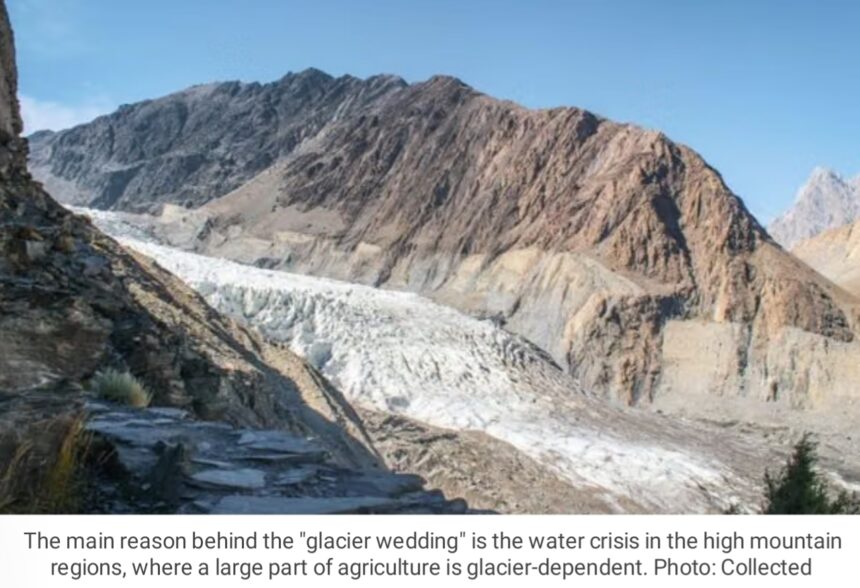
In Pakistan’s Gilgit-Baltistan region, some communities have long followed a traditional practice of artificially combining pieces of glacier ice to create new ice masses. Locally known as “Gang Khswa” and increasingly described as “glacier grafting” or the “marriage of glaciers”, the practice reflects how mountain communities are adapting to growing water insecurity in one of the world’s most important high-altitude environments.
Gilgit-Baltistan is home to more than 5,000 glaciers, ranging in size from just a few metres to nearly 70 kilometres. With agriculture and livelihoods in many high-altitude settlements heavily dependent on glacier-fed water, changes in the region’s ice reserves are raising concerns over future water availability.
Under the traditional process, villagers typically collect large pieces of glacier ice in October, when temperatures fall below freezing but before heavy snowfall begins. Porters then carry the ice to remote, high-altitude locations, in some cases reaching nearly 4,000 metres above sea level. The ice is placed inside a natural cave or a specially prepared pit and covered with materials such as sawdust, charcoal and wheat husks to slow melting and protect the stored ice.
The resulting ice mass does not immediately become a source of water. Instead, it gradually develops over many years and can eventually provide meltwater for local communities. In some cases, it may take nearly a decade before the newly created ice reserve begins producing a meaningful supply of water.
For local communities, the practice represents more than an inherited tradition. It is a form of local climate adaptation aimed at supporting agriculture, livestock and everyday life in areas where reliable water supplies are increasingly difficult to maintain.
The practice is also drawing wider attention as scientists and policymakers examine how traditional knowledge can complement modern approaches to climate adaptation. Changes in glaciers across the Himalayas and Karakoram can have consequences far beyond high-altitude settlements, potentially affecting water security for millions of people living downstream.
The “marriage of glaciers” is not a direct solution to global warming or the accelerating loss of glacier ice. But it offers a striking example of how communities living in some of the world’s most challenging environments are using traditional knowledge, natural resources and local ingenuity to prepare for an increasingly uncertain water future.