US intelligence agencies believe Iran’s newly appointed Supreme Leader, Ayatollah Mojtaba Khamenei, could steer the country’s nuclear programme in a more assertive direction than his predecessor, according to a report by The New York Times. Citing current and former US officials familiar with classified intelligence assessments, the report says Washington believes Mojtaba Khamenei may be more inclined to pursue advanced nuclear capabilities than his father, the late Ayatollah Ali Khamenei. While there is no public evidence that Iran’s new leader has endorsed the development of nuclear weapons, US intelligence analysts reportedly assess that the country’s evolving leadership could place greater strategic emphasis on nuclear deterrence amid growing regional and international security pressures.
The assessment marks a significant shift from the long-standing public position associated with Ayatollah Ali Khamenei, who repeatedly declared that nuclear weapons were incompatible with Islamic principles and issued a religious decree, or fatwa, rejecting their development. US officials now believe the succession in Tehran could eventually reshape Iran’s strategic doctrine, although they acknowledge that no official policy change has been announced by the Iranian government and that the country’s declared position remains focused on the peaceful use of nuclear technology.
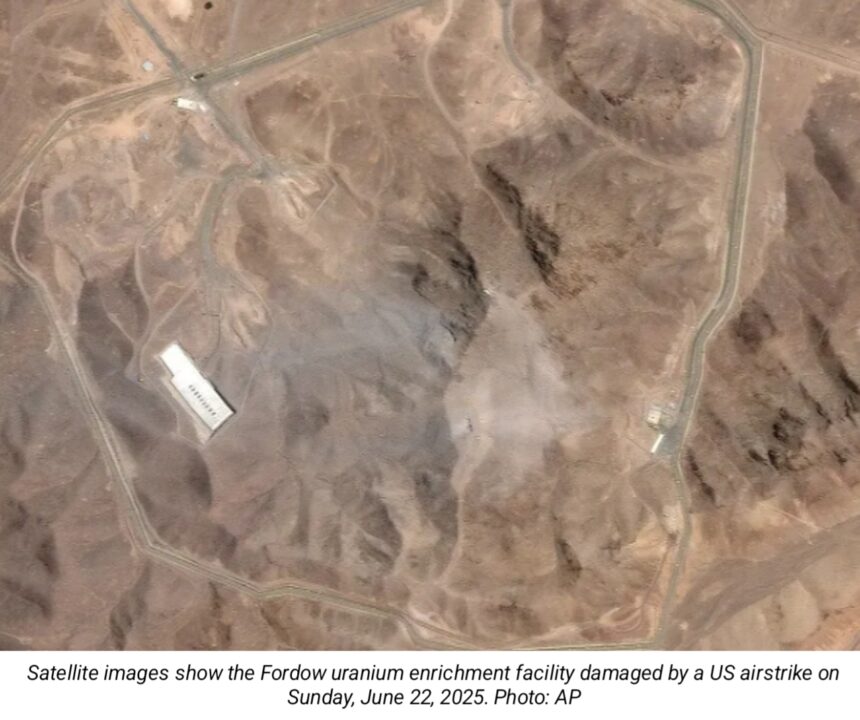
The report comes at a time of heightened tensions between Tehran and Washington following months of military confrontation and renewed concerns over Iran’s nuclear infrastructure. According to US officials cited by The New York Times, Iran has not formally resumed expanded uranium enrichment activities since the latest conflict. However, intelligence assessments suggest Tehran may have relocated sensitive centrifuges and key nuclear equipment to the heavily fortified underground complex known as Pickaxe Mountain in central Iran, a move believed to be aimed at safeguarding critical assets from potential future attacks. Similar concerns over the resilience of Iran’s nuclear infrastructure have also been reported by The Wall Street Journal.
US officials cautioned, however, that much of the intelligence regarding Mojtaba Khamenei’s views predates the outbreak of the recent conflict. They noted that after reportedly being injured during the early stages of the war, his public appearances and communications have remained extremely limited for security reasons, making it difficult to determine whether his strategic thinking has evolved since assuming the country’s highest office. Even so, American intelligence agencies reportedly assess that he has consolidated significant influence over Iran’s political and security establishment, although he has yet to wield the same undisputed authority his father exercised over the Islamic Republic.
Iran has consistently maintained that its nuclear programme is exclusively for peaceful purposes, including electricity generation, medical research and civilian scientific development. The United States, Israel and several Western governments, however, continue to argue that Tehran’s expanding nuclear capabilities could provide the technological foundation for developing a nuclear weapon if a political decision were made. As international scrutiny intensifies and regional tensions remain high, analysts say the direction chosen by Iran’s new leadership will be closely watched by global powers, with any shift in Tehran’s nuclear policy likely to carry far-reaching implications for Middle Eastern security and international diplomacy.
Will Khamenei’s successor change Iran’s nuclear policy? Strong indication in US assessment