The security situation in Asia has once again drawn international attention following renewed tensions between China and the Philippines over the disputed Second Thomas Shoal in the South China Sea. This coral reef, which has been at the center of sovereignty disputes for decades, saw clashes last month between coast guard and military personnel from both countries. The incident has added a new dimension to the strategic rivalry between China and the United States.
The United States, a long-standing military ally of the Philippines, has expressed concern over the incident. However, many countries in Asia are now asking a bigger question: as Washington becomes heavily engaged in the ongoing war involving Iran in the Middle East, how much military and diplomatic capacity does it truly have left to counter China in the Indo-Pacific?
The strain placed on U.S. air defense systems and other critical military resources due to the Iran conflict has further increased concerns among Asian allies about Washington’s long-term commitment and capability. At the same time, China has demonstrated its strategic military strength, with reports indicating that it conducted a test of a nuclear-capable intercontinental ballistic missile in the Pacific region in early July. This has sparked renewed debate over the balance of power in the region.
Meanwhile, discussions in the U.S. Congress about the possible closure of two American consulates in Japan and Indonesia have raised further doubts about Washington’s sustained engagement in Asia. Gregory W. Meeks, a senior Democratic member of the House Foreign Affairs Committee from New York, warned that a failure of President Donald Trump’s second term to protect U.S. interests in Asia could create strategic advantages for China and pose risks to U.S. national security.
However, Trump administration officials insist that the United States is not withdrawing from the Indo-Pacific. Instead, they emphasize maintaining a deterrent military posture along the First Island Chain, which includes Taiwan, the Philippines, and Japan. On August 10 in Manila, U.S. Under Secretary of Defense for Policy Elbridge Colby reaffirmed this strategy, stating that sufficient deterrence capabilities are necessary to counter China’s military pressure in key maritime areas.
At the same time, Washington is urging its allies to increase defense spending, strengthen military coordination, and work more closely with U.S. forces. However, alongside security cooperation, the Trump administration’s tariff policies have created new unease among Asian partners. Many fear that while the United States remains essential for security, its economic policies could become a major source of pressure for regional countries in the future.
The absence of a long-term U.S. economic strategy in Southeast Asia has become more evident after successive administrations moved away from the vision of expanding American economic engagement in the region, once symbolized by the Trans-Pacific Partnership during Barack Obama’s presidency.
Mira Rapp-Hooper, a former National Security Council official in the Biden administration, said that Southeast Asian countries do not want to be caught in direct conflict between the United States and China. At the same time, they also do not want to see Chinese regional dominance. Their goal is to maintain balance. However, if perceptions grow that the U.S. presence in the region is weakening, that balance could come under increasing pressure.
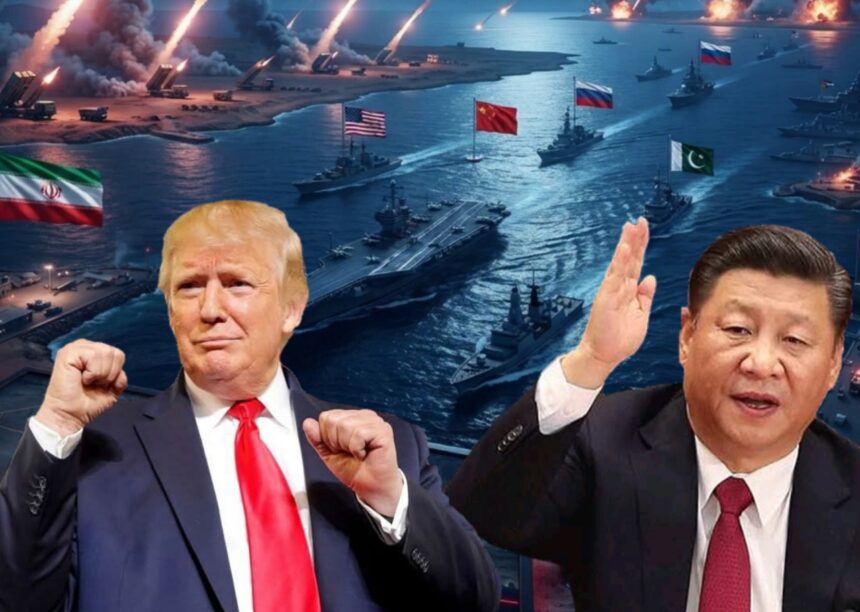
Trump’s evolving China policy has further complicated the situation. While he once portrayed Beijing as the primary economic rival, his administration has recently placed greater emphasis on negotiation and cooperation following China’s retaliatory tariffs and trade measures. Reports of high-level communication between Trump and Chinese President Xi Jinping, along with a possible visit to Washington, have strengthened perceptions in Asia that the two powers may be seeking a framework to manage competition rather than sustain long-term confrontation.
Such a possibility has deepened concerns among smaller and mid-sized Asian states. Countries like the Philippines seek U.S. military support to counter China’s maritime pressure, but at the same time want to maintain stable economic and diplomatic relations with Beijing. Filipino political analyst Richard Heydarian noted that Manila is caught in a difficult position, trying to maintain strong ties with both superpowers simultaneously.
Security initiatives launched under the Biden administration—such as closer defense cooperation with Japan and the Philippines, increased U.S. military presence near strategic Philippine bases close to Taiwan, and efforts to strengthen regional defense structures—are now being tested under changing geopolitical conditions. At the same time, growing military cooperation between Japan and the Philippines suggests that Manila is seeking to diversify its security partnerships rather than rely solely on Washington.
In this context, the South China Sea is no longer just a territorial dispute between China and the Philippines. It is increasingly becoming a testing ground for U.S. global military priorities, China’s rising power, the strategic autonomy of Asian allies, and the future balance of power in the Indo-Pacific.
As the conflict involving Iran continues, the United States will face the challenge of managing two critical strategic regions simultaneously—the Middle East and the Indo-Pacific. This raises the central question for Asian allies: can the United States maintain sufficient military strength, economic influence, and political commitment in both regions at the same time, or will China’s growing power gradually reshape the regional balance in Asia in Beijing’s favor?