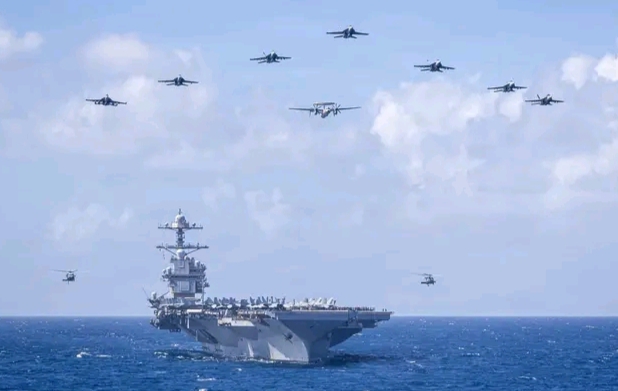
The United States has significantly expanded its military presence across the Middle East, with U.S. Central Command (CENTCOM) confirming the deployment of more than 20 naval warships and hundreds of military aircraft throughout the region. The large-scale buildup comes amid escalating tensions with Iran, as U.S. President Donald Trump declared that American military operations against Iranian targets will intensify in the coming days. In an interview with Fox News, Trump stated that U.S. forces are conducting sustained strikes against Iran’s coastal and maritime infrastructure and emphasized that the campaign would continue until he determines that its objectives have been achieved. He suggested that while current operations are focused on military and strategic assets, future strikes could expand to include Iran’s energy facilities, power plants, and critical transportation infrastructure if Tehran refuses to return to negotiations. Trump asserted that Iran has “no choice” but to reach a new agreement, claiming that U.S. representatives had been in contact with Iranian officials shortly before the interview. He also alleged that a potential agreement had collapsed at the last moment only two days earlier. Addressing the Strait of Hormuz, Trump stressed that the vital global shipping route must remain open to international commerce. He revealed that he had previously considered imposing transit fees but abandoned the idea in favor of securing substantial investment commitments from Gulf states, arguing that keeping the waterway accessible serves broader international interests. Meanwhile, CENTCOM announced that U.S. forces had launched additional operations aimed at degrading Iran’s capability to threaten commercial shipping through the Strait of Hormuz and confirmed that a renewed naval blockade targeting Iran is now in effect. The growing military deployment has further heightened tensions across the Gulf region. Although Pakistan recently brokered a memorandum of understanding intended to reduce hostilities and establish a framework for lasting peace between Washington and Tehran, exchanges of military strikes have continued. Adding to the volatile situation, Iran’s Islamic Revolutionary Guard Corps (IRGC) claimed on Tuesday that it had destroyed several U.S. weapons systems and drones during operations targeting American assets in Bahrain and Kuwait. Those claims, however, have not been independently verified. With diplomatic efforts under increasing strain and military activity accelerating on both sides, regional observers warn that the confrontation risks expanding into a broader conflict that could threaten global energy security, disrupt international shipping through one of the world’s most strategic maritime chokepoints, and further destabilize an already fragile Middle East.
US deploys 20 warships and hundreds of military aircraft to Middle East